US DOLLAR
 EURO
 AUSTRALIAN DOLLAR
 CANADIAN DOLLAR
 POUND STERLING




Product Description
SEE MORE AFRICAN NEOLITHIC TOOLS
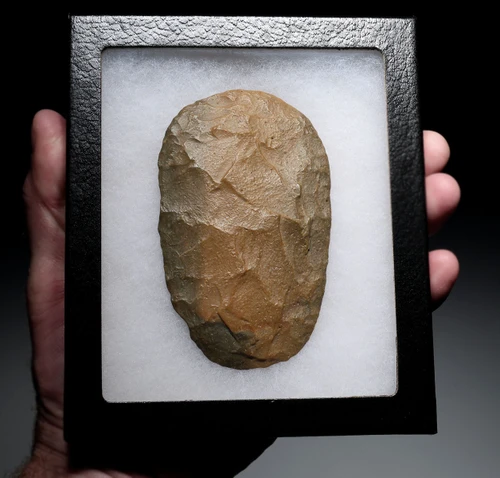
On a dinosaur fossil-hunting expedition in 2000 by a team of scientific explorers led by Paul Sereno, a paleodune and ancient lakebed site was discovered that yielded over 200 ancient burials of Kiffian and Tenerian people. The scientific findings showed that this area was once a humid lake region that was home to a hunter-fisher-gatherer people. The area became known as the "Green Sahara" for its once fertile and habitable landscape. Noted paleontologist, Dr. Paul Sereno, famous for other Saharan dinosaur discoveries, shot into the archaeological spotlight with his discovery of the ancient lakebed cemetery at Gobero in Niger in the year 2000. Interred in the many burials were numerous stone tools, ceramics, shells, beads and bone harpoons typical for the lifestyle of these ancient people of the Green Sahara. This exceptional AUTHENTIC artifact is similar to the specimens found at Gobero. It comes from the same period and Tenerian Neolithic Culture of that famous discovery.
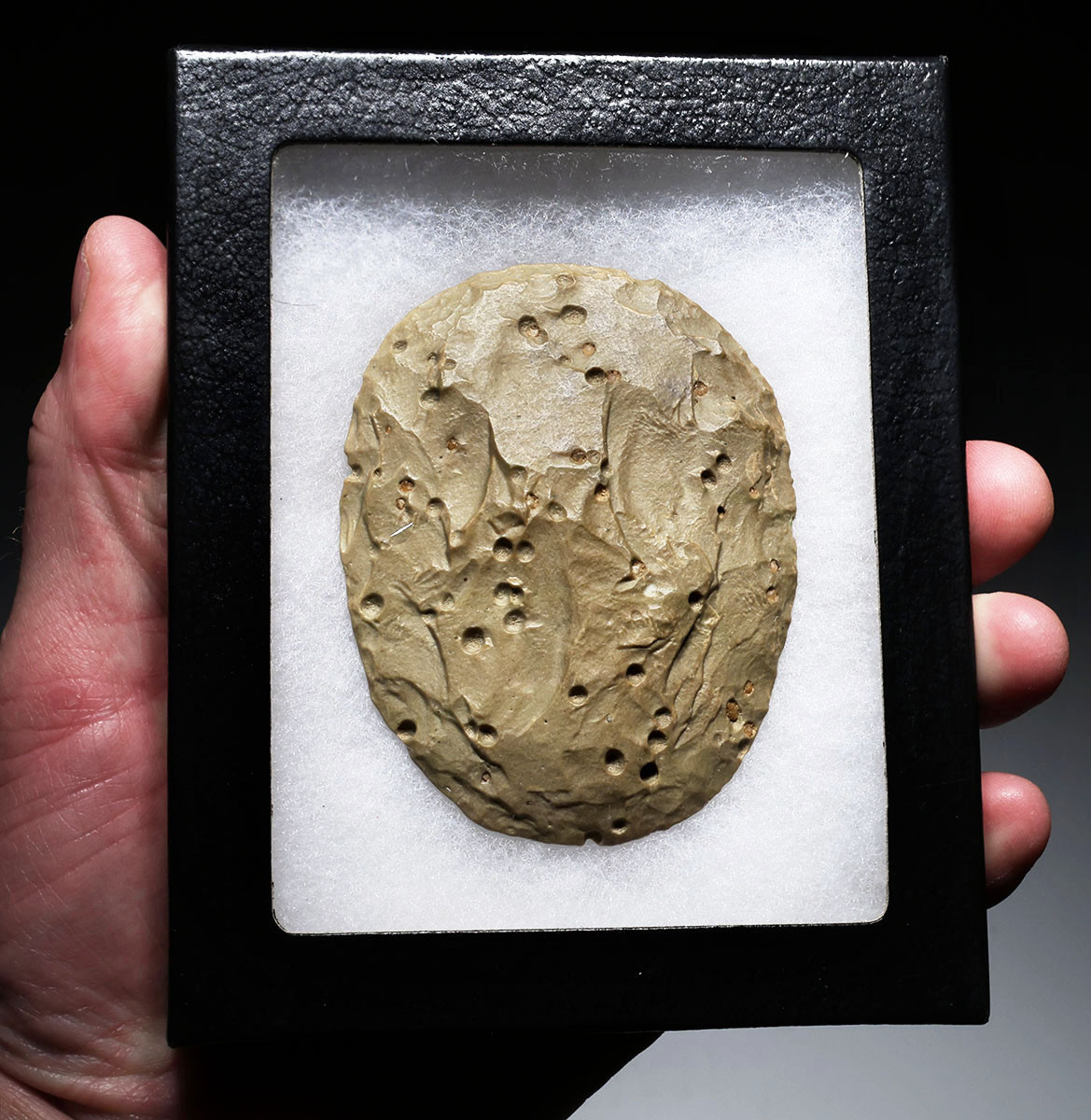
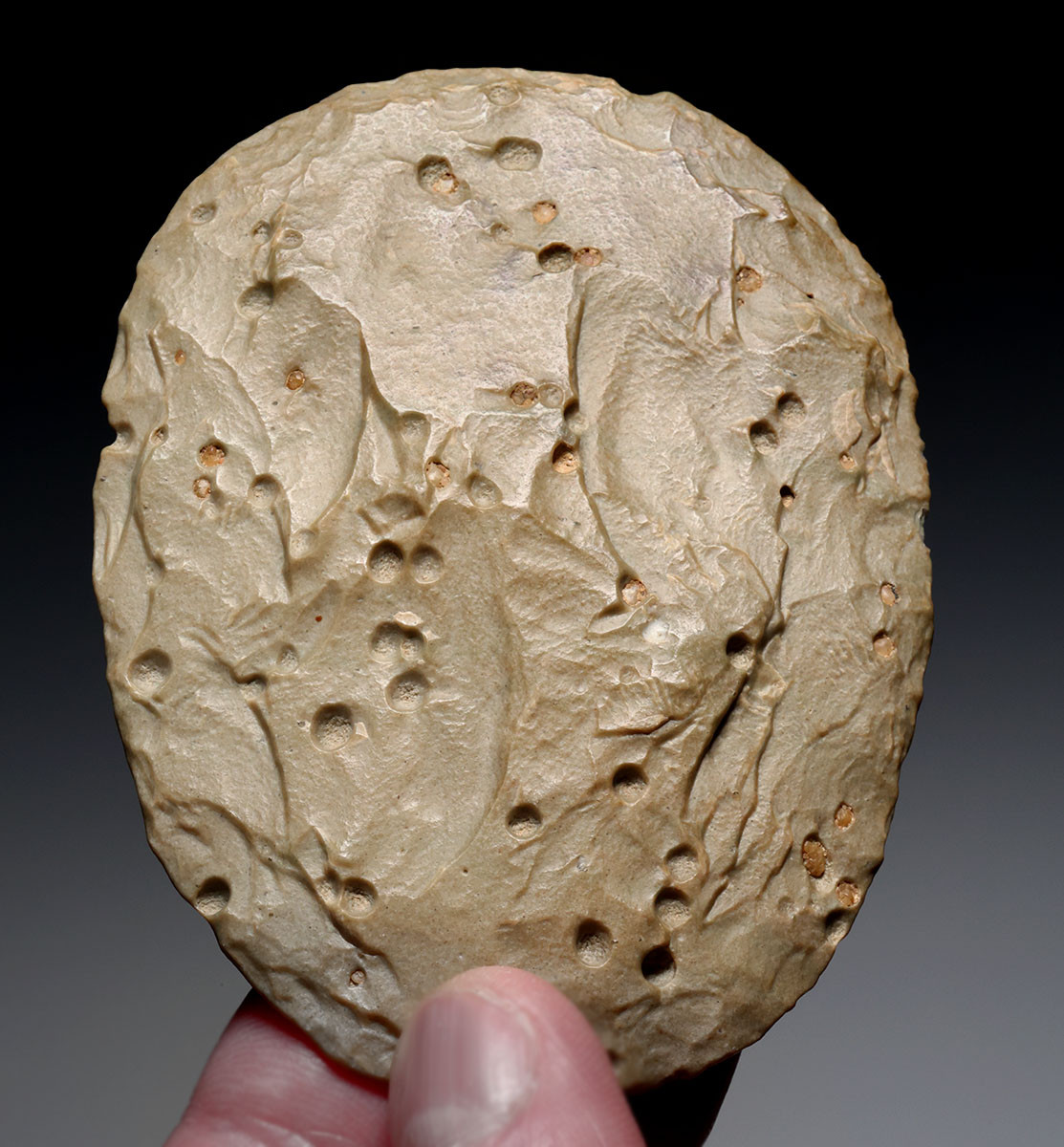
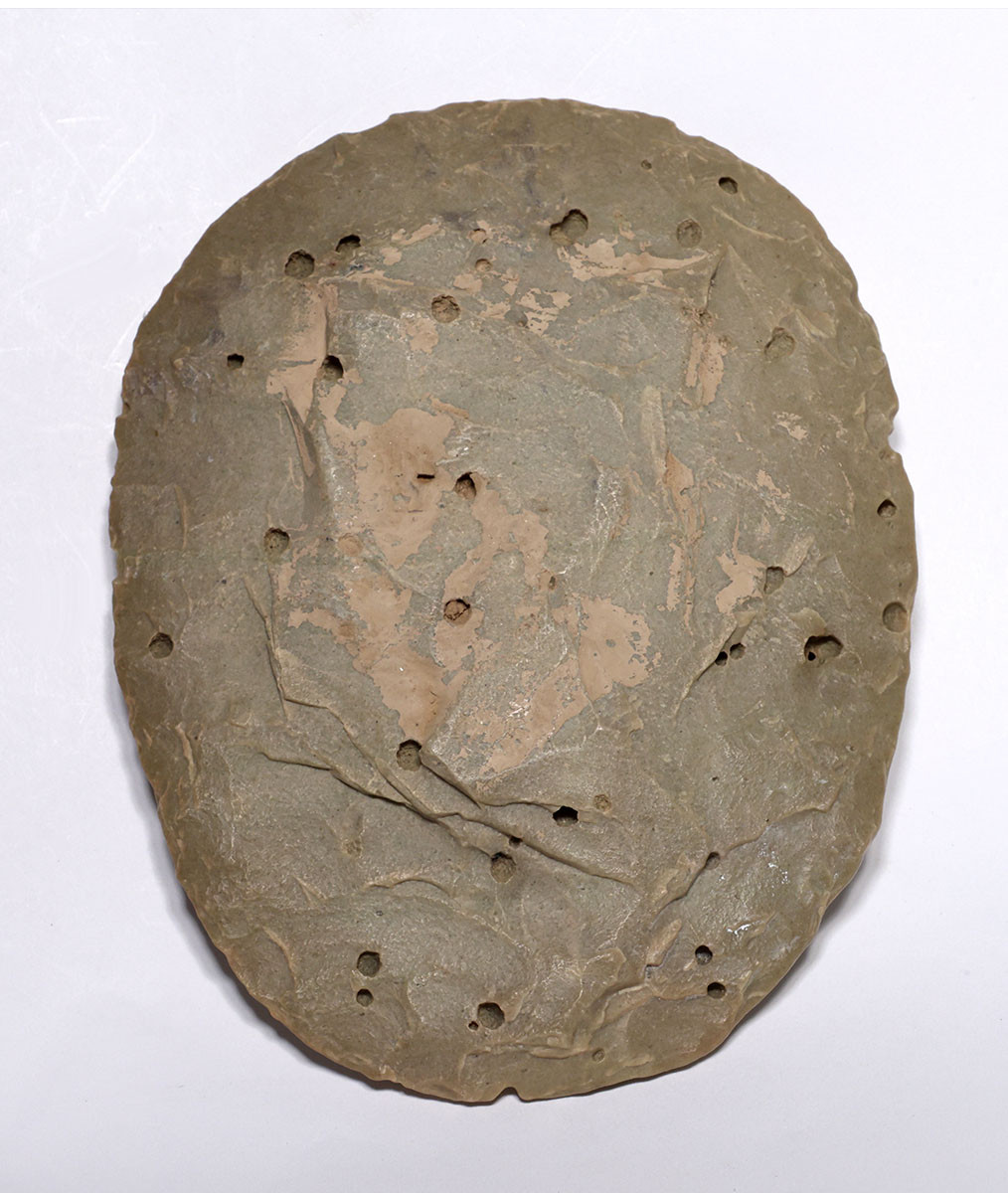
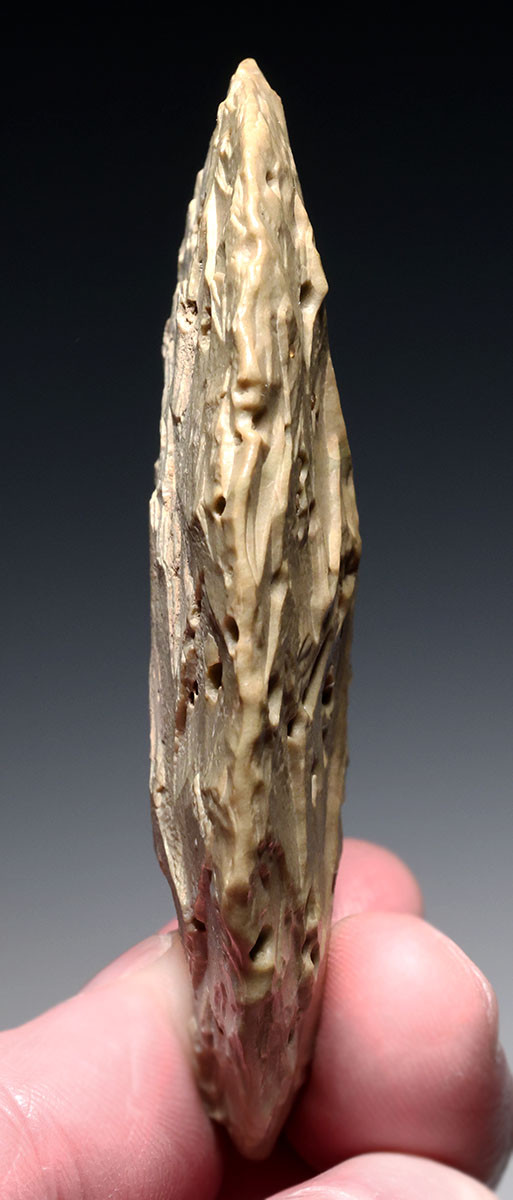
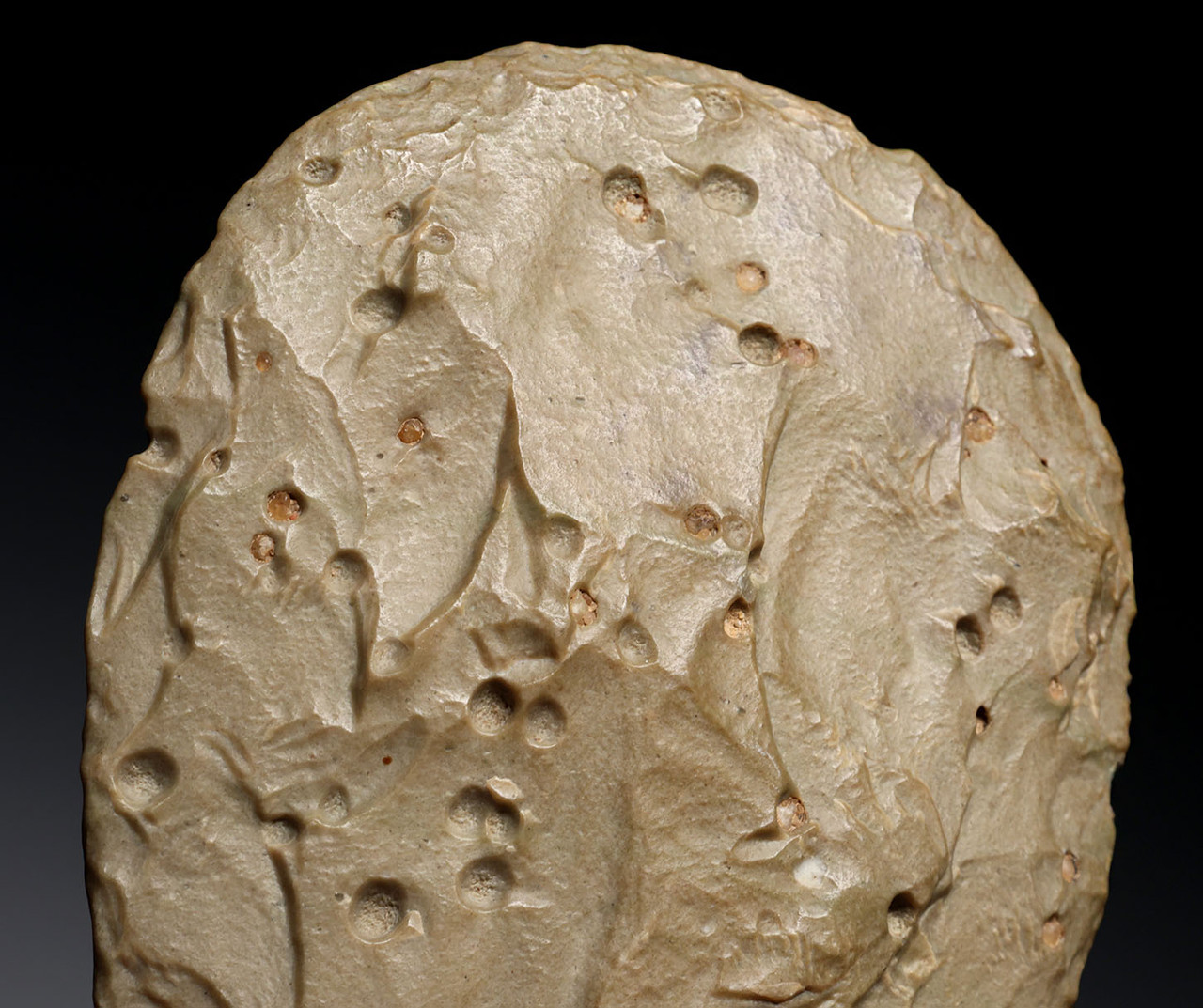
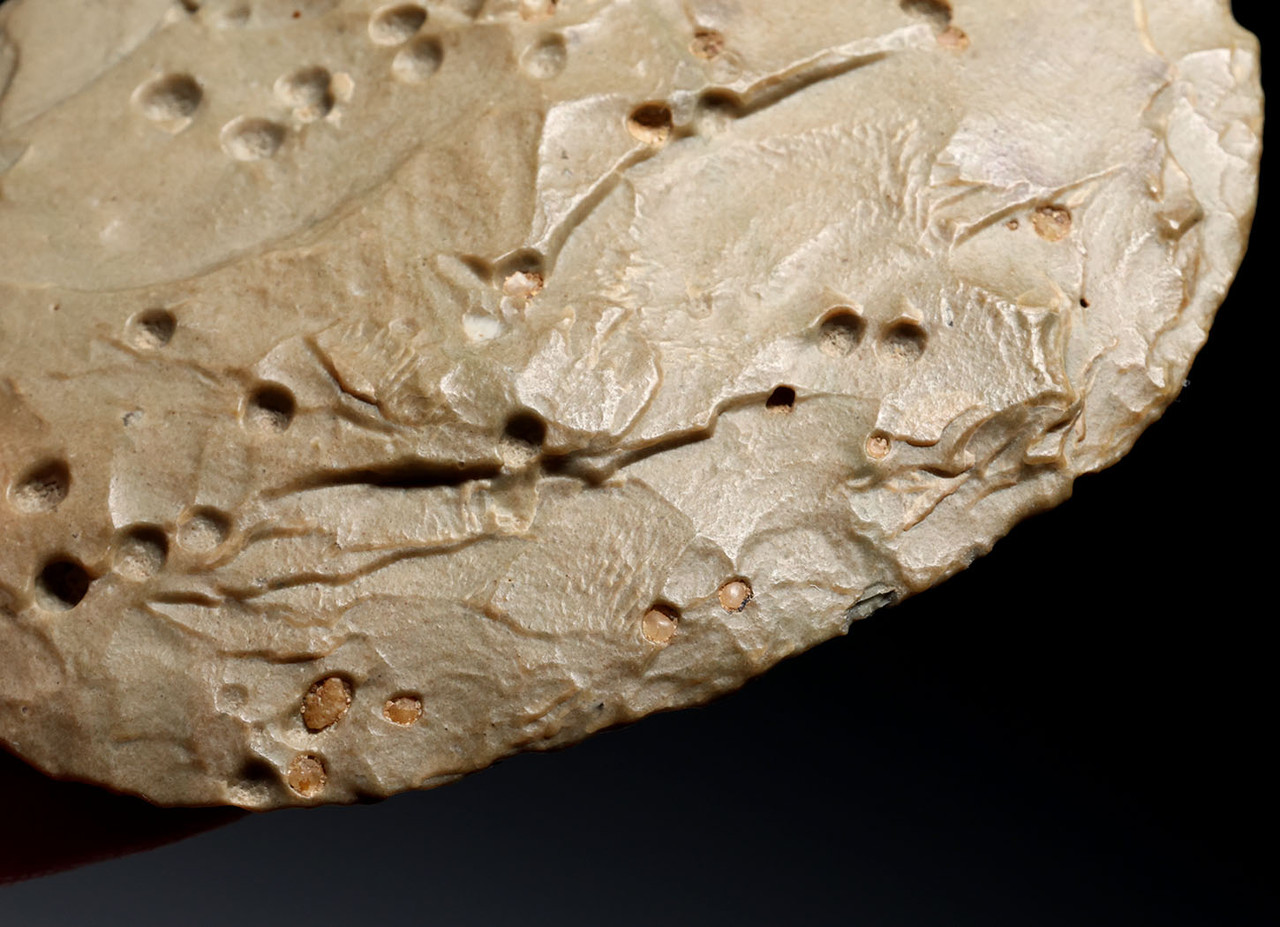
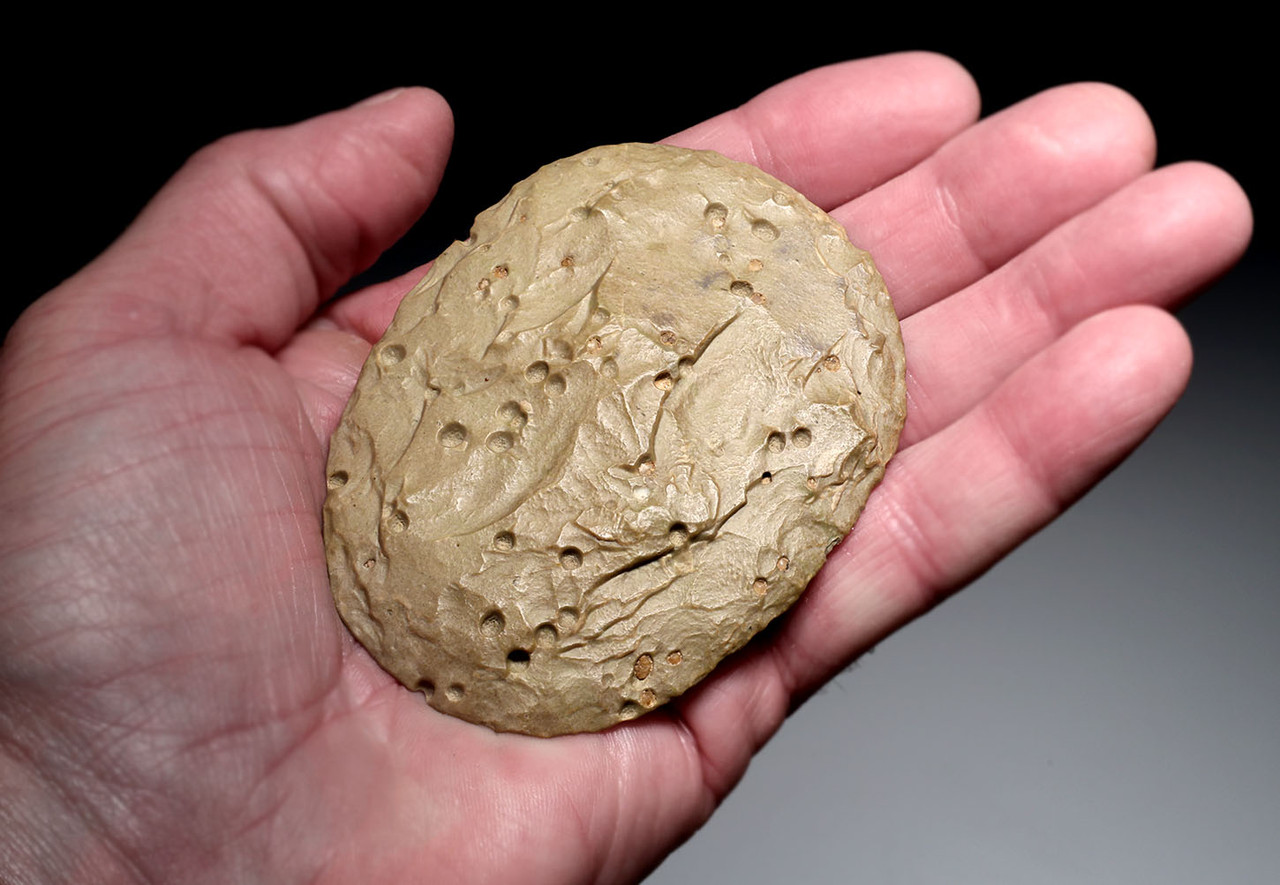
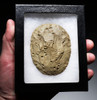
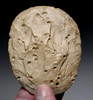
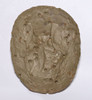
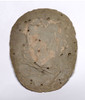
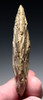
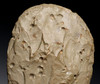
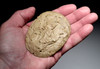
Of all the unique objects that are known from this rare African Neolithic culture, expertly made, thin bifacial disk scrapers are considered one of the most unusual and iconic. While most of these were flaked in green jasper, this incredible specimen was flaked with the same thinness, in VESICULAR basalt that shows a very unusual color - light olive green! We have seen large Tenerian grinding mill basins and rubbing stones made from this unique basalt but scrapers like this are very, very rare. The large pores in the stone offer an intriguing beauty that no stone tool possesses, normally. Basalt is extremely difficult to work with to get exact results in flaking, as well as being able to flake it to the thinness this specimen is. It is nearly impossible to flake to any thin proportion. How this ovate discoidal scraper was made to the same thinness as jasper is a mystery and, quite a demonstration of the true Neolithic master artisan that was able to achieve such a feat. The circumference is perfectly made with very light secondary retouch flaking. The one side surface has a wonderful luster caused by its 'desert varnish' patina from extreme long-term desert exposure to the blowing sands and minerals. The other is dull as that side had been laying down in the sand for millennia. The uniqueness of the vesicular basalt with its many holes (most still containing original sand from the desert), along with its unusual mint olive color, adds immense aesthetics to this masterpiece stone tool.
This piece comes from our private collection of the best specimens we reserved, building an assemblage of the best specimens we encountered over the last 24 years.
It's an artifact like this that makes the Tenerian Neolithic so amazing. Its size and workmanship indicate it was an object of prestige, made with the additional time and workmanship that would have far exceeded what an ordinary tool would have required for everyday use.
Tenerian Neolithic disk scraper objects like this, are legendary in prehistory. No other ancient or prehistoric stone tool culture in the world has ever matched the workmanship and beauty of Tenerian bifacial flaked stone disks. This is an exceptional example of these "mascot" objects of this Neolithic society. The site where these were once found has been completely exhausted of newly discovered material by modern nomads who were last to collect remaining specimens.
We are very fortunate to have acquired an old French collection of these artifacts, decades ago. Nevertheless, we have a very limited amount and once sold, we most certainly will never be able to replace them. Objects from the Tenerian African Neolithic culture are so rare that not even most major museums have a single object in their collection.
HISTORY
The Earth has been warming and cooling for millions of year, well long before humans were on the planet. One of the most dramatic examples of climatic change in the last 10,000 years is the desiccation of what is now the Sahara desert. Prior to as recent as 3000 B.C., the South Central Sahara region in Africa was a humid lake savanna. It was home to a thriving culture of ancient humans known as the Tenerians and before them, the Kiffians. The occupation of this area by these two peoples occurred continuously from around 7700 B.C. to the drying of the Sahara in 2500 B.C..
In the final Pleistocene and early Holocene Periods around 10,000 years ago, the South Central Sahara Desert was once a highly favorable environment for hunters, gatherers and pastoralists. Freshwater lakes existed between the dunes in what is now the Tenere region, Lake Chad was eight times its current size, the highlands supported Mediterranean forest trees, and a diverse variety of both large and small fauna flourished there. The slow drying out process of the Sahara, began 7,000 years ago and ended 4500 years ago resulting in the barren conditions that exist to this day. As we progress through time from the end of the Pleistocene towards the end of the Neolithic Period there, we see humans relying more on meat from raised animals as opposed to hunted animals that once roamed wild in the formerly Green Sahara.