 US DOLLAR
 EURO
EURO
 AUSTRALIAN DOLLAR
 CANADIAN DOLLAR
 POUND STERLING







Product Description
SEE MORE PRE-COLUMBIAN ARTIFACTS
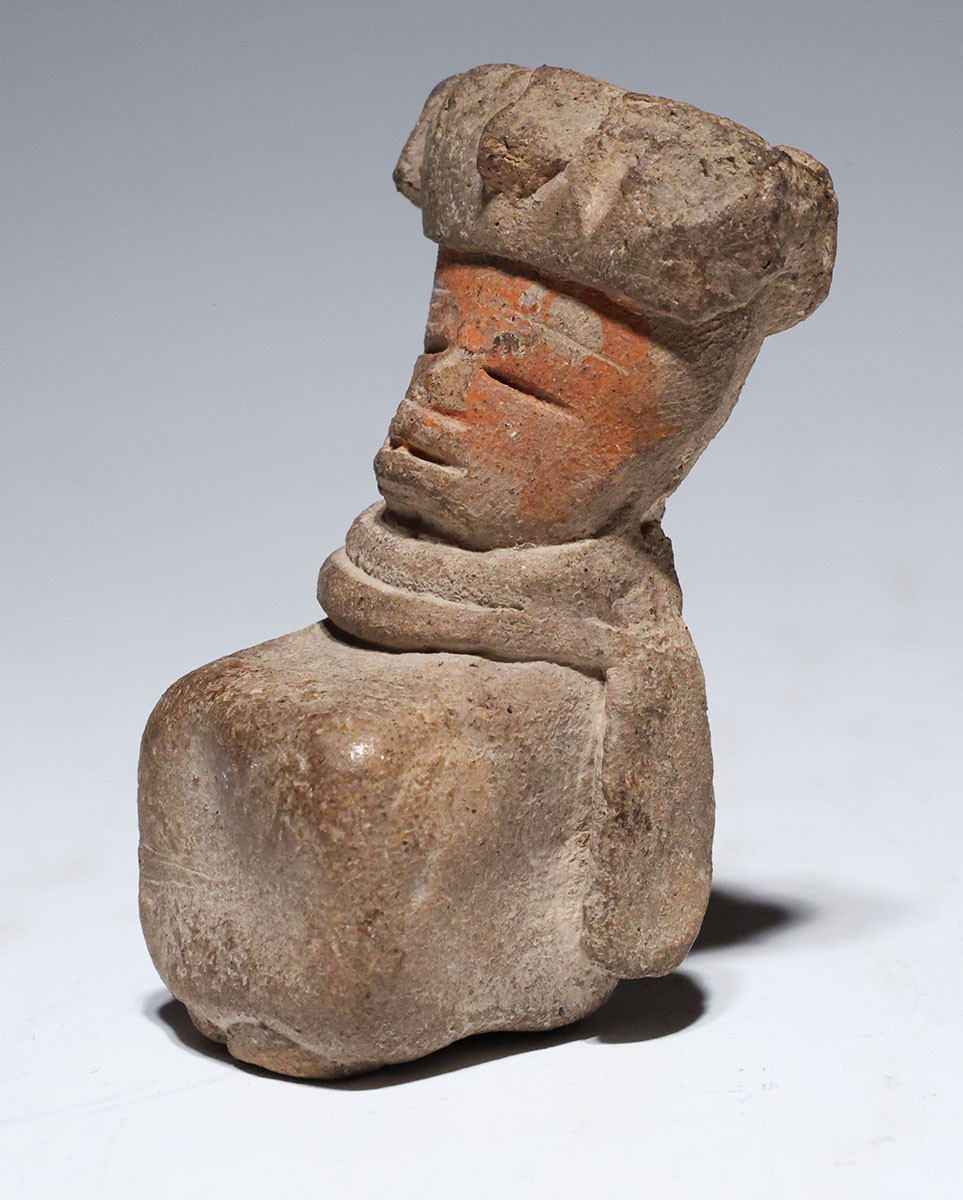
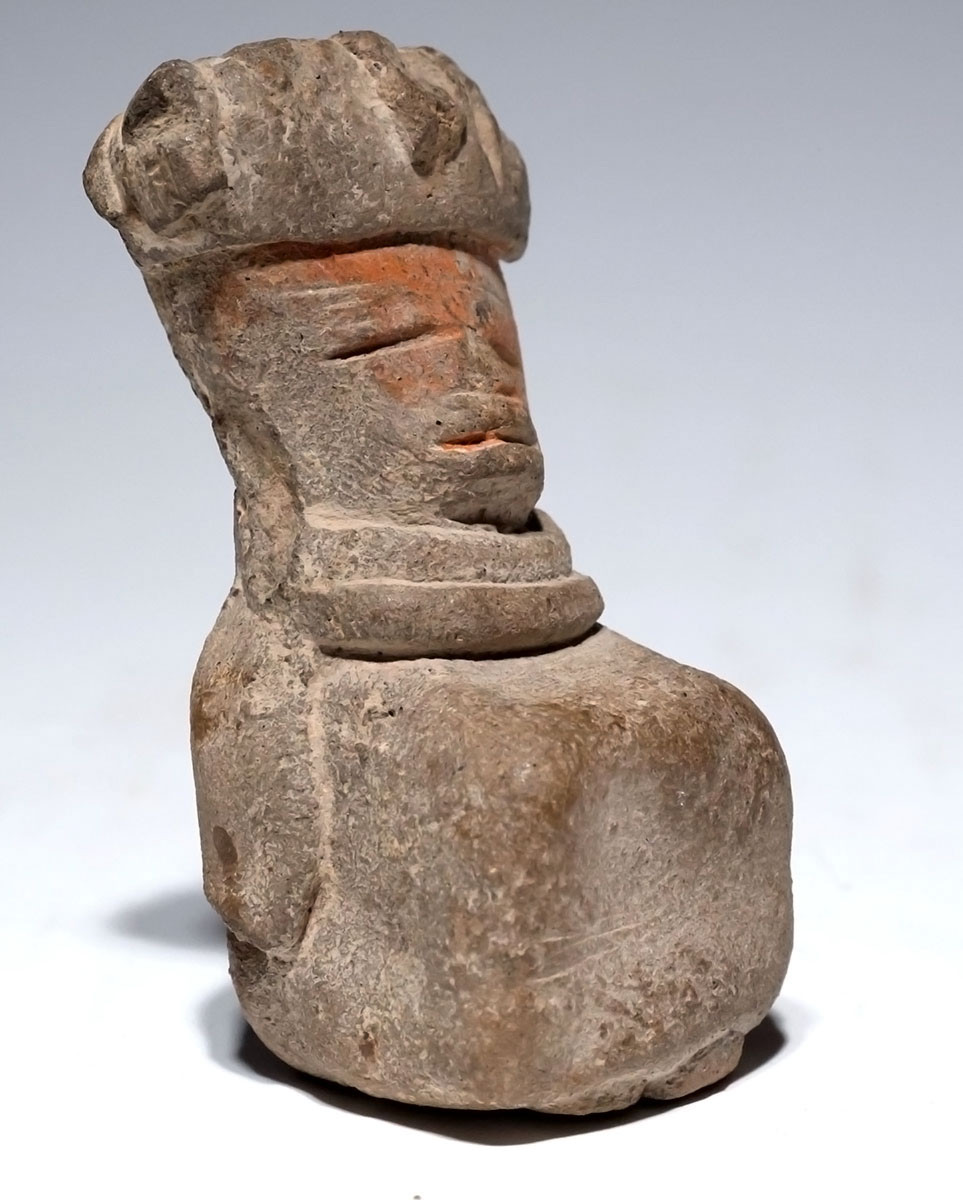
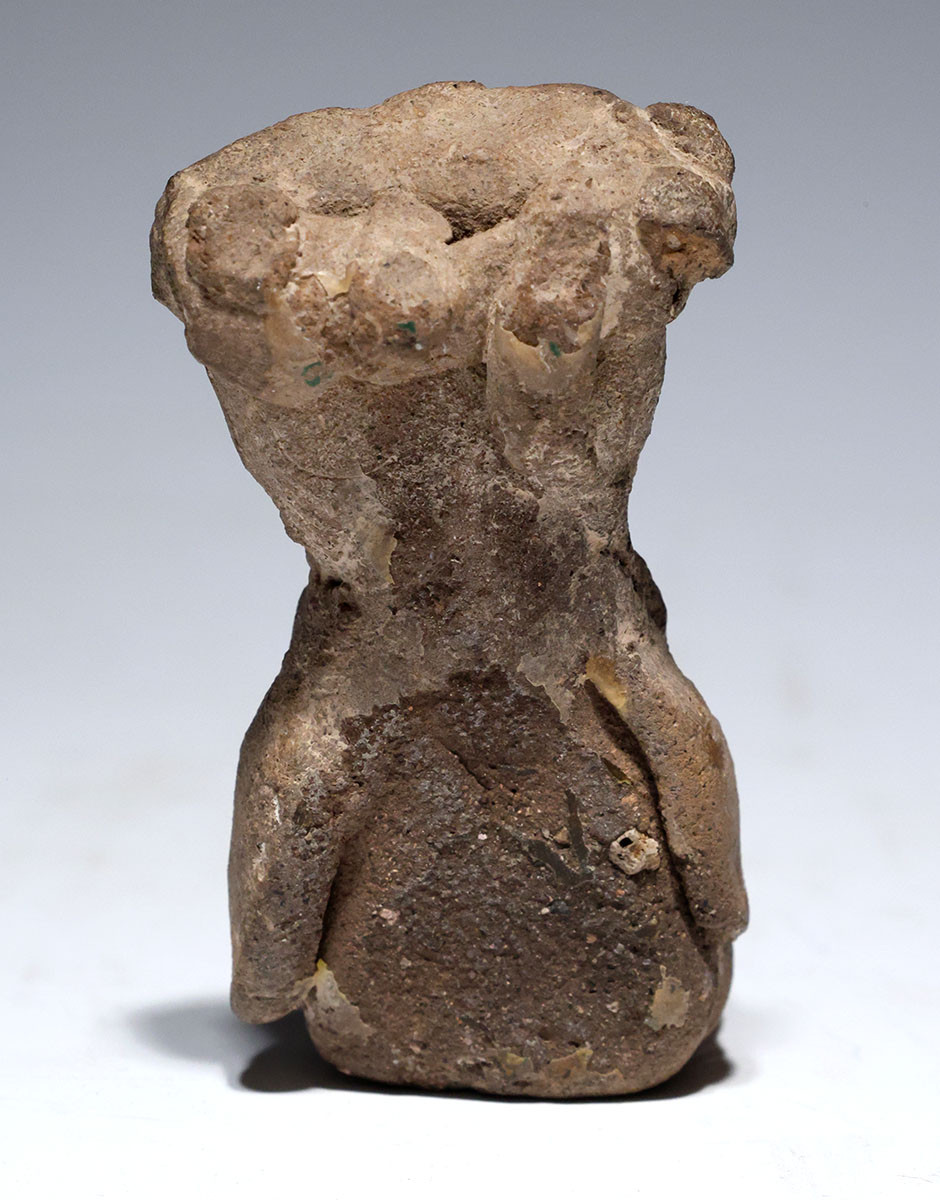
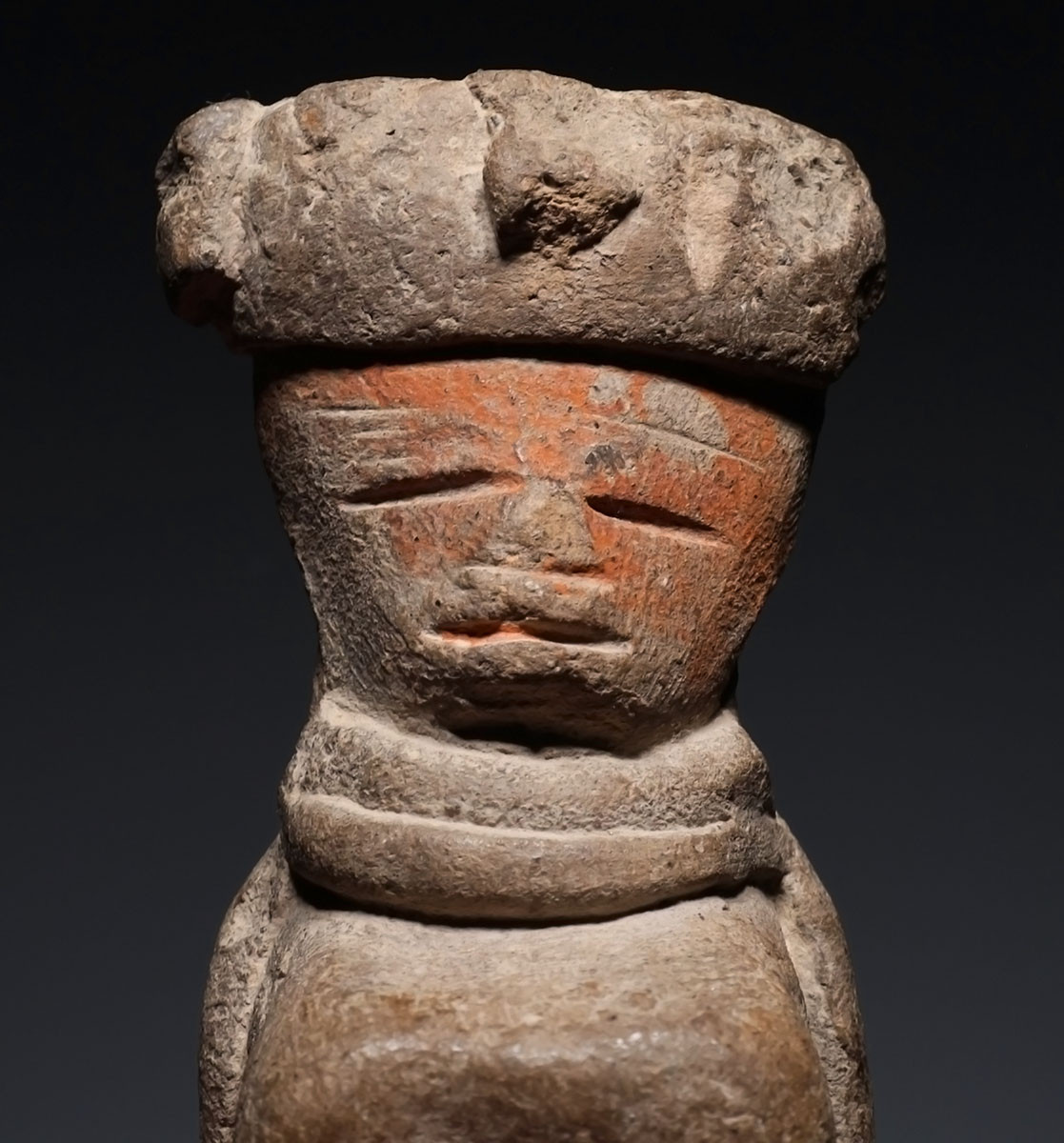
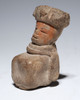
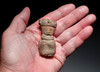
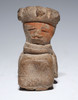
A solid formed clay figure, this votive figure is from the mysterious Teotihuacan Pre-Columbian Empire. Representing a ruling elite member of the Teotihuacan people, this stylized small statue represents a seated individual with a long garment covering the legs, and both arms resting at the sides. You can see the feet peeking out from the front edge at the base. A large crown is evident and rare original cinnabar pigment is still intact on the face. This figure is exactly as found with no alterations, repairs or enhancements. Original ancient deposits are still intact. It comes from the Dr. Heflin collection and historical documentation will be provided to the buyer.
Not much is known about the political organization of Teotihuacan but perhaps, this figure represents a member of the ruling elite. Evidence of a king or other authoritarian ruler is strikingly absent in Teotihuacan. Contemporaneous cities in the same region, including Mayan and Zapotec, as well as the earlier Olmec civilization, left ample attestations of dynastic authoritarian sovereignty in the form of royal palaces, ceremonial ball courts, and depictions of war, conquest, and humiliated captives. However, no such artifacts have been found in Teotihuacan. Many scholars have thus concluded that Teotihuacan was led by some sort of "collective governance.
The Allen Heflin Collection - Dr. Allen Heflin was a specialist veterinarian with the USDA (United States Department of Agriculture) who worked in 40 countries over 4 decades. During his years of service in Mexico from 1946-1962, he actively collected and researched a number of sites, publishing several articles in Mexican anthropological journals. His large estate consisted of over 8,000 pieces, with 70% being from Pre-Columbian cultures of Central America, 20% from North American Indian cultures, 5% of Old World and Middle Eastern antiquities, and the remaining 5% being ethnographic objects of various cultures.
HISTORY
In the first millennium A.D., the central American mega-city of Teotihuacan was THE largest city in the pre-Columbian Americas and had a broad influence on its neighboring cultures both, in simultaneous existence to it and even long after. At its peak in 450 A.D., with an estimated population exceeding 200,000 at this time, it was one of the largest cities in the world. The founders of this great city are a mystery and much debate has circled around who exactly built the city. Because the inhabitants seem to have been multi-ethnic (Nahua, Otomi, Totonac and Mayan) the culture is not attributed to a specific ethnicity or tribe but is called TEOTIHUACAN or TEOTIHUACANO.
Teotihuacan was an enormous industrial city and trading center housing a variety of trades and craftspeople. The quality of artistry in the thousands of mural paintings from Teotihuacan artists rivaled anything that was to be produced by many master painters of Renaissance Europe much later in time. Perhaps, the most famous industry the city was known for was its extensive production of obsidian objects.
Many of the same gods worshipped by other Pre-Columbian cultures of the surrounding region were worshipped by the inhabitants of Teotihuacan. Gods such as the Feathered Serpent and the rain god, which were later worshipped by the Aztecs in their own culture. It is believed the Mayans and later period Aztecs, along with many other tribes, were heavily influenced by Teotihuacan and like those cultures, human sacrifice was practiced in Teotihuacan. This is evidenced by numerous human skeletons showing signs of ritual sacrifice, excavated from the sites where the pyramids were built.
The end of Teotihuacan is as much a mystery as its beginning. Most recent studies now show the city's decline began some time around the 6th century A.D. and may have been caused not by a conquering neighbor but by internal civil unrest and uprising.

