US DOLLAR
 EURO
EURO
 AUSTRALIAN DOLLAR
 CANADIAN DOLLAR
 POUND STERLING








Product Description
SEE MORE ACHEULEAN STONE TOOLS
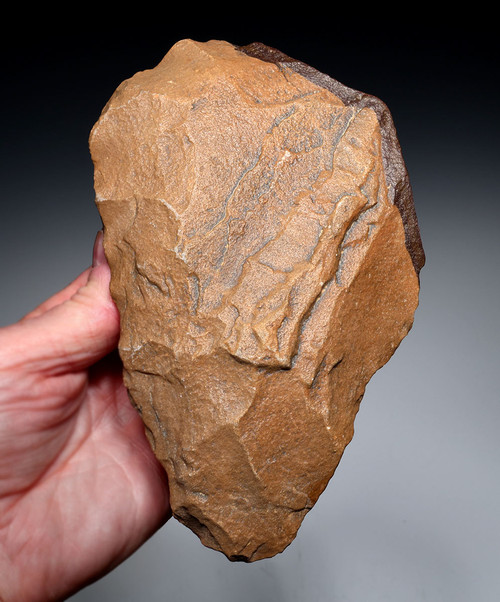
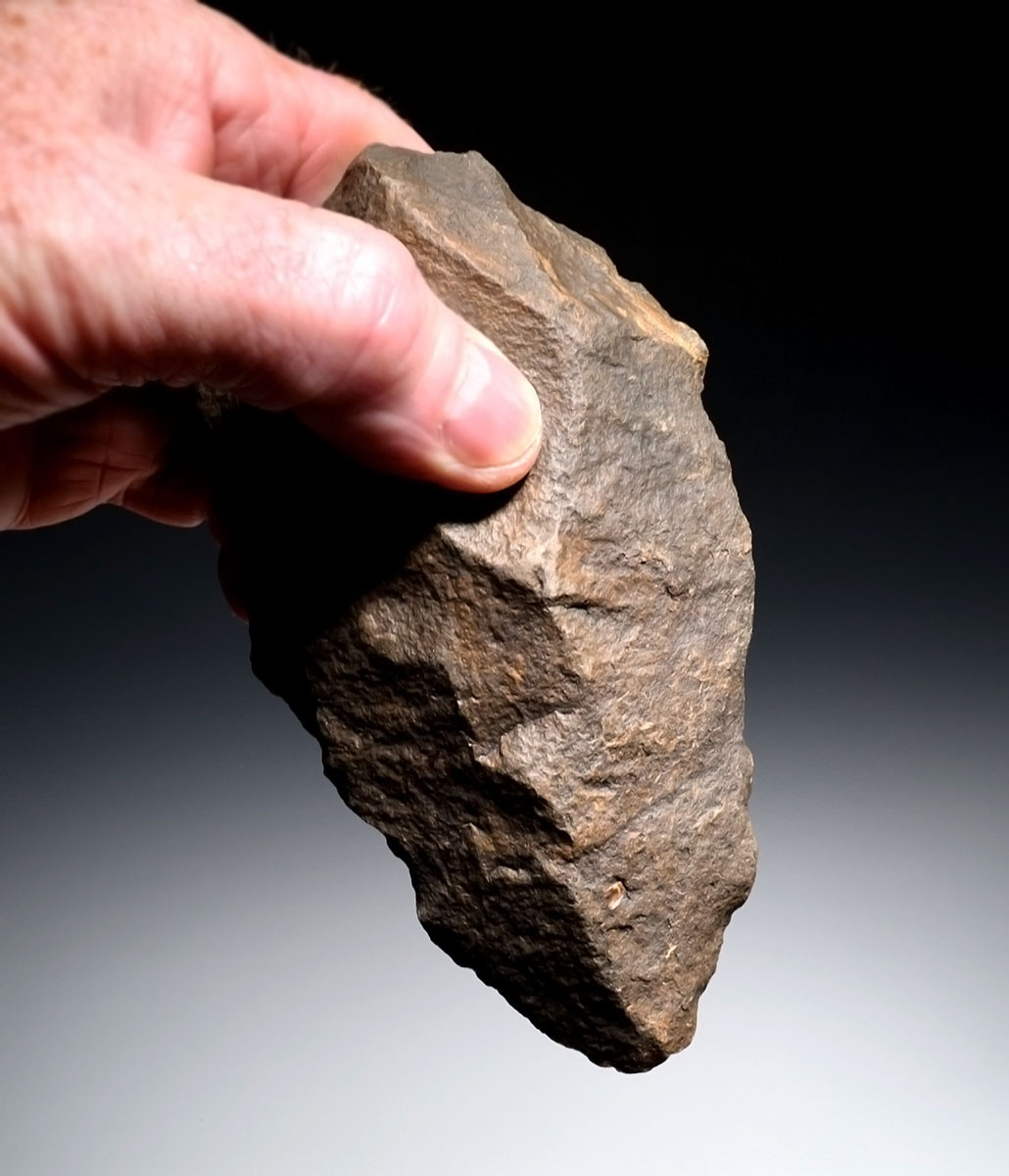
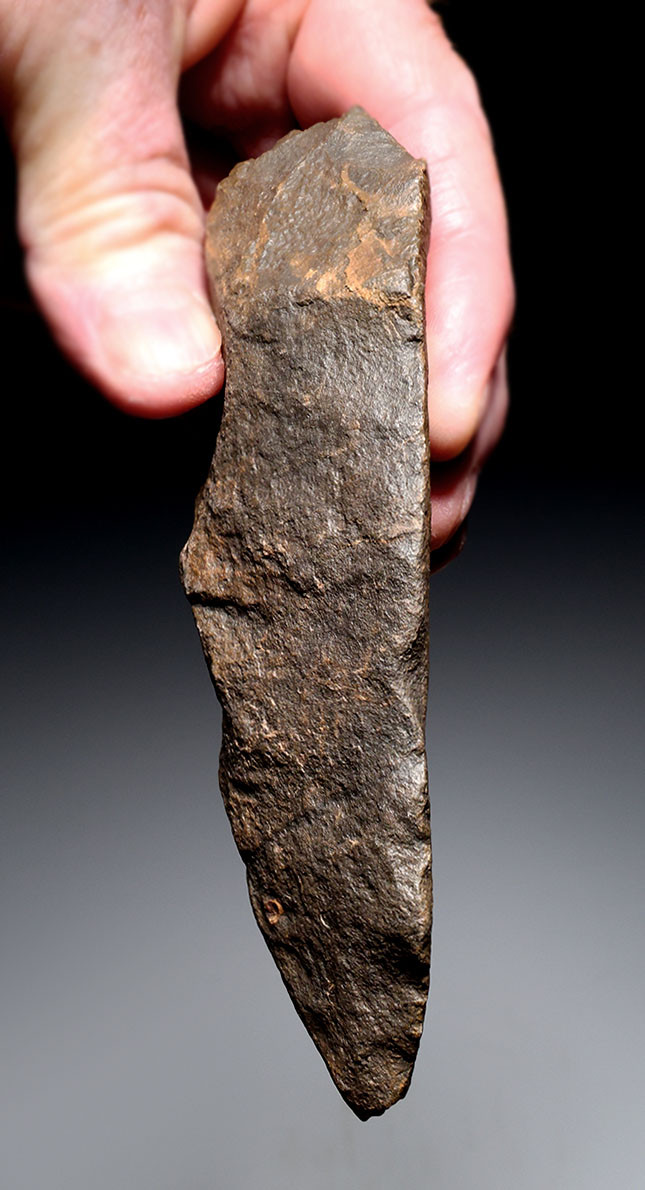
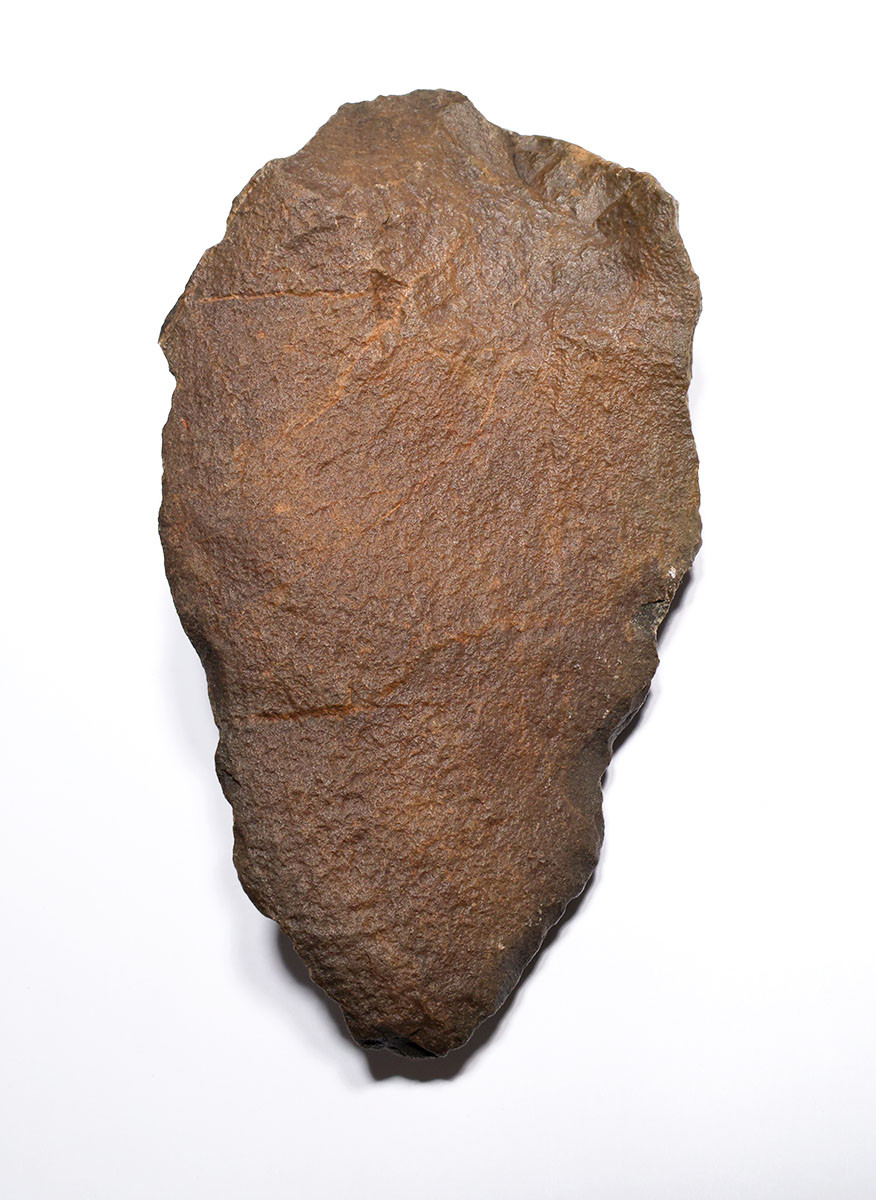
This Lower Paleolithic Acheulean hand axe was made and used by Homo ergaster (African Homo erectus), and dates from 1.2 million to 500,000 years ago. It was surface-collected from an exposed Acheulian site in the Northwestern Sahara Desert of North Africa. This Lower Paleolithic tool represents the first intelligent design type known to science that was made by primitive humans. Prior to these Saharan Acheulean tools, only crude pebble tools existed in the human fossil record.
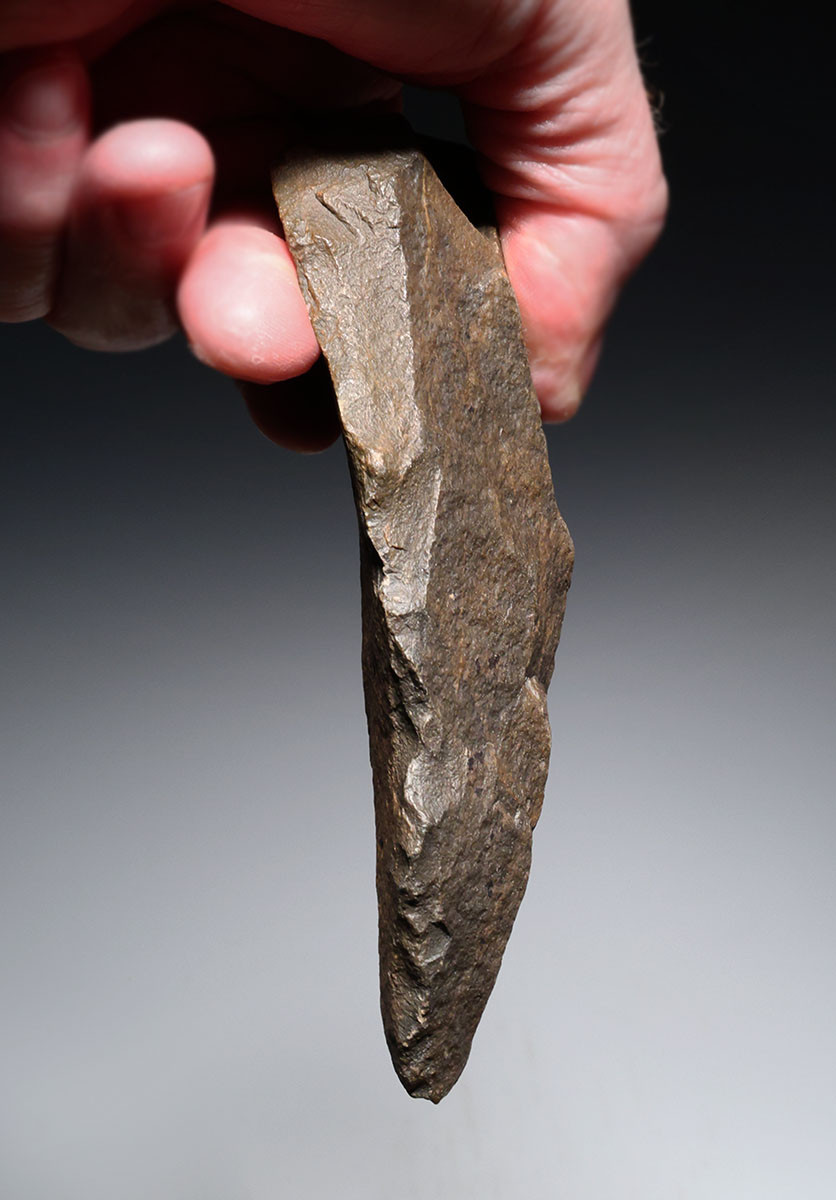
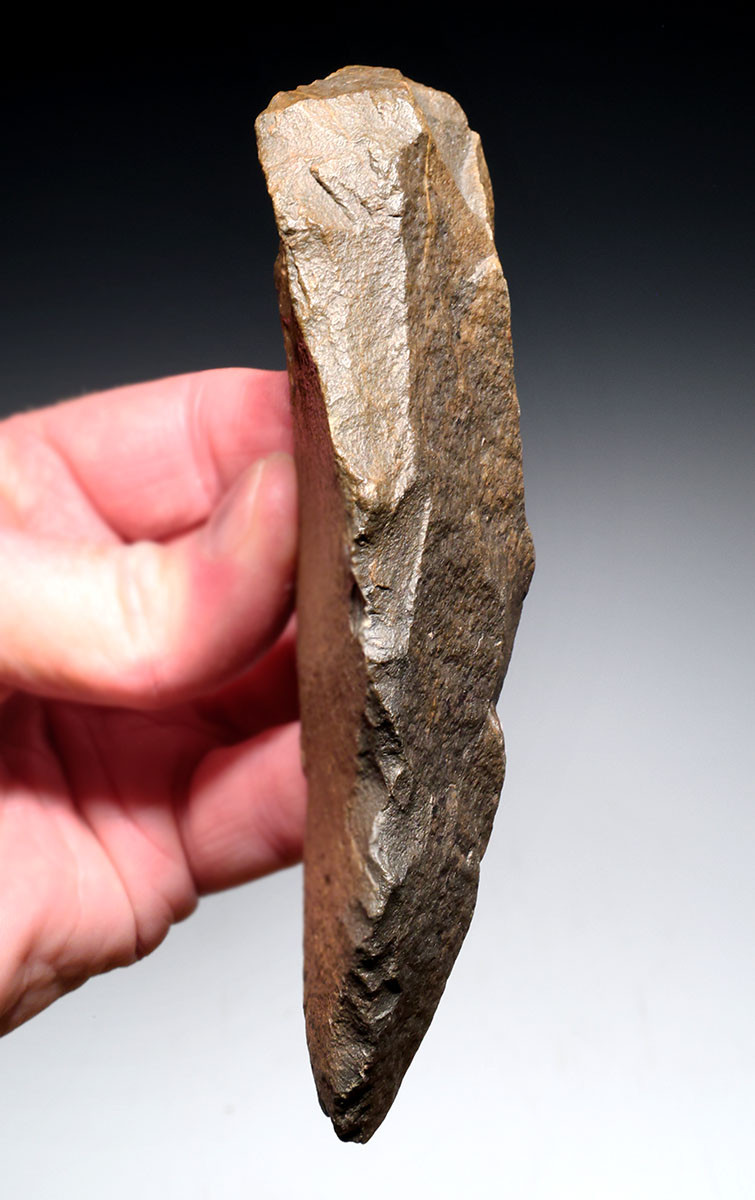
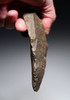
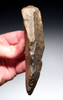
This is a superb example of an ELONGATED UNIFACIAL Acheulean hand axe made of quartzite. Unifacial hand axes are flaked only on one side rather than both sides as in more common bifacial examples. A hand axe of this design would have yielded very sharp cutting edges making it ideally suited to dismember large hunted game, and separate meat and fat from large bones. During the time of this axe in the Lower Paleolithic Period, there were large elephant, hippopotamus, and giraffe species in Africa, that primitive humans would have hunted. An axe like this was necessary to butcher such large kills.
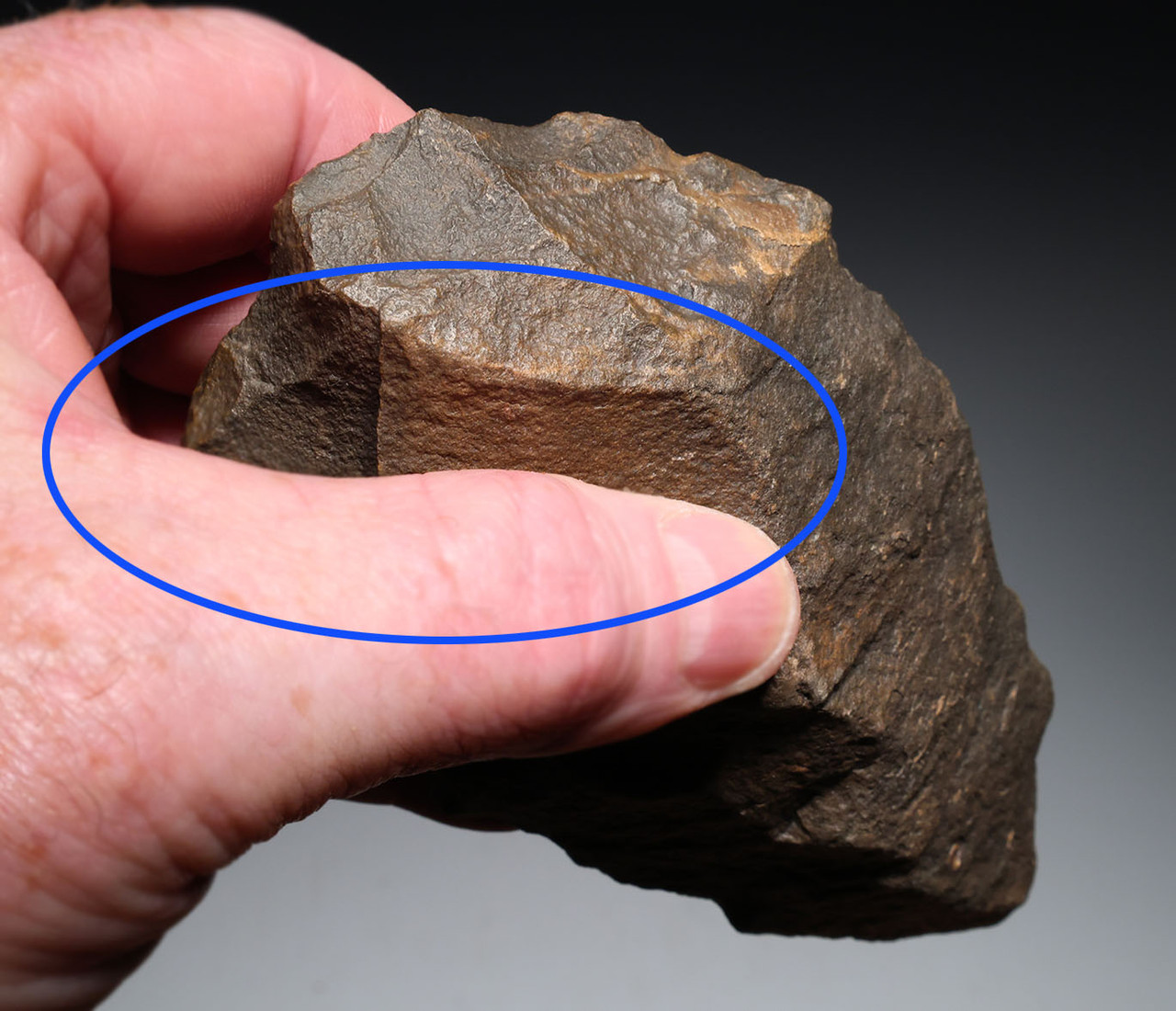
An excellent made flat facet has been flaked off the proximal end for a comfortable grip when held against the palm. No modern flaking is evident with the entire surface showing a very worn, "Desert Varnish" patina from hundreds of thousands of years of open exposure. The bulbous side shows superb RADIAL flaking workmanship. This is a rare and fine grade reference specimen featuring all the premium features for this period and technology. "Desert varnish" and bi-color patina indicates extreme long-term exposure undisturbed, on one side - traits only found in authentic African Paleolithic artifacts.