 US DOLLAR
 EURO
EURO
 AUSTRALIAN DOLLAR
 CANADIAN DOLLAR
 POUND STERLING












Product Description
SEE MORE ANCIENT NEAR EASTERN LURISTAN AXES
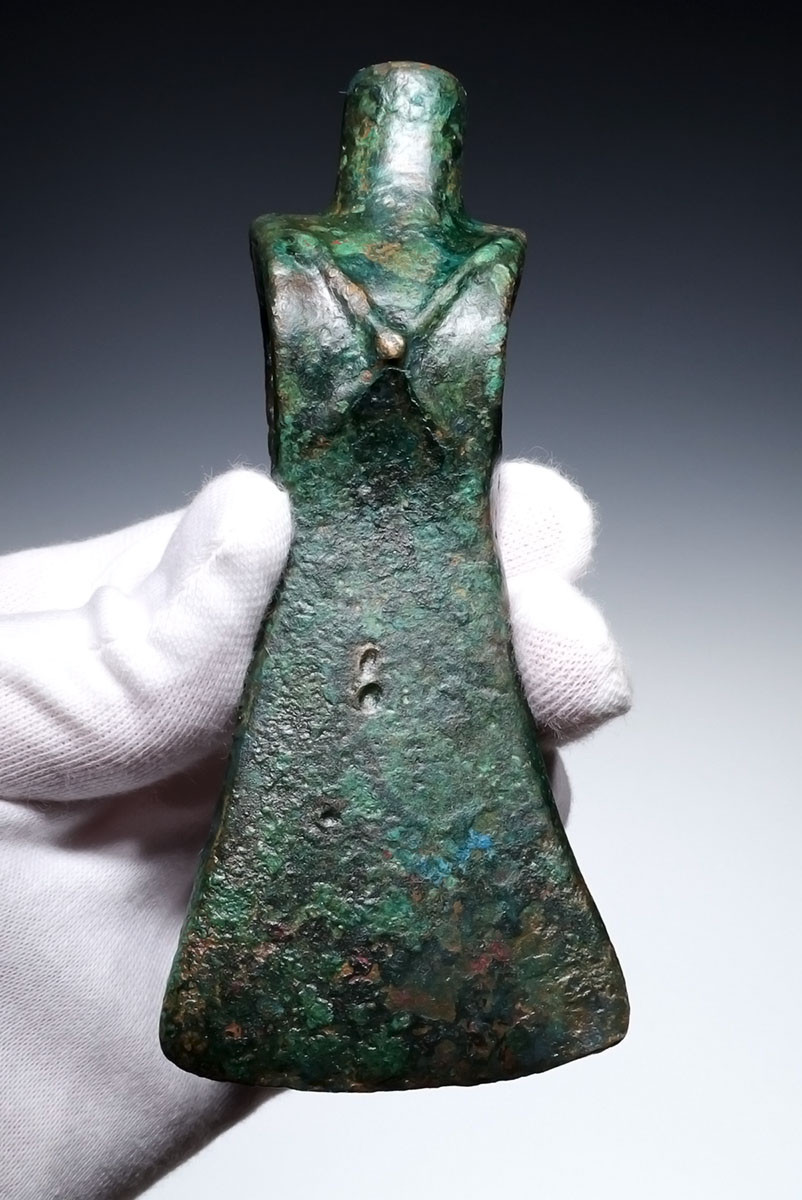
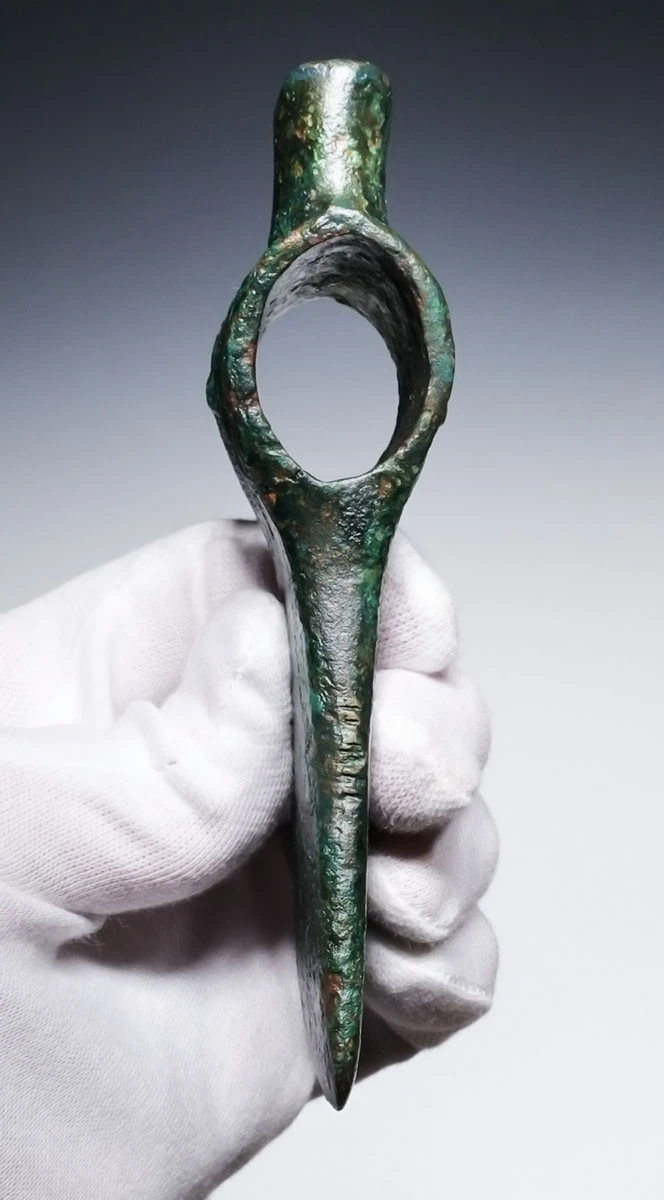
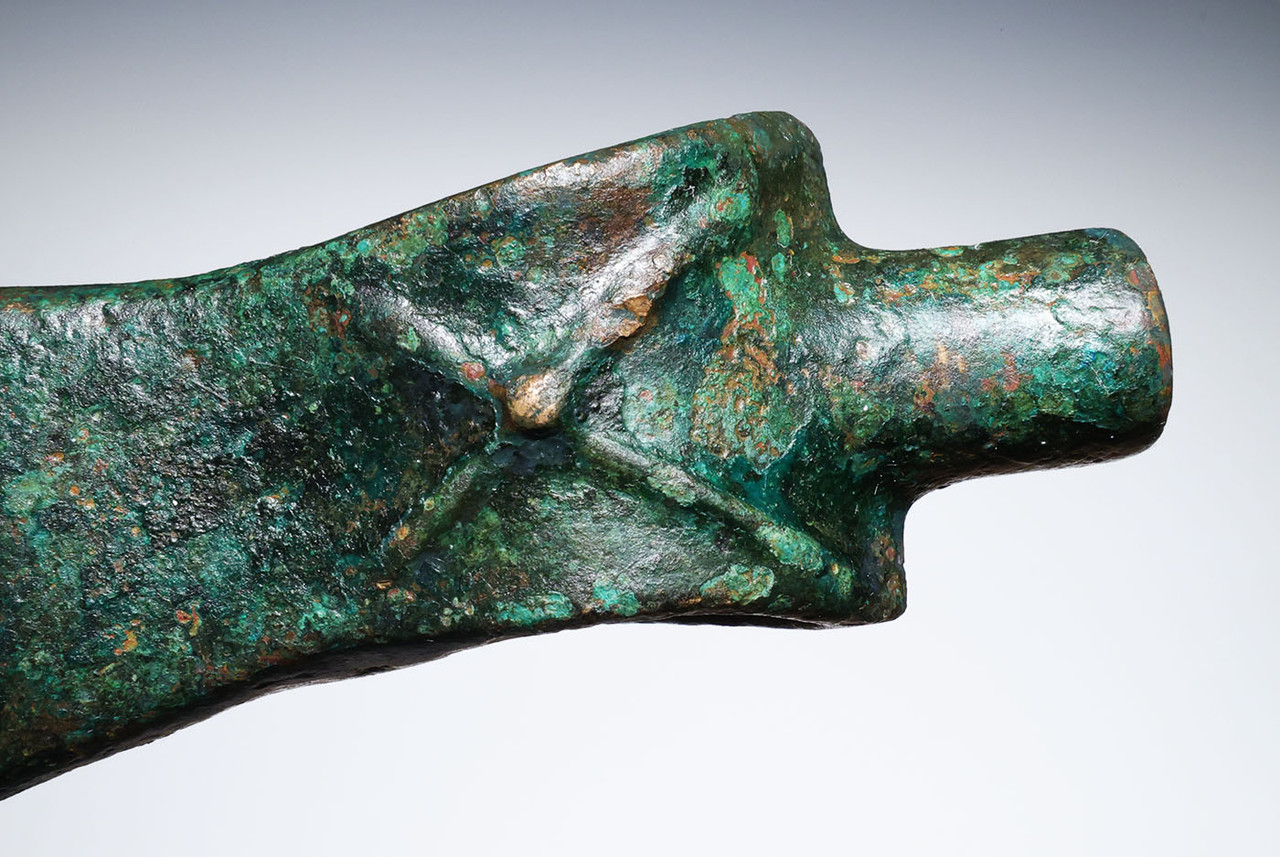
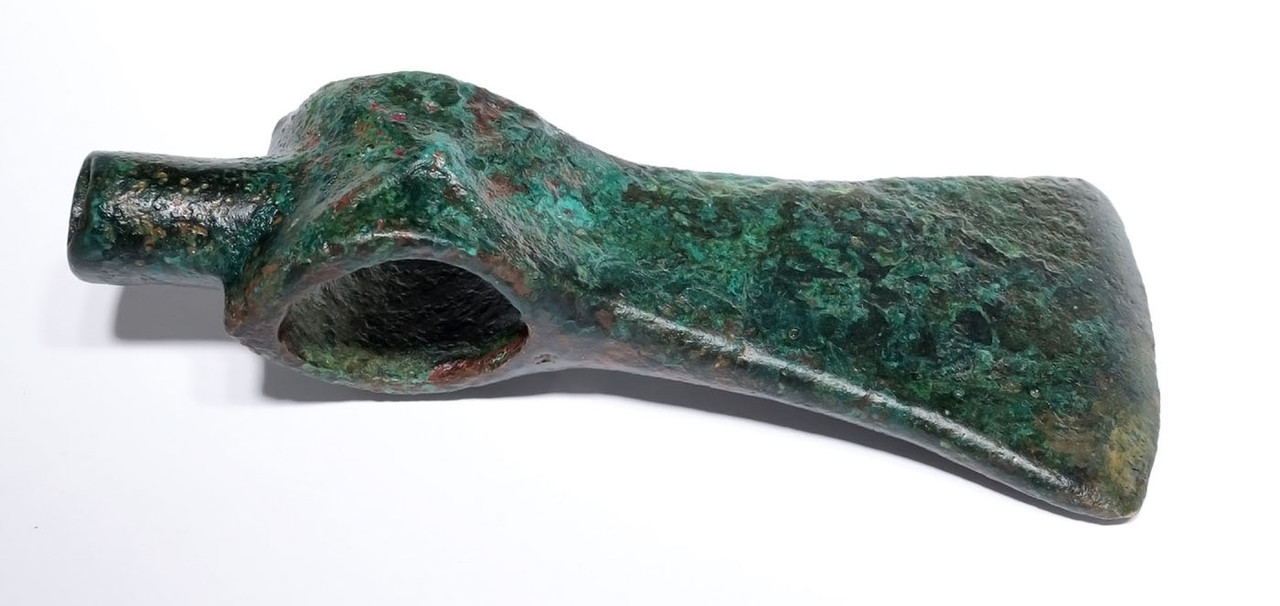
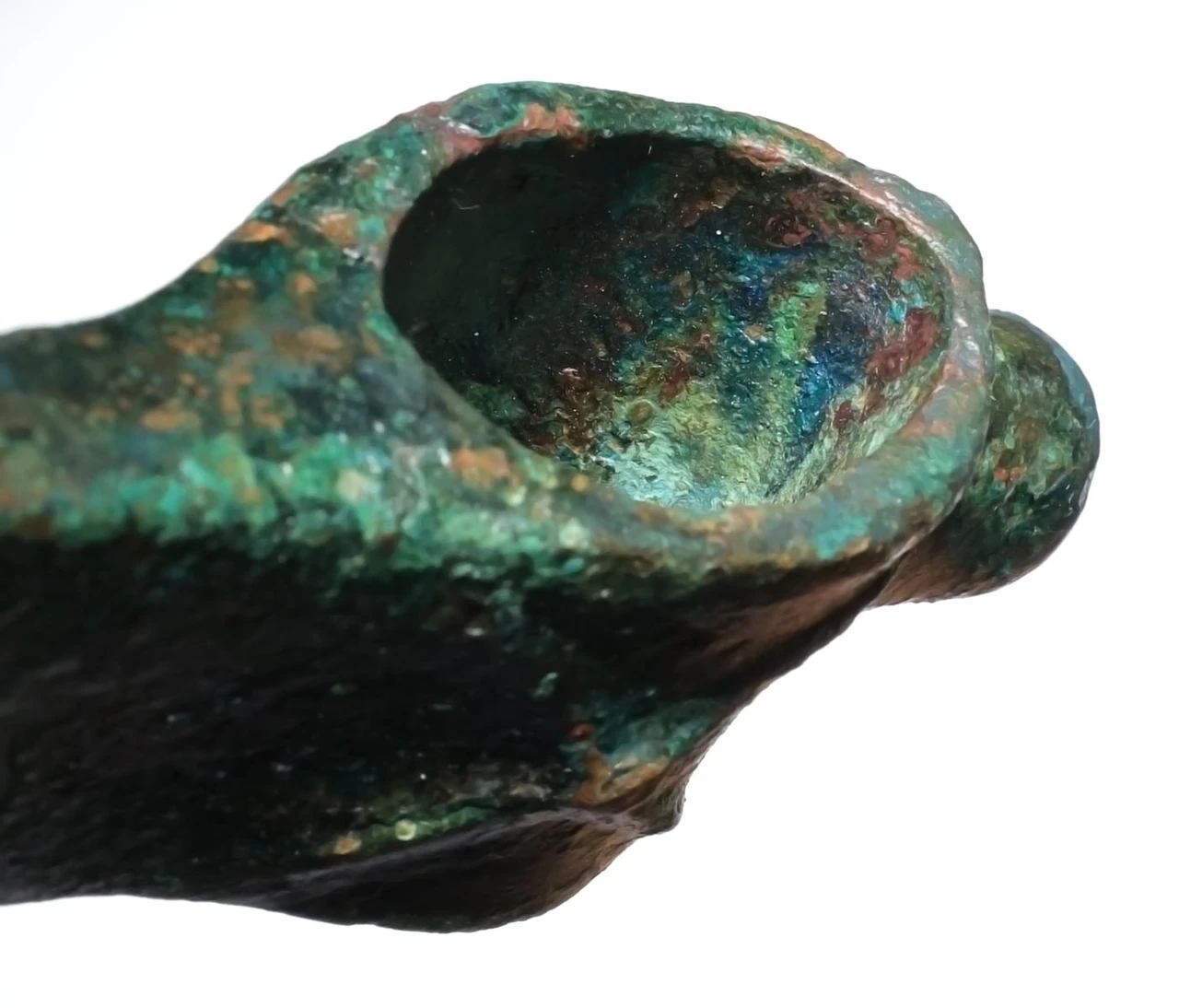
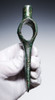
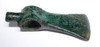
This museum-class bronze fighting hammer axe comes from the Ancient Near Eastern Bronze Age of the Luristan Culture. It features a crossed raised decoration on either side of the shaft body in a manner that imitates the way earlier axes were affixed to a wood shaft, by cord wrapping the blade to the handle. Decorations like this indicate luxury level weapons that were usually reserved to noble class or high ranking military soldiers. With its reduced size, this tomahawk-style war hammer axe would have been a deadly striking weapon, able to be quickly swung and wielded for rapid blows to a lightly armored foe. The prominent peg end on the butt would have been very effective in punching through helmets and light body armor to inflict deadly wounds. Axes like these would have been employed by light infantry and cavalry soldiers with the axe on a longer shaft handle than foot soldiers. While many ancient weapons were intended for ceremonial or votive purposes not made for or used in actual warfare, this is a functional example.
This impressive specimen displays a beautiful azurite and malachite ancient mineral bronze patina. This amazing ancient war axe shows superb bronze preservation with no disease or corrosion.
This artifact has been professionally cleaned and conserved in our lab, being treated with a special sealer developed and formulated by us specifically for ancient metal preservation. The patina shows beautiful traits only found in authentic ancient weapons. It is a patina like this that the finest ancient bronzes are prized for and it is a patina like this that brings a premium in price and value of the specimen. There is no active bronze disease. Bronze disease can develop on ancient bronze that is not properly cleaned and conserved. It produces a corrosive powder that will literally eat away an artifact over time and destroy it.
HISTORY
With origins dating back to prehistory, the empire of ancient Iran was one of the world's first superpower civilizations by the time it had taken form in the second millennium B.C.. The various cultures that can be included in the former ancient Iranian Empire stretched across an enormous geographical region extending beyond what is called the Iranian Plateau. To gain insight as to just how large this area was, the Iranian Plateau alone, includes Iran, Afghanistan and Pakistan and comprises approximately nearly 4 million square kilometers (almost 1.5 million square miles). The area of ancient Iran included not only the massive Iranian plateau made up of the tribes of the Medes, Persians, Bactrians and Parthians, but also included groups as far west as the Scythians (an eastern Scythian tribe existed in parallel in Central Asia), Sarmartians, Cimmerians and Alans populating the steppes north of the Black Sea. To the eastern boundary of the empire, the Saka tribes dominated, spreading as far as Xinjiang, China. From a very early period, the ancient Iranian peoples have been historically documented to exist in two separate continuums - a western civilization (Persia) and an eastern civilization (Scythia).
The beginnings of ancient Iran trace back to an influx into the Iranian cultural region of bands of horse-mounted steppe nomads from Central Asia, speaking Indo-European languages. Some settled in eastern Iran but other groups migrated deeper to the west settling in the Zagros Mountains. These first people descended from the proto-Iranians, originating from the Central Asian Bronze age culture of what is called the Bactria-Margiana Complex (aka Oxus Civilization), dated 2200-1700 B.C..
This historical achievements and the breadth of diverse cultures included of this once great empire are too vast to adequately credit in this brief synopsis. The Islamic conquest of Persia in the middle of the 7th century A.D. and the collapse of the Sassanid Empire marked the end of once geographically expansive and culturally diverse ancient superpower.
The term LURISTAN references artifacts made by a society of semi-nomadic people that once lived in the mountainous region of Northwest Iran. Little is known of this ancient culture but the most impressive traces are that of the bronze artifacts they left behind that can be found in parts of present-day Turkey, Iran and Afghanistan. These include highly decorative equipment for their horses, ceremonial containers and numerous weapons ranging from simple utilitarian pieces on up to elaborate masterpieces of warfare.
It is theorized that the Luristan bronzes were crafted by the earliest existence of the Median empire but this has never been proven as written records of the Medes have not survived. The Medes were Indo-Iranian people originally from central Asia who settled in Northwest Iran in the 9th century BC and later defeated the Assyrian empire in 614 BC. Their success is short-lived and their empire which once stretched from central Iran to the Persian Gulf and Anatolia was overrun in 550 BC by the Persians.


