 US DOLLAR
 EURO
 AUSTRALIAN DOLLAR
 CANADIAN DOLLAR
 POUND STERLING








Product Description
SEE MORE CHALCOLITHIC ARTIFACTS
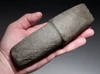
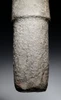
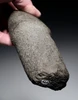
This rare ground and pecked stone adze axe is a substantial example. It comes from the Cucuteni-Trypillia Neolithic-Chalcolithic culture of Southeastern Europe. The Cucuteni–Trypillia culture (also known as Tripolye) was a major Neolithic–Chalcolithic (Copper Age) archaeological civilization that flourished in Eastern Europe from roughly 5050 to 2950 BC, spanning modern-day Romania, Moldova, and Ukraine. During its middle and late phases, the culture built some of the largest settlements in prehistoric Europe (such as Talianki, Majdanets, and Nebelivka), covering up to 340+ hectares with thousands of multi-room timber-and-daub houses arranged in concentric circles.
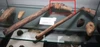
To construct such large timber buildings would have required major woodworking tools and the primary tool for that task would have been the adze axe. Made of hardstone, this half-ground and half-pecked stone adze axe head would have been embedded in a large wooden shaft handle as shown in second image of this listing. This remarkable and rare specimen is complete with ancient use wear on the chopping edge. It is of substantial size and weight, and would have been ideal to shape and work large trees into building timbers. Coming from a 60+ year private Polish collection, it has been the only object of this rare culture we have ever had or will offer.
We cannot emphasize enough to exercise considerable caution when encountering any stone axes on the market as forgeries abound! Reproductions have been made for many decades, and sold to less knowledgeable buyers. There are more forgeries floating around the market than there are genuine specimens. While you can rub dirt over a modern ground copy, you cannot drive minerals deep into microscopic pores in the stone as authentic examples only possess. Furthermore, the sediment on original specimens cannot be cleaned off but a deep cleaning of a forgery will reveal modern grinding and crushing areas on the stone. Always deal with reputable and highly knowledgeable sellers that are able to differentiate a modern fake from an authentic specimen AND, get every purchase in writing with an unconditional guarantee of authenticity and correct identification, as we always provide.
HISTORY
The majority of Cucuteni–Trypillia settlements were of small size, high density (spaced 3 to 4 kilometres apart), concentrated mainly in the Siret, Prut and Dniester river valleys. During its middle phase (c. 4100 to 3500 BC), populations belonging to the Cucuteni–Trypillia culture built some of the largest settlements in Eurasia, some of which contained as many as three thousand structures and were possibly inhabited by 20,000 to 46,000 people. The 'mega-sites' of the culture, which have been claimed to be early forms of cities, were the largest settlements in Eurasia, and possibly the world, dating to the 5th millennium BC. The population of the culture at its peak may have reached or exceeded one million people. The culture was wealthy and influential in Eneolithic Europe and the late Trypillia culture has been described by scholar Asko Parpola as thriving and populous during the Copper Age. It has been proposed that it was initially egalitarian and that the rise of inequality contributed to its downfall.

