US DOLLAR
 EURO
 AUSTRALIAN DOLLAR
 CANADIAN DOLLAR
 POUND STERLING







Product Description
SEE MORE UPPER PALEOLITHIC TOOLS
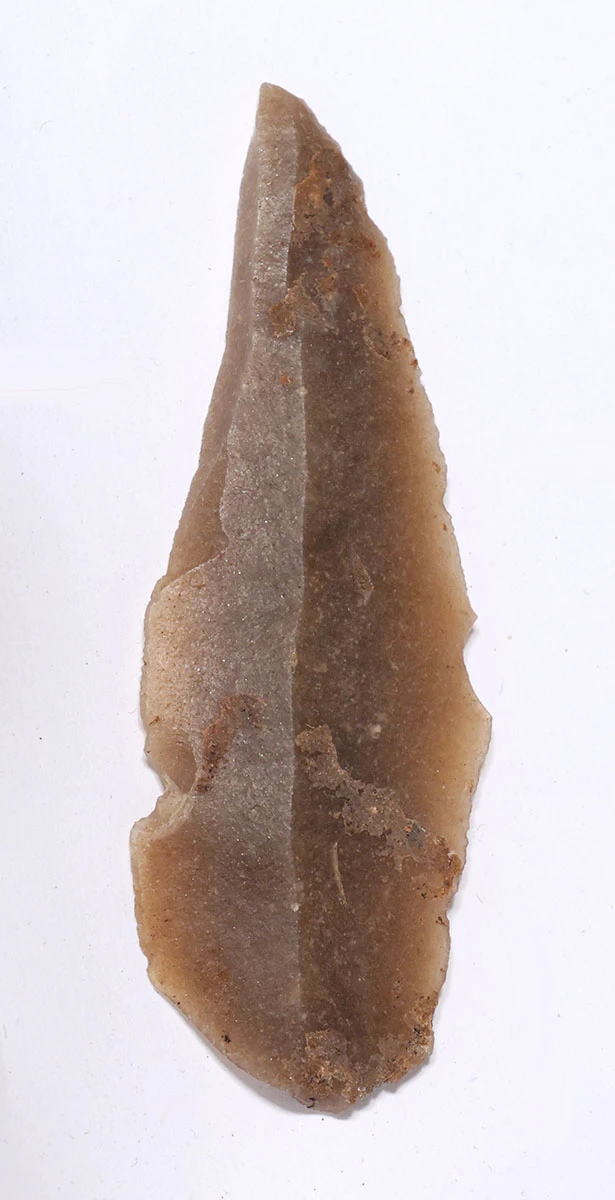
This Upper Paleolithic Magdalenian flint flake tool is called a BURIN or ENGRAVER, and was made on a blade. It is a rare offering as it comes from the Upper Paleolithic famous type site Abri de la Madeleine for which the Magdalenian tool tradition got its name. The World Heritage archaeological site Abri de la Madeleine (Magdalene Shelter), is a rock shelter under an overhanging cliff situated near Tursac, in the Dordogne département of the Aquitaine région of southwestern France. It represents the type site of the Magdalenian culture of the Upper Paleolithic. The first systematic excavators of the site began in 1863, with the findings published in 1875 under the name of the Age of the Reindeer ("L'âge du renne"). It was declared a UNESCO World Heritage site in 1979. Along with numerous flake tools, several extraordinary art carvings were found in wood and bone including what is believed to be one of the earliest forms of sexual depiction in art. Some of the cave walls also had carved stone bas reliefs of animal and erotic art subjects. Objects that were found at the la Madeleine site are distributed among a number of museums, including the Muséum de Toulouse, the Musee des Antiquites Nationales, St. Germain-en-Laye and the British Museum.
Made of a warm light brown flint, this flake tool shows a classic burin engraving tip made on the point of a delicate blade. Burins were a type of flake tool used for engraving art and weapons. Since it was found in a famous cave known for its carved prehistoric art objects, it is no doubt it was employed in the creation of prehistoric art objects. From an old French private collection dating back to the late 19th century. The original collection site label is still intact on one side. It is complete as originally made with a small nick on one edge that is not modern as evidenced by the same mineral deposits in the nick as on the rest of the micro-crevices of the flint. It is with no repair, modern alterations or restoration, and intact ancient deposits still exist on all surfaces.
Basically, all Paleolithic archaeological sites in France are closed and protected from any private excavations, and have been for many, many decades, making this specimen rare and desirable with strong future appreciation in price.
This Magdalenian Upper Paleolithic Cro-Magnon flint tool is an excellent specimen with traits only found on authentic specimens - no modern flaking or crushing, and prehistoric mineralized sediment deposits in micro-crevices and flake scars.
No collection of Paleolithic tools would be complete without the inclusion of examples dating to the Upper Paleolithic Period. This was an era of many of the most famous human development milestones. In this period, the technology developing around the planet took place at slightly different times but globally, humanity was taking a huge turn for the better, and in overall unison. A new level of tool production and craftsmanship emerged unlike ever seen before. Modern humans first arrive on the scene and with them, they bring many new inventions - most notable is the concept of artistic expression as seen in the famous cave paintings that were only produced in this era.