US DOLLAR
 EURO
EURO
 AUSTRALIAN DOLLAR
 CANADIAN DOLLAR
 POUND STERLING




Product Description
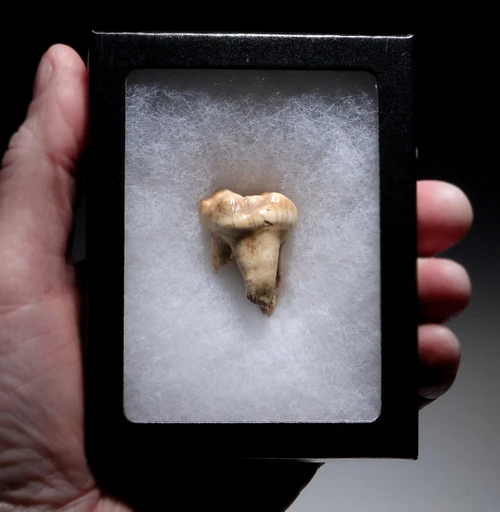
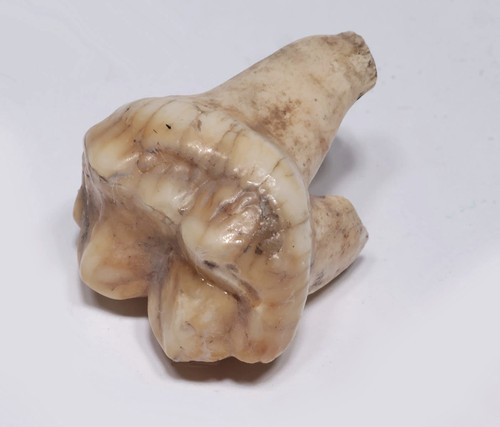
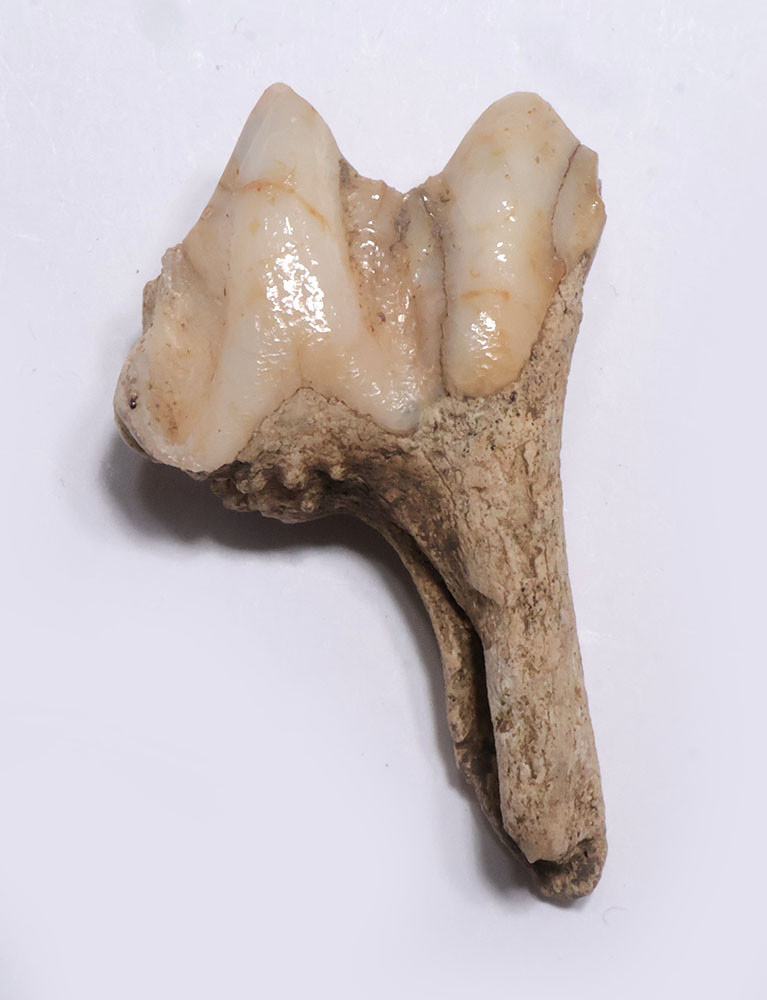
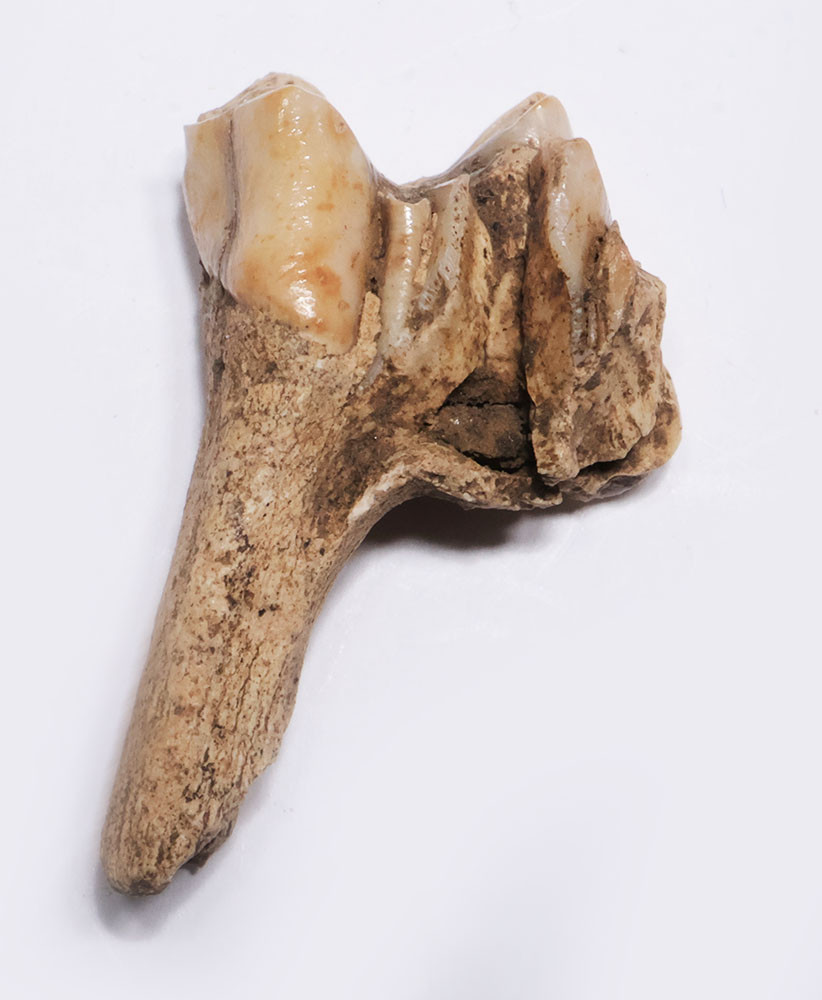
This ULTRA RARE Ice Age fossil Ibex molar tooth with partial root was found in a cave from the Ardennes Forest in Belgium. The specimen was found in an Ice Age deposit of preyed megafauna and their eaten fossil remains from Cave Hyenas that once killed their prey and brought their carcasses back to their cave den to feed on them. The majority of the rare collection we acquired included boar fossils as the predominant prey. The collection included ONE baby Woolly Rhinoceros molar tooth cap, and ONE Ibex tooth - this specimen. This Ibex fossil molar is missing a portion of the crown and one root lobe but is such an amazing specimen since it was the only Cave Hyena-eaten Ibex fossil from the collection!
This collection was the only private collection of Ardennes Forest cave fossils from Belgium we have ever known of, or will ever have since fossil collecting in this area is forbidden and has been for a number of years.
Many years ago, we acquired a collection of cave fossils found in the Ardennes Forest of Belgium. The collection was formed in the 1960's and comprised fossils of predators such as Cave Bear and Cave Hyena, but also fossils of their prey such as Wild Boar, Woolly Rhinoceros and Ibex. Despite a large part of our business and years of experience being based in Europe, this collection was the single instance ever, we have encountered cave fossils from Belgium! The cave deposit was wet, making the fossil preservation more fragile than usual, requiring the original collector to apply consolidant glue to the fossils in the field, sometimes in a crude manner. The fossils are much whiter in color than those found in the Carpathian Mountains of Romania, adding to their uniqueness. An interesting observation of the fossil layers indicates the boar were killed mostly by the Cave Hyenas and their carcasses brought back to the hyena den in the cave. According to the collector who originally dug the fossils, the layer of boar fossils were BELOW the layer of the hyena fossils, confirming this predator-prey relationship. For advanced Ice Age collectors, these fossils are a once-in-a-lifetime opportunity.
HISTORY
The Capra ibex is a wild mountain goat that thrived during the Ice Age in Europe. It is one of the most famous animals depicted on numerous cave drawings and paintings. No doubt, with its exotic and impressive horn display and unmatched skill in climbing rocky terrain, it was a revered and respected beast by prehistoric humans. This animal possessed very large curved horns with pronounced ridges running across the full length of these horns. They were stout beasts with short legs and hooved feet that were especially designed for irregular terrain. These creatures are alive today in limited regions and are called the Alpine Ibex. They thrive in the most extreme and hazardous environments, consisting of arctic-like temperatures and seemingly impossible to navigate rocky mountain faces. Even today, very little is known about these animals because their habitat is practically unreachable by scientists for study. Aside from their magnificent horns, their hooves are uniquely designed to maintain a sure footing on rock.
Capra ibex live in herds from 7 to 30 individuals with some males living alone. They are diurnal animals meaning they are active during the day, with their most active periods being early morning and late afternoon. Their height at the shoulders range from 2.3 to 3.1 feet. Body weights range from 88 to 264 pounds. Horn lengths have been measured up to 40 inches. Life spans run from 10 to 14 years.
The Capra ibex has an uncanny ability to negotiate the most dangerous rock cliffs and ledges with seemingly careless abandon.