US DOLLAR
 EURO
EURO
 AUSTRALIAN DOLLAR
 CANADIAN DOLLAR
 POUND STERLING













Product Description
SEE MORE EUROPEAN NEOLITHIC TOOLS
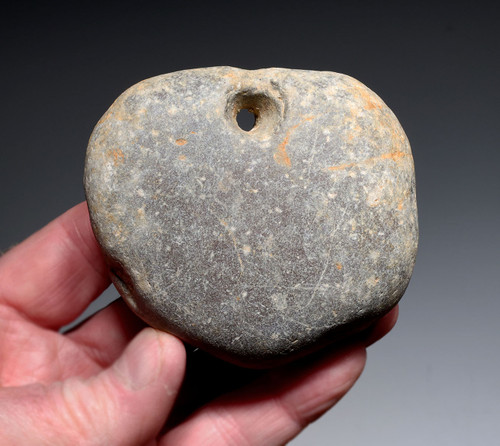
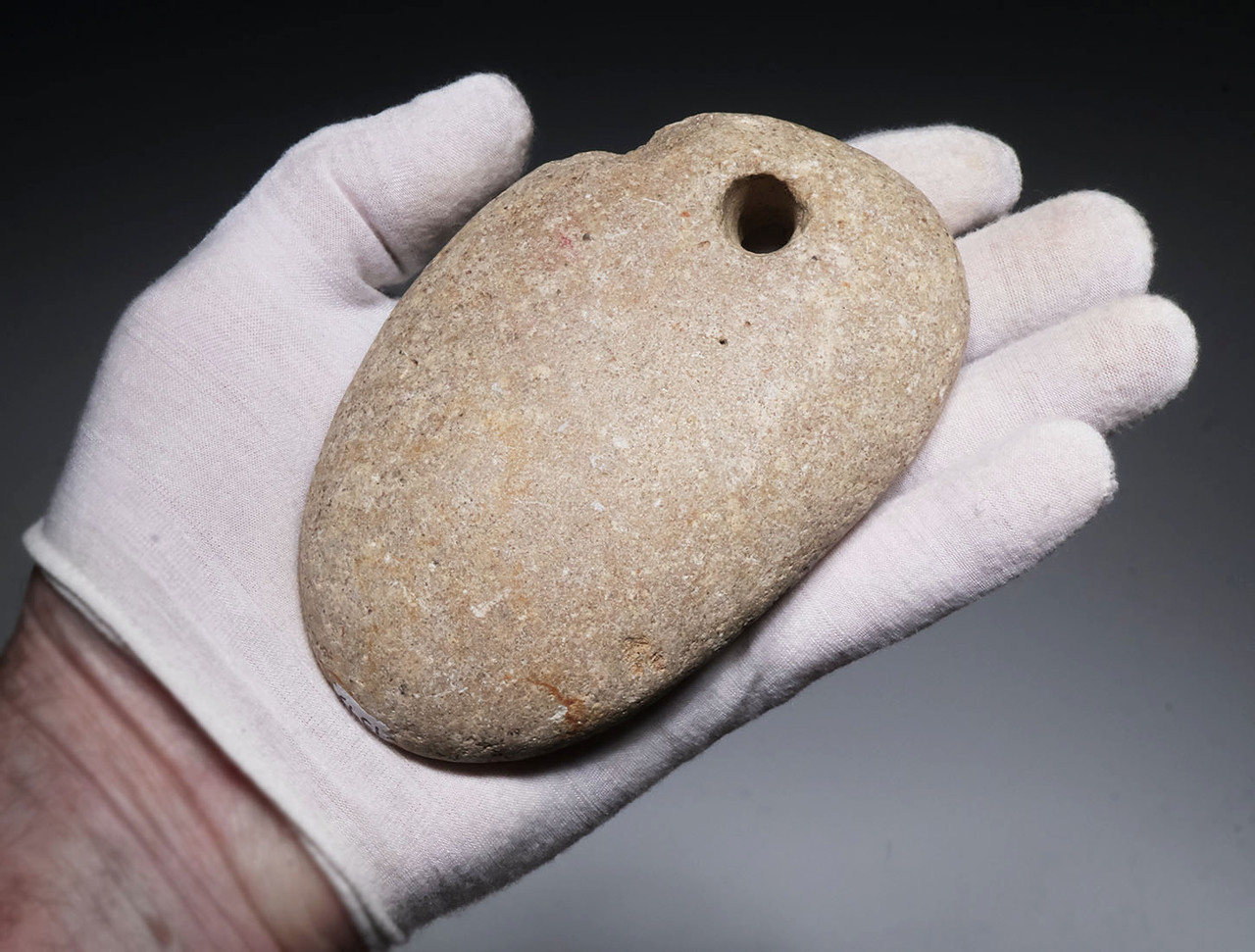
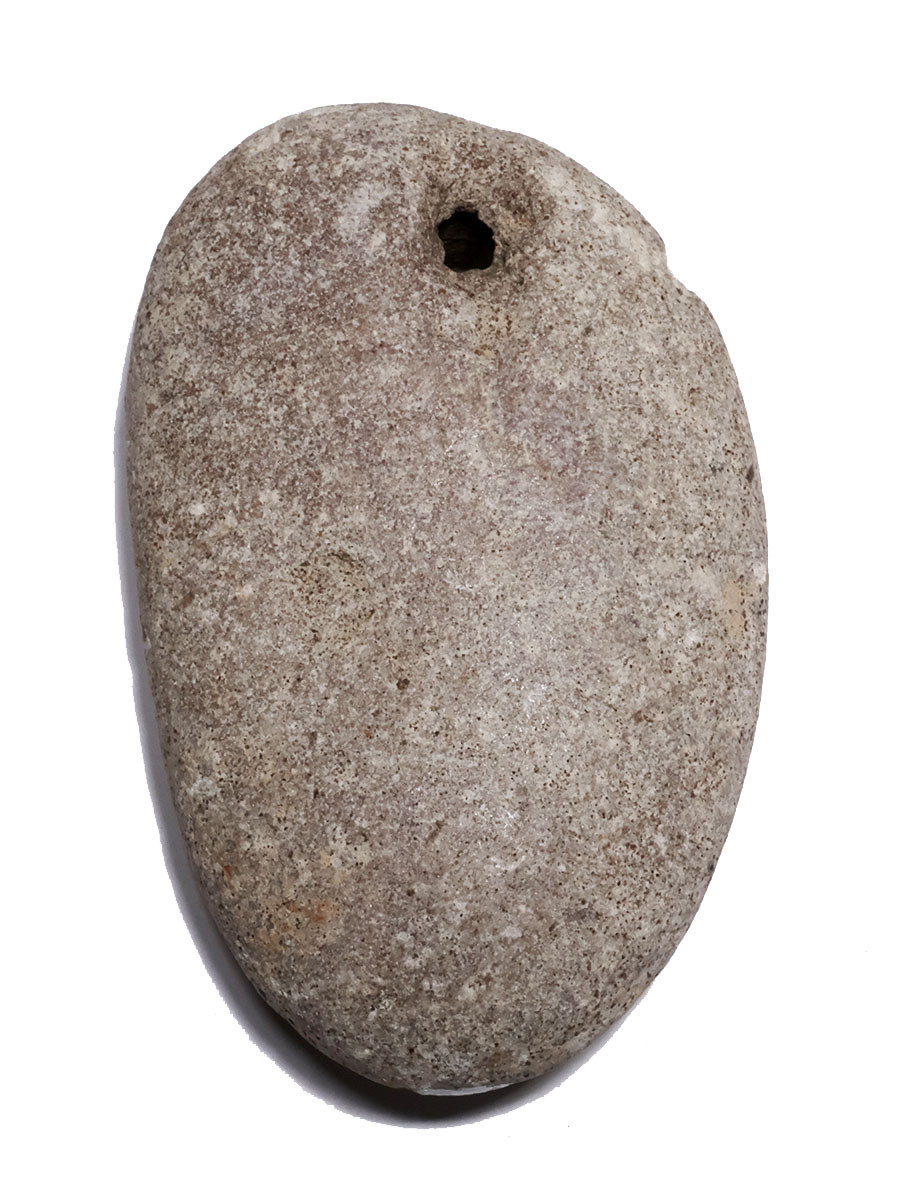
Found during a river dredging project, this large quartzite cobblestone fishing net weight dates back to the Neolithic Period of Europe. It was found in the Garonne River in Toulouse, France, and has been drilled on one end to tie it to a fishing net. Earlier net weights were simply inlet flaked cobble stones, the later designs such as this specimen, were drilled and pierced through the stone. This is the largest and the last of a small group of these unique several thousand year old fishing net weights we ever acquired from Europe. Original ancient sediment and minerals can be seen deep in the micro-crevices, a testament to its authenticity and extreme age. No modern damage and with intact collection label.
HISTORY
Fishing nets have been used widely in the past, including by stone age societies. The oldest known fishing net is the net of Antrea, found with other fishing equipment in the Karelian town of Antrea, Finland, in 1913. The net was made from willow, and dates back to 8300 BC. Recently, fishing net sinkers from 27,000 BC were discovered in Korea, making them the oldest fishing implements discovered, to date, in the world. The remnants of another fishing net dates back to the late Mesolithic, and were found together with sinkers at the bottom of a former sea. Some of the oldest rock carvings at Alta (4200–500 BC) have mysterious images, including intricate patterns of horizontal and vertical lines sometimes explained as fishing nets.
Fishing nets are well documented in antiquity. They appear in Egyptian tomb paintings from 3000 BC. In ancient Roman literature, Ovid makes many references to fishing nets, including the use of cork floats and lead weights. In Norse mythology the sea giantess Rán uses a fishing net to trap lost sailors. References to fishing nets can also be found in the New Testament. Jesus Christ was reputedly a master in the use of fishing nets.
Fishing nets have not evolved greatly, and many contemporary fishing nets would be recognized for what they are in Neolithic times. However, the fishing lines from which the nets are constructed have hugely evolved. Fossilized fragments of "probably two-ply laid rope of about 7 mm diameter" have been found in one of the caves at Lascaux, dated about 15,000 BC. Egyptian rope dates back to 4000 to 3500 BC and was generally made of water reed fibers. Other rope in antiquity was made from the fibers of date palms, flax, grass, papyrus, leather, or animal hair. Rope made of hemp fibers was in use in China from about 2800 BC.