US DOLLAR
 EURO
EURO
 AUSTRALIAN DOLLAR
 CANADIAN DOLLAR
 POUND STERLING








Product Description
SEE MORE LOWER PALEOLITHIC ACHEULEAN STONE ARTIFACTS
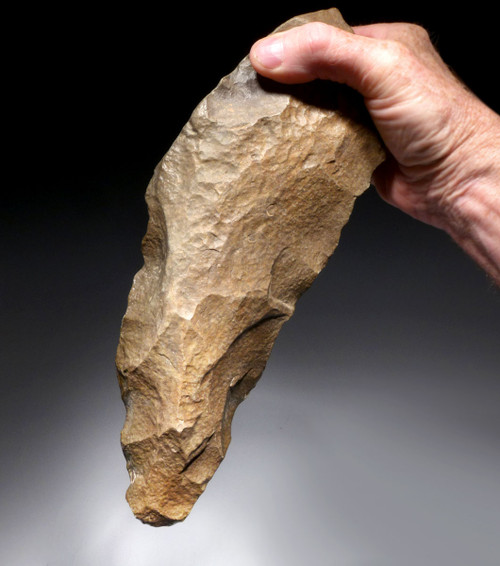
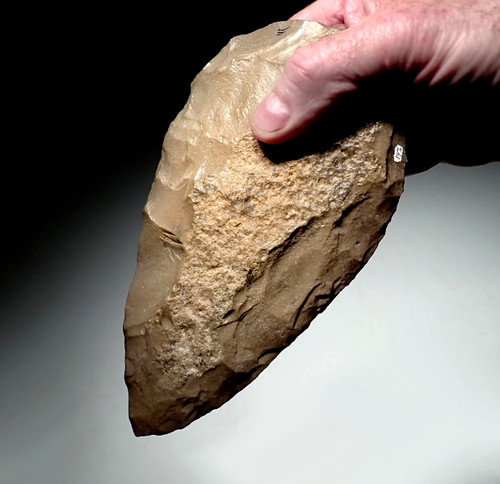
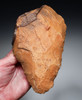
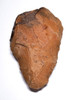
This genuine Acheulean bifacial hand axe was made and used by early humans of the primitive species Homo erectus (ergaster). It was surface-collected from an exposed Lower Paleolithic Acheulian site in the Sahara Desert of Northwest Africa. Acheulean Lower Paleolithic hand axes from Africa represent the first scientifically documented intelligent tool made by primitive humans. Prior to these Saharan Acheulean hand axes, only crude pebble and flake tools existed in the human fossil record.
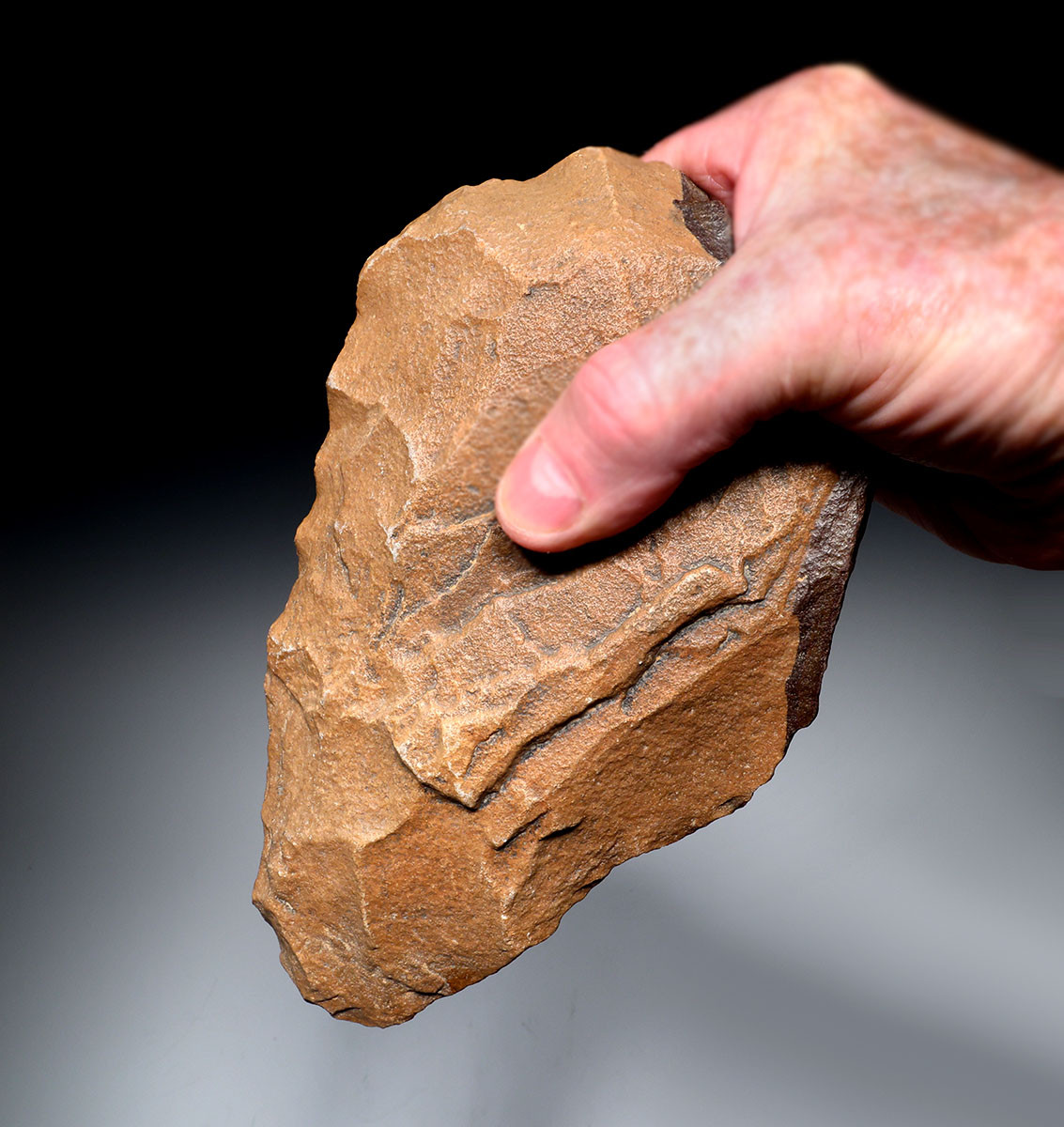
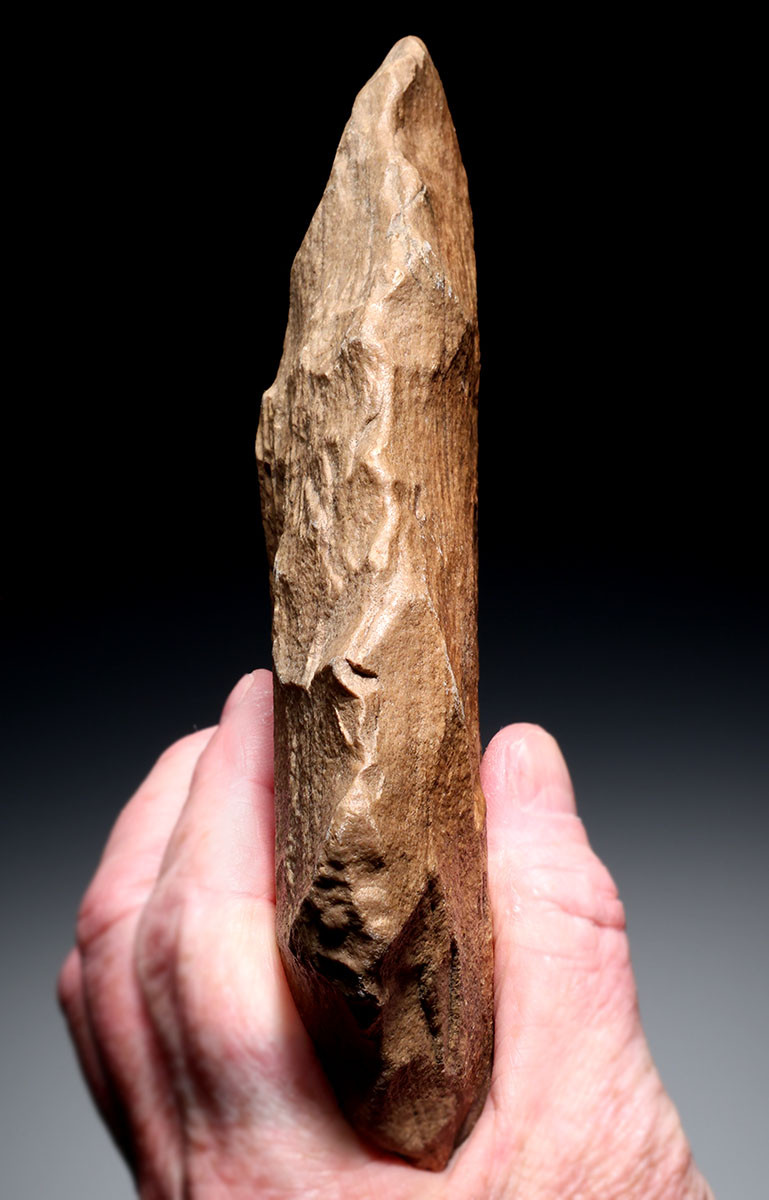
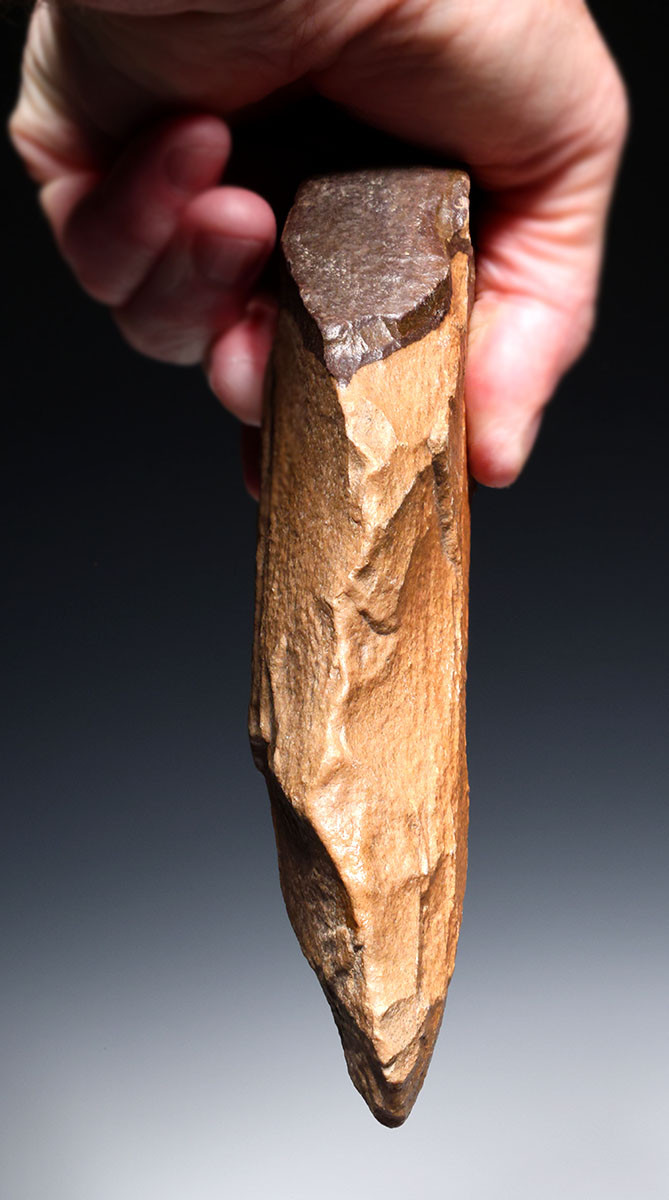
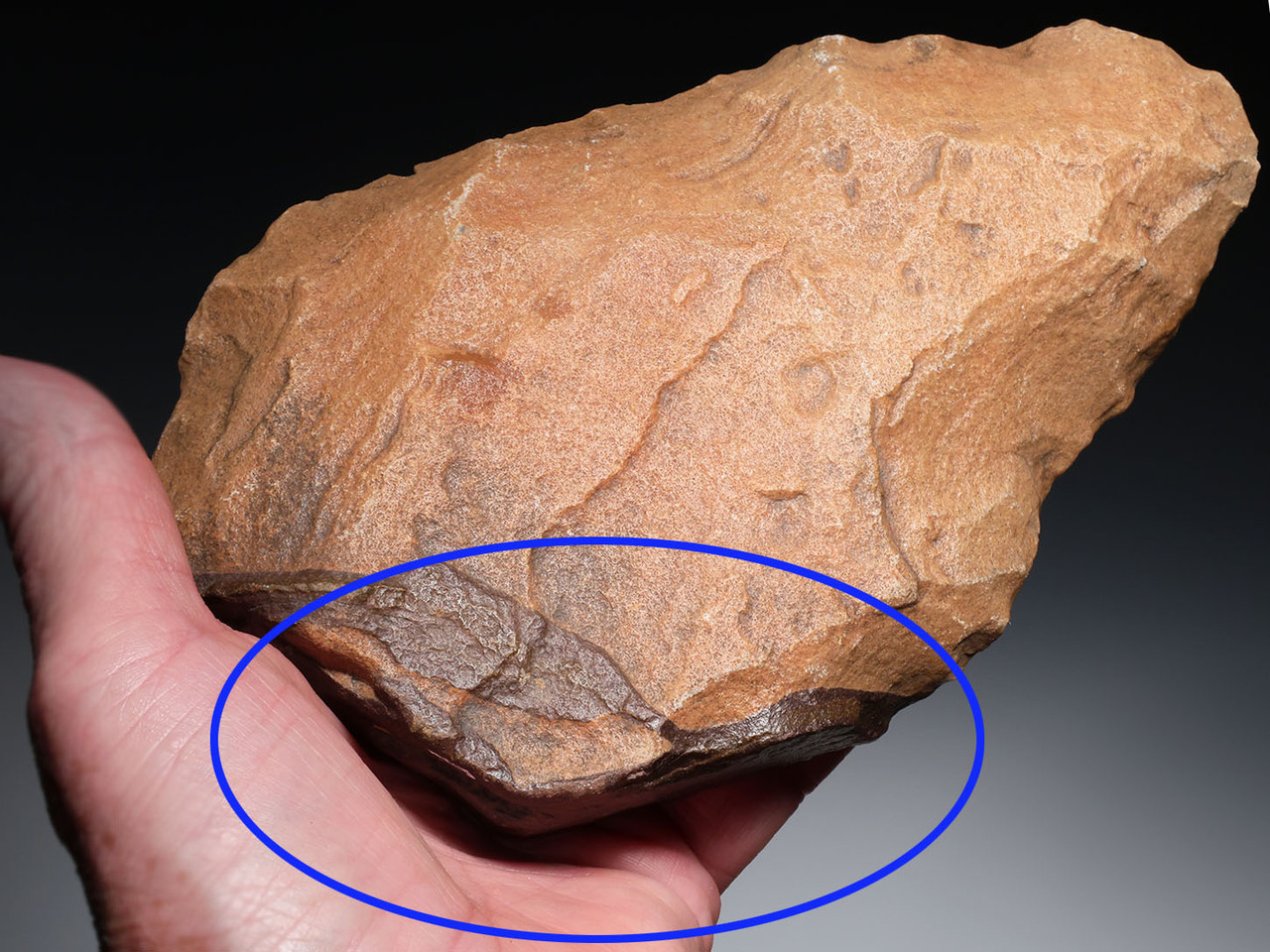
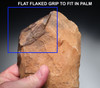
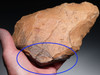
Made of a unique two colored quartzite, this CORDATE BIFACIAL HAND AXE has several prestige features that were incorporated into what was likely a prized tool rather than an everyday throwaway example. A dark root beer brown portion of the stone was purposely and artistically oriented to be where the hand grip was when this Homo erectus masterpiece creation was made over 1 million years ago. The rest of the stone is a warm reddish brown, highlighting the darker grip. A prominent facet was flaked on the proximal end to best fit the palm when this hand axe was held and used. The narrow cross-section shows incredible flaking and form with a zig-zag flaked edge, made from opposing strikes during its manufacture. The chopping tip is still intact as originally made, just like the rest of this stunning specimen.
This is one of the most beautiful Lower Paleolithic African hand axes we have listed in quite a long time. Exceptional specimens like this were the masterful handiwork of extremely highly-skilled early humans! They were the superstar artisans of prehistory tool-making! Furthermore, flaking a hand axe of this size and symmetry means that it could have easily been considered more of an exhibit of prestige and accomplishment. Such as object would not have been practical to take the time to make and then just leave discarded by a hunting kill site! This hand axe demonstrates ARTISTIC APPRECIATION and ARTISAN PRIDE, as well as the skill and ability of Early Man's ability, to the highest order.
A bI-color patina is the result of laying on one side face down for millennia, and absorbing the minerals of the Saharan red sands. Other side shows a different contrasting hue - a prized trait only found in authentic Lower Paleolithic specimens from the Northwestern Sahara. The chopping tip and edges are intact and well-made with evidence of original prehistoric primary and secondary flaking. Surface areas of the axe display a "desert varnish" - a natural glossy surface where the artifact lay undisturbed and exposed to blowing sands, for millennia. The wind-driven sand polished and deposited microscopic layers of silica on the surfaces of the artifact, giving it a sheen. Original sediment and mineral encrustations are still present in microscopic crevices and on some surfaces - a trait ONLY found in authentic Paleolithic artifacts like these. These features are a testament to the age and authenticity of ALL Saharan Paleolithic artifacts.
Not only is this large Lower Paleolithic African hand axe in supreme original condition, it shows incredible flaking and form made way beyond what was necessary for a utilitarian purpose. This leads many to theorize that these hand axes were the earliest form of art, flaked by master toolmakers to a degree that conveys prestige, status and achievement. Seldom will you find examples of this size, condition and form, ever available for sale.
Genuine Saharan Acheulean hand axes of this quality are rare and recent realized prices at major auction houses are proving what we have been saying for years that authentic high grade tools of primitive man remain one of the most promising investments in the rare collectible market. Specimens like this are only a few of many, many thousands of ordinary examples, making them extremely scarce. Collectors consider prized features to include either size, workmanship or color but when ALL exist, then it is truly an important piece to include in a collection as this one is.
HISTORY
During this time in prehistory when this Lower Paleolithic tool was made, the Sahara Desert (where this stone tool was found) was a savanna rich in wildlife. Prior to the prehistoric global warming that turned the vast region to desert, early humans lived alongside prehistoric giraffe, bison and elephant, which were vital to their survival. Hunting and butchering these animals would have required specialized tools such as those found in the Acheulean Tool Tradition of the Lower Paleolithic of Africa.