 US DOLLAR
 EURO
EURO
 AUSTRALIAN DOLLAR
 CANADIAN DOLLAR
 POUND STERLING







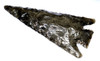


Product Description
SEE MORE PRE-COLUMBIAN WEAPONS AND TOOLS
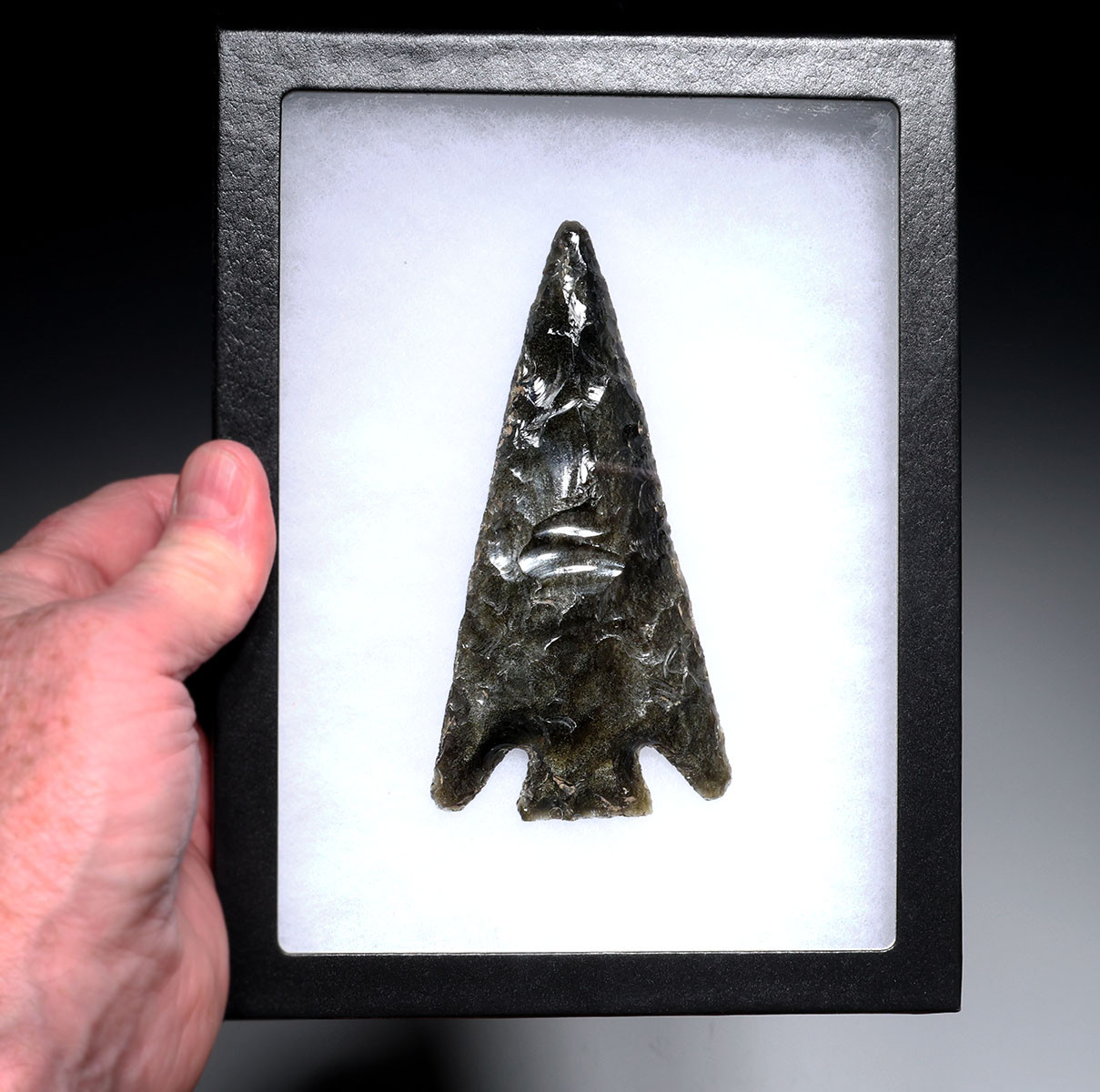
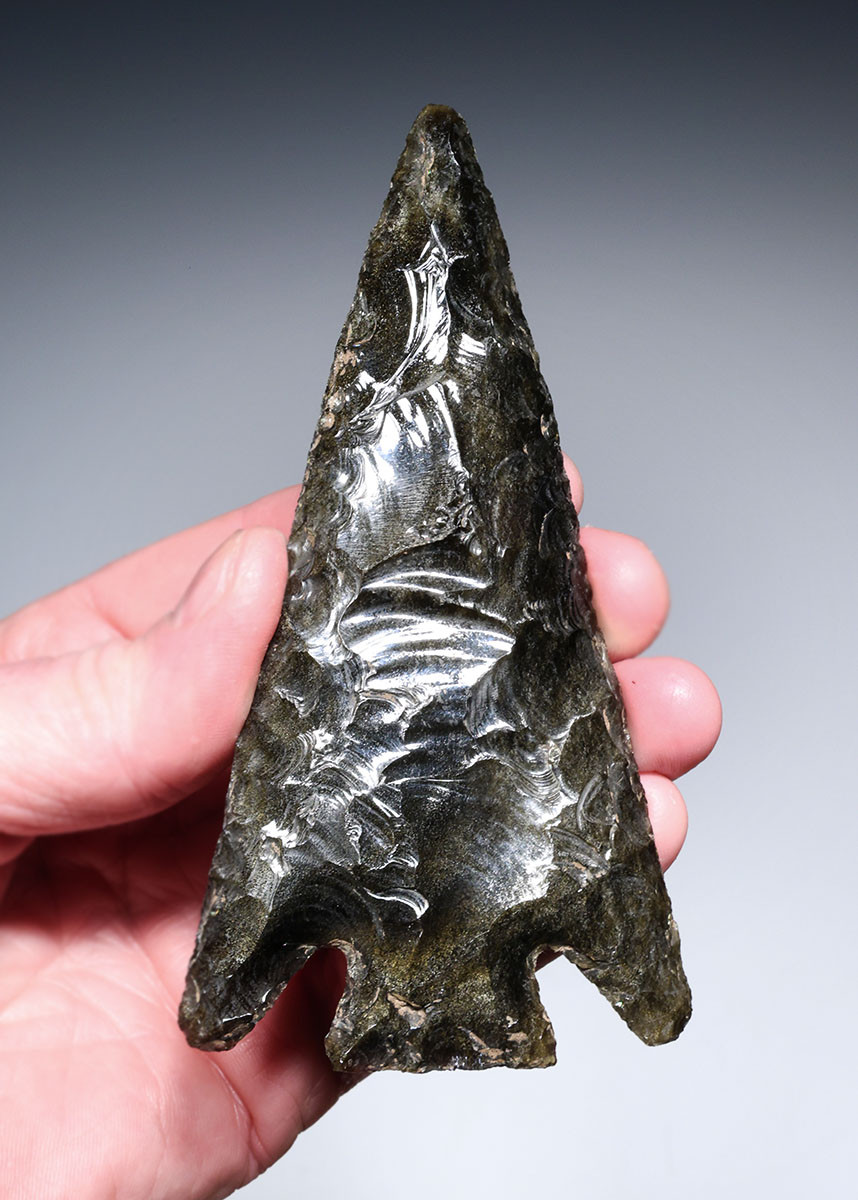
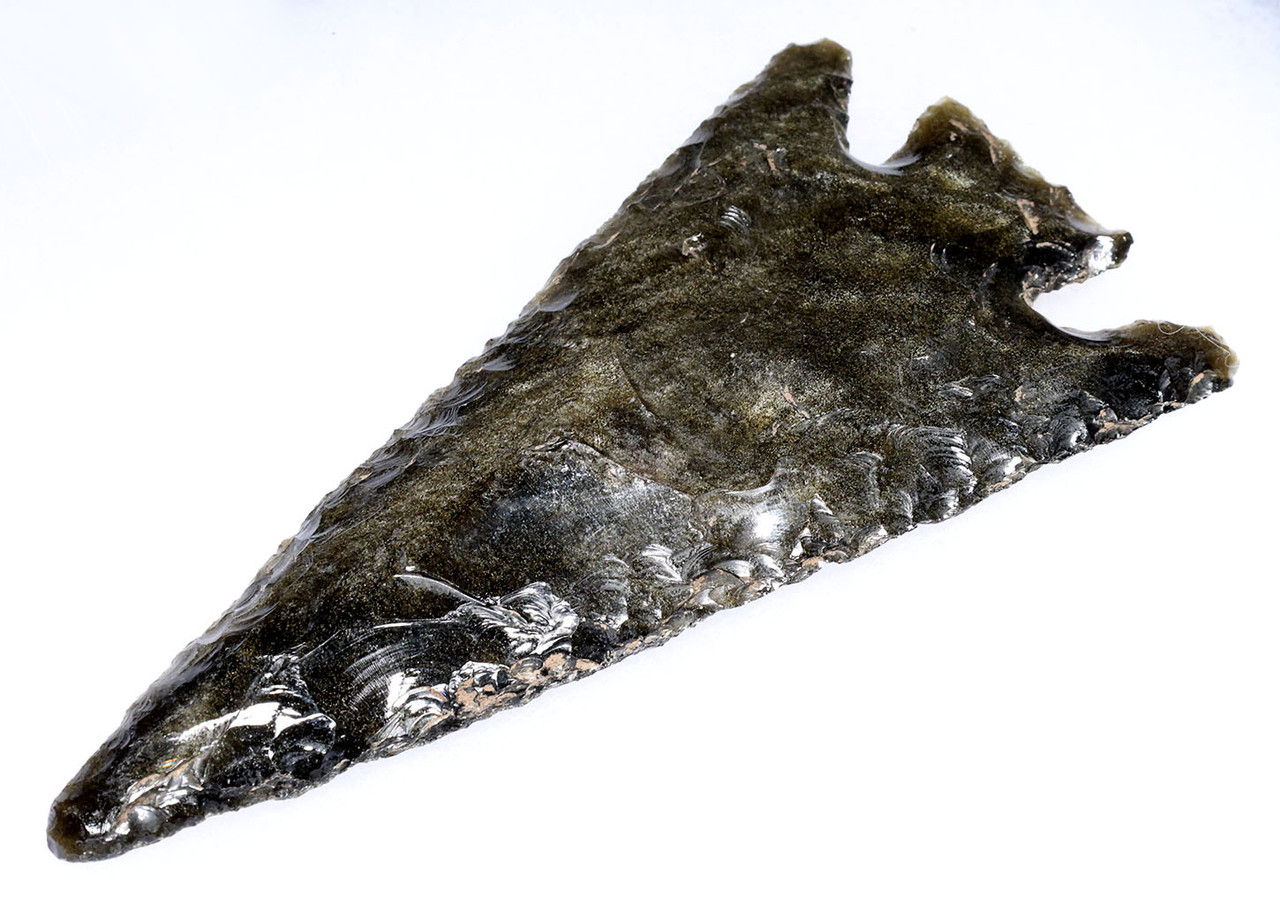
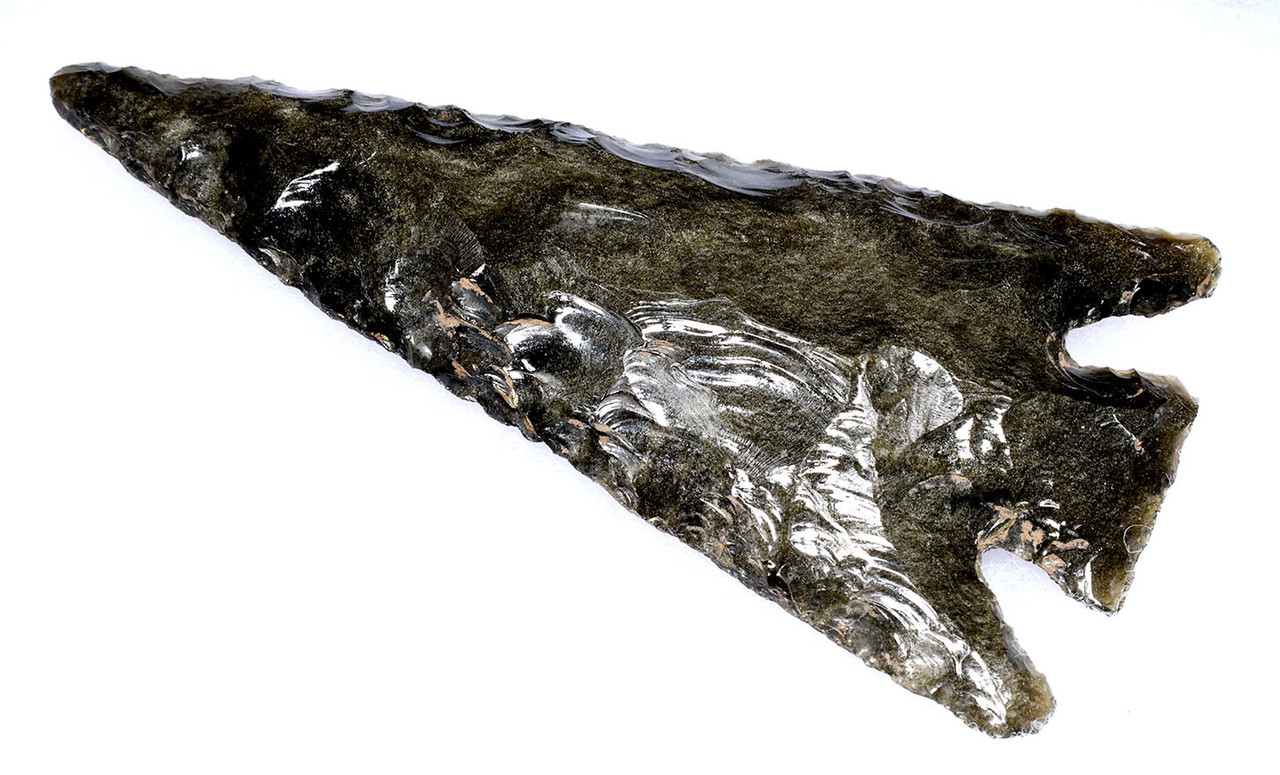
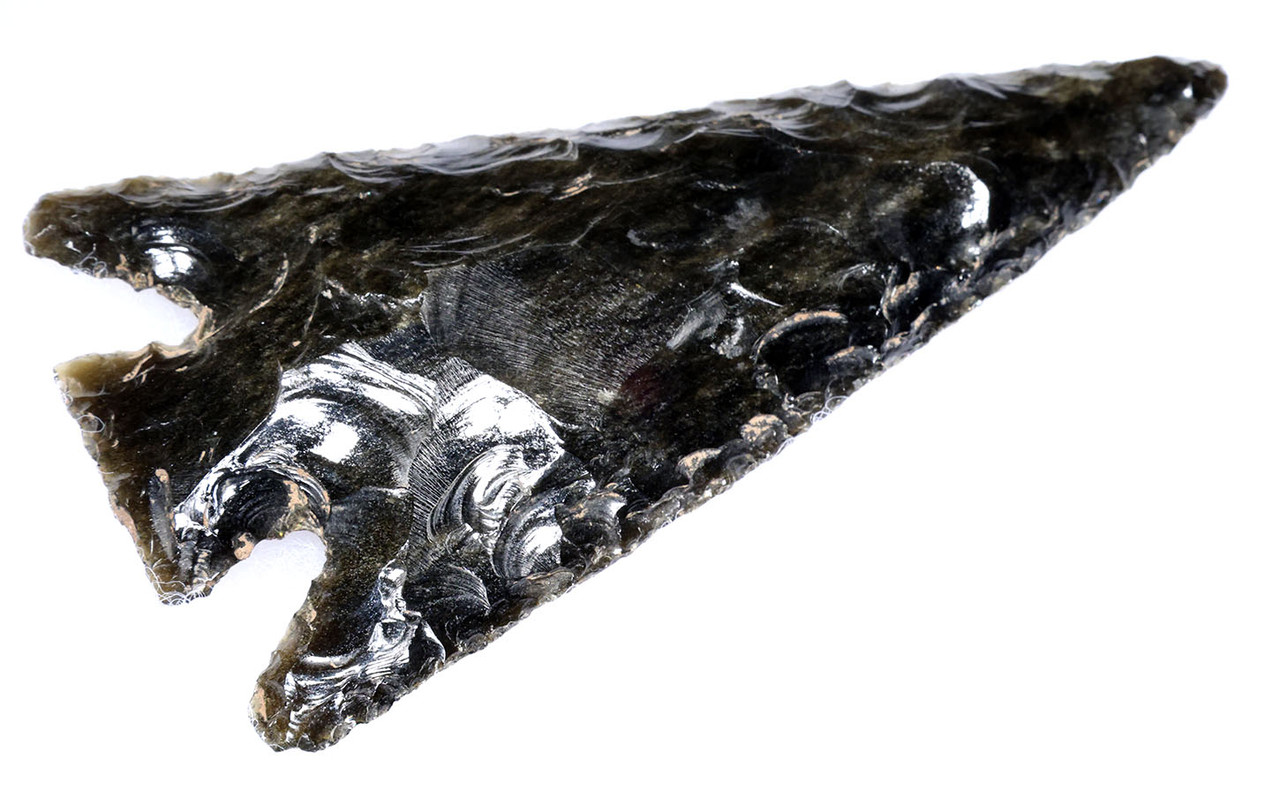
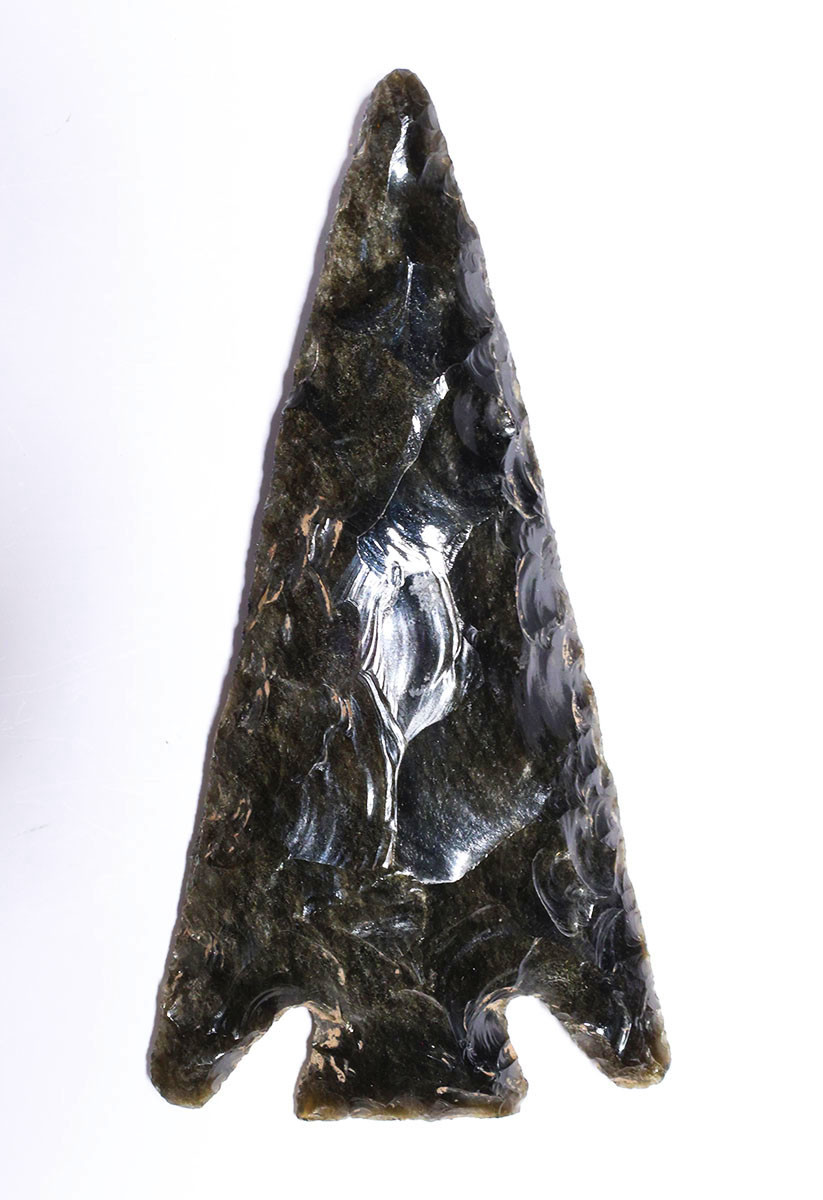
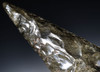
In our 40 year career, this is one of only a few of these extraordinarily rare spearheads we have ever seen and, it is the ONLY example we have seen in green SHEEN obsidian. From the Pre-Columbian Mayan Empire, here is a super rare ROYAL CEREMONIAL PRESTIGE barbed spearhead made of a rare lithic - green sheen obsidian! Since green obsidian was an exclusive luxury reserved only for aristocracy and ceremonial use, the purpose and ancient importance of this breath-taking artifact is obvious. This giant barbed and tanged spearhead features superb symmetry, flaking and design. It shows expert secondary retouch flaking throughout all edges with well-made barbs and a broad tang for hafting onto a shaft. Such a prestige weapon was strictly reserved for either human sacrifice, or as a trophy to a royal warrior of noble bloodline. Even later in the Mayan Empire, when obsidian ownership increased among common society, green obsidian was strictly limited to only noble class society and for ritual use. For discriminating collectors striving to acquire the most rare objects of Pre-Columbian weaponry, this is a prize projectile point unlike any other we have ever had or offered.
With an incredible magical presence, it is no wonder ancient Pre-Columbian people believed this stone had its own spirit. When light hits the surface, the inside lights up and sparkles beyond words! The light effect in sheen obsidian is caused by internal linear bubbles that formed in the ancient volcanic glass before it hardened. While sheen obsidian occurs in black colors, rare green obsidian with this feature makes it especially scarce!
Mineral and sediment deposits can be seen deep in all micro-crevices and flake scars which are indicators ONLY found in AUTHENTIC specimens such as this. Caution must be applied in acquiring ancient obsidian artifacts because the stone does not patinate on the surface like other lithic types.
This remarkable specimen comes from the incredible 1950's collection of Dr. Jose Medina, a diver collector who was one of the earliest users of scuba equipment. This was the only specimen of its kind in that collection, of what amounted to some of the finest flaked stone Pre-Columbian objects we have ever seen in private hands (a notarized acquisition letter and documentation from the estate, will be provided to the buyer.)
HISTORY
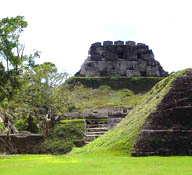
Of all the ancient cultures of the Americas, no civilization has held more intrigue and secrets for so long as that of the Mayans. In 1960, their language code of glyphs was finally deciphered and forever changed our view of what we initially thought was a peaceful and harmonious society. On the contrary, the Mayan Culture of the latter years was bathed in the blood of vicious warfare and astounding levels of human sacrifice. Their technology was so advanced it is no wonder many believe they received intelligence from extra-terrestrials. Despite our recent discoveries of Mayan mathematics, astronomy and calendar technology, the Mayans still leave us with many mysteries. Their love of war caused them to manufacture spectacular weapons with inherent beauty and artistry. Their ceramics depict a fascinating culture of status, sacrifice and deep religious devotion to a number of strange gods.
Archaeologists divide the Mayan Culture into different periods - LATE PRE-CLASSIC / PROTO-CLASSIC (300 BC - 300 AD), EARLY CLASSIC (300 AD - 600 AD), LATE CLASSIC (600 AD - 830 AD), TERMINAL CLASSIC (830 AD - 950 AD). The earliest days of the Maya date back to 2000 BC when small farming villages first appeared in the highlands and Pacific coastline of Guatemala. Crops such as corn, squash and beans made up the staple of their diet and are believed to have been brought from previous migration through Mexico. The Maya pottery styles were unique to the early Maya settlements, though. By 1000 BC, villages sprang up in the lowland regions. The Maya lived in the same locations for centuries and in a continuous state of architectural improvement and expansion leading up to the magnificent 'super-cities' we associate with them today. By 300 AD. full-scale cities were being built with stone featuring massive plazas, temples and pyramids reaching 20 stories high.
It is no wonder that some believe that extra-terrestrial beings brought their knowledge to the Maya. By 300 AD, the first inscriptions suddenly appeared in Maya sites. These early inscriptions were so beautiful it was as if the gods had delivered it to the Mayan themselves! Forward to 600 years later and the inscriptions cease. The first comprehensive writing system in Pre-Columbian America was invented by the Maya. Among the mysteries of the Maya are their amazing understanding of astronomy along with the development of an accurate calendar and mathematical system. Their number system was based on units of 20 and included a concept of 'zero'.
The skills of the Mayan craft are exemplified in their stone and wood carvings, flaked stone objects, pottery and personal adornment. Much of their art centers around their devotion to a religion that is both fascinating and gory. Blood-letting rituals were the norm and many acts of war were motivated by the capture of vast numbers of their enemies for ritual human sacrifice that would run for days on end, forming lakes of blood and fat at the bases of their stone pyramids that defy architectural explanation.
Our understanding of the fascinating MAYAN CULTURE was completely wrong and misinterpreted until as recent as the 1960, when major achievements were made in the deciphering of their glyph language. Elaborately designed ceremonial cities lacking any obvious defenses initially led us to believe that the Mayans were a peaceful theocracy living in ideal harmony with their environment and each other. We could not have been further from the truth. Lowland city-states lived in constant warfare with one another and the thirst of their gods for human blood and sacrifice seemed impossible to satiate.
Perhaps a lesson for us today, recent scientific analysis of the demise of the highly advanced Mayan civilization now answers the biggest mystery of all - "What ever happened to the ancient Mayans?". Long-term high population density (500 people per square mile - the highest in the world at the time) of unbelievable proportions put a strain on their agricultural system that was impossible to sustain. The effects of nutritional deficiencies are evident in bone and tooth analysis on graves dating to the Late Classic Period. It is most probable that starvation put unbearable sociopolitical stress on the society to either kill each other for food or die of hunger necessitated by the technological advancement of warfare and its escalation.
