US DOLLAR
 EURO
EURO
 AUSTRALIAN DOLLAR
 CANADIAN DOLLAR
 POUND STERLING










Product Description
SEE MORE AFRICAN NEOLITHIC TOOLS AND ARTIFACTS
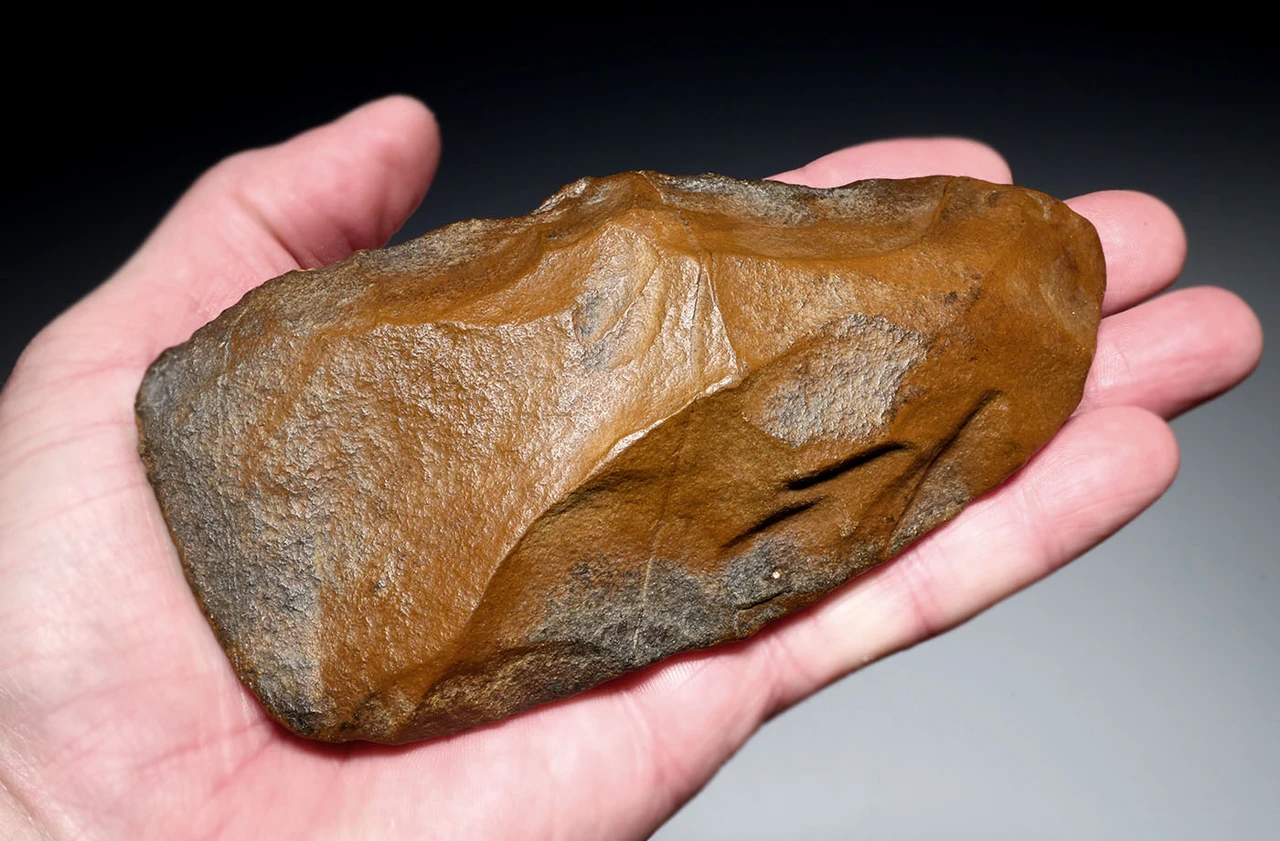
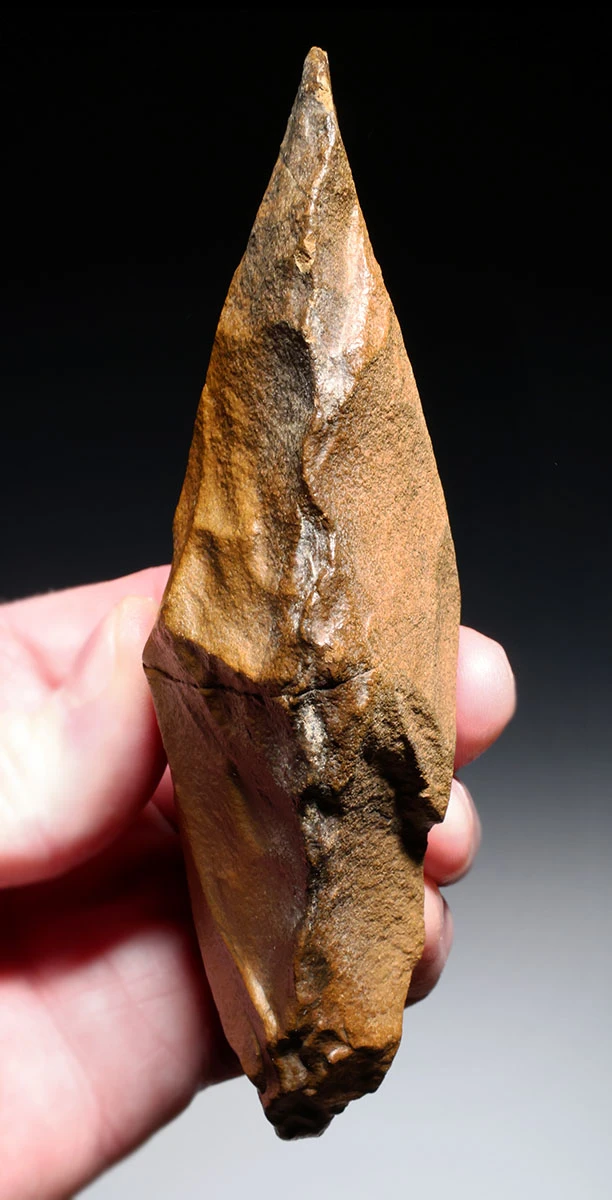
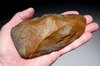
This BEAUTIFUL African Capsian Neolithic knapped celt war axe was found on an exposed African Neolithic site in the Sahara Desert in Northwest Africa. Flaked out of quartzite that has not been wonderfully patinated by the desert wind and sand, it dates from 8000 B.C. to 2700 B.C.. This Neolithic axe was masterfully fashioned by Neolithic humans between 10,000 and 4,700 years ago. It would have served as a deadly weapon of warfare. By this period in time, the northern Sahara was nearly devoid of trees as the African Humid Period was ending and the phase of desiccation was underway. The use of axes to cut wood became obsolete while the increase in warfare, due to a reduction of resources, turned axes like this, into a weapon or war.
This axe shows MASTERFUL workmanship with broad flakes struck to create a wide chopping end. Exceptional secondary flaking from opposing strikes, outline the entire perimeter of the body as seen on the edge photos. One side shows heavy Desert Varnish wind gloss patina from the axe laying on one side exposed and undisturbed, for thousands of years. It is made of quartzite compared to many later axes being made of flint. It features a natural groove in the stone from an geologic healed fissure, not a break or repair (see photos). The axe displays excellent preservation, workmanship and color. A flaked reduced end opposite to the chopping side, was intended for inserting into a wooden shaft handle and further lashed secure to the handle with cord and sinew.
This celt axe was selected out of hundreds and hundreds of inferior examples and represents the finest possible piece of its type - one of the best few of a large, life-long collection! Intact original mineral deposits and patina deep within the flake scars and micro-crevices are signs of authenticity and age not found in modern forgeries often seen on the market.