US DOLLAR
 EURO
EURO
 AUSTRALIAN DOLLAR
 CANADIAN DOLLAR
 POUND STERLING





Product Description
SEE MORE ANCIENT SCYTHIAN ARTIFACTS
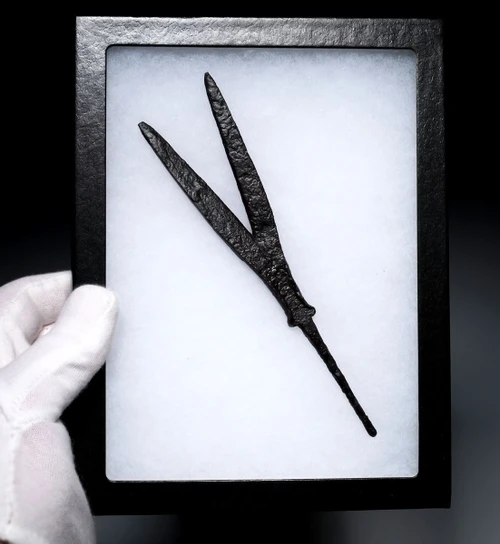
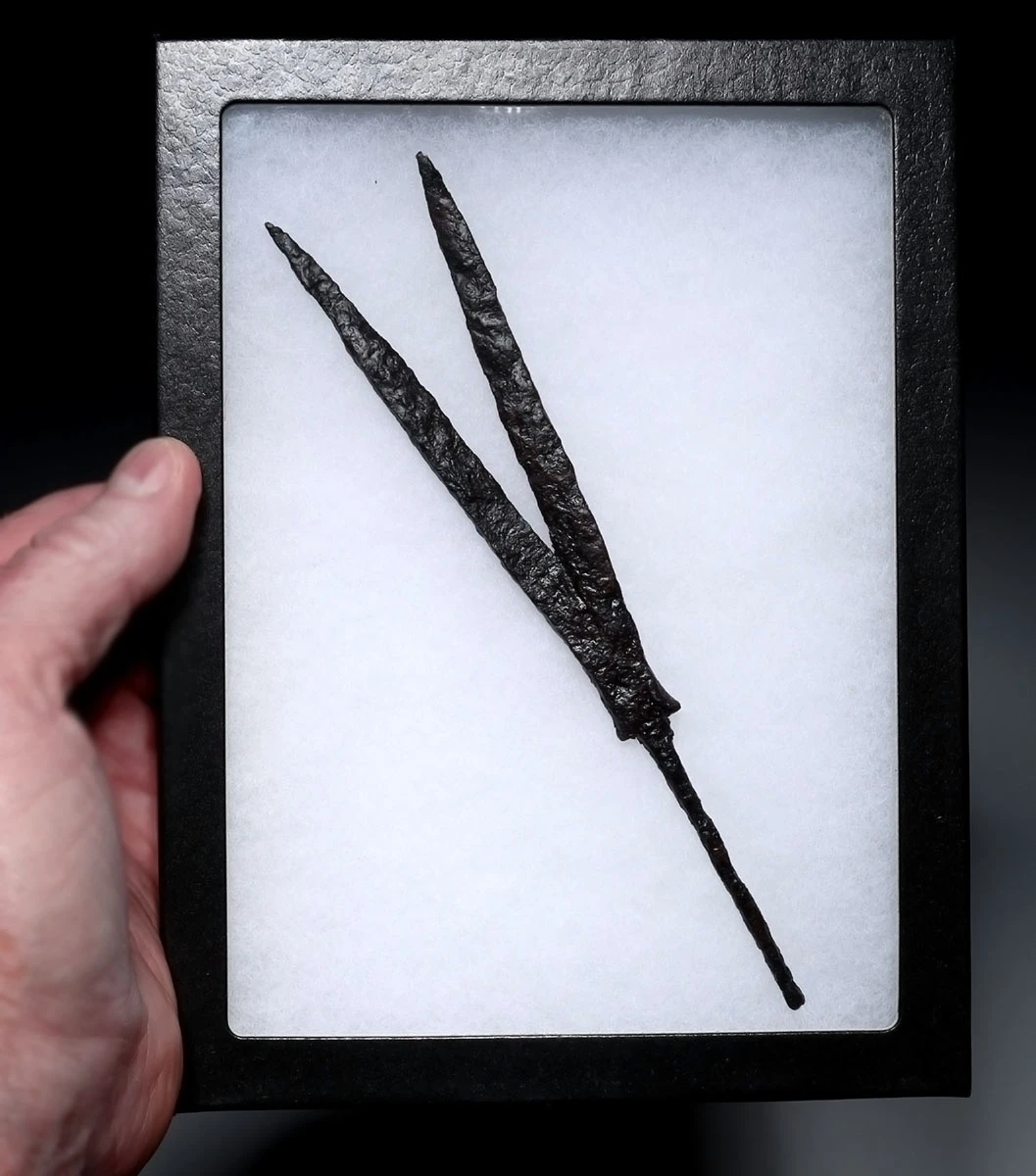
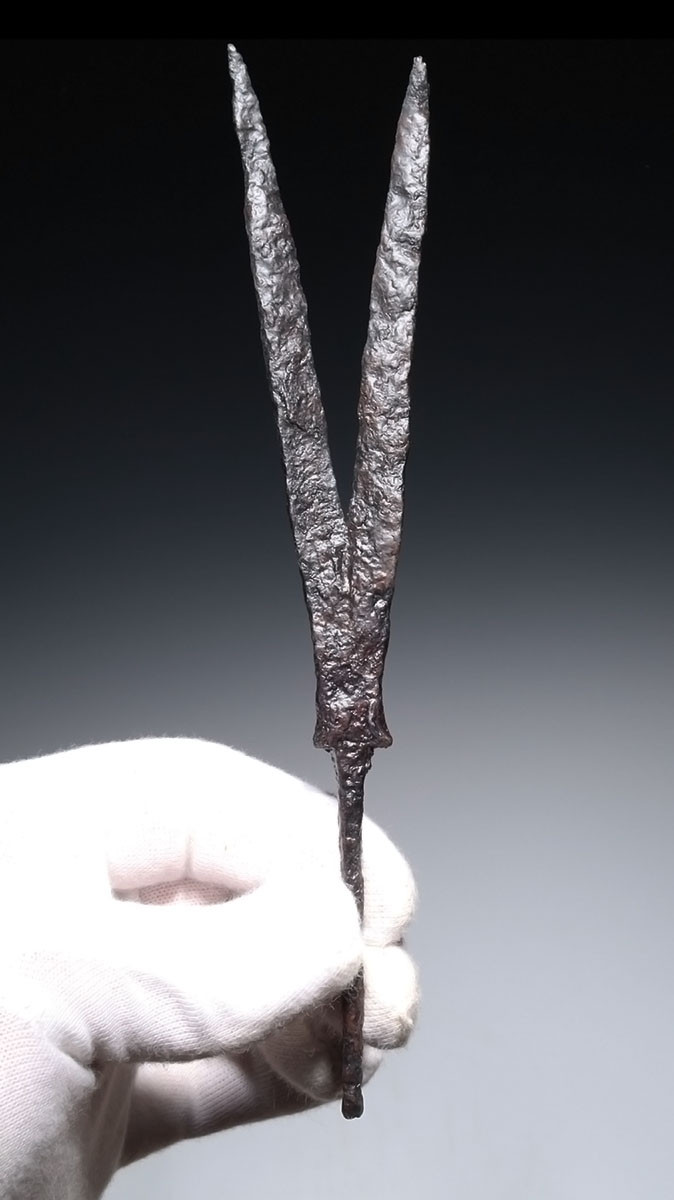
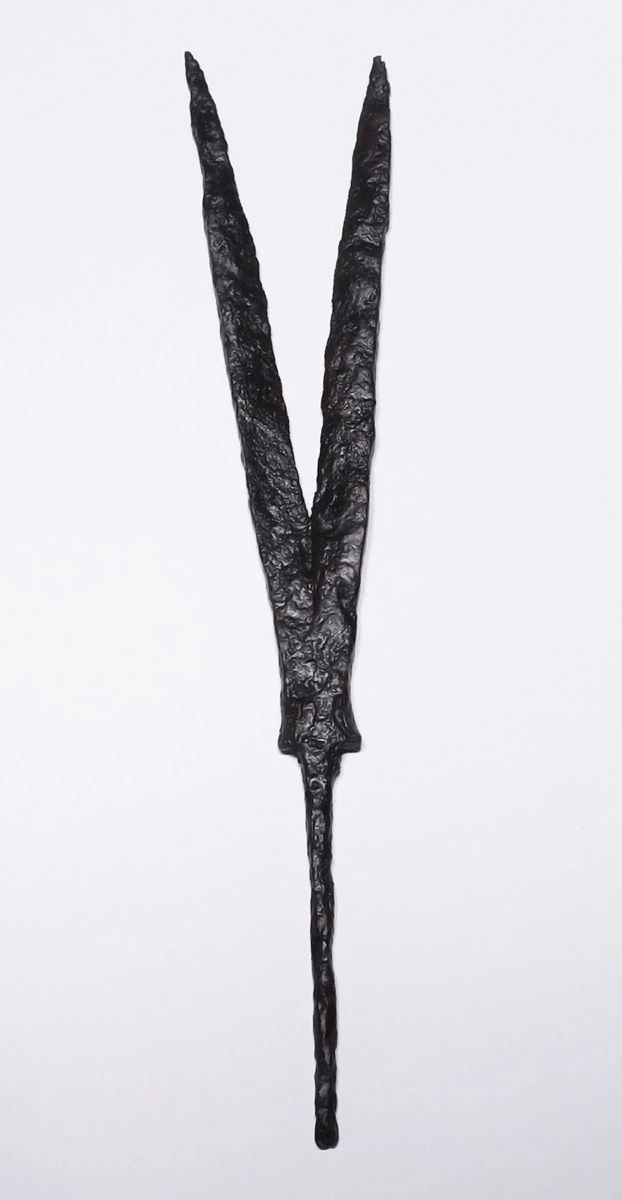
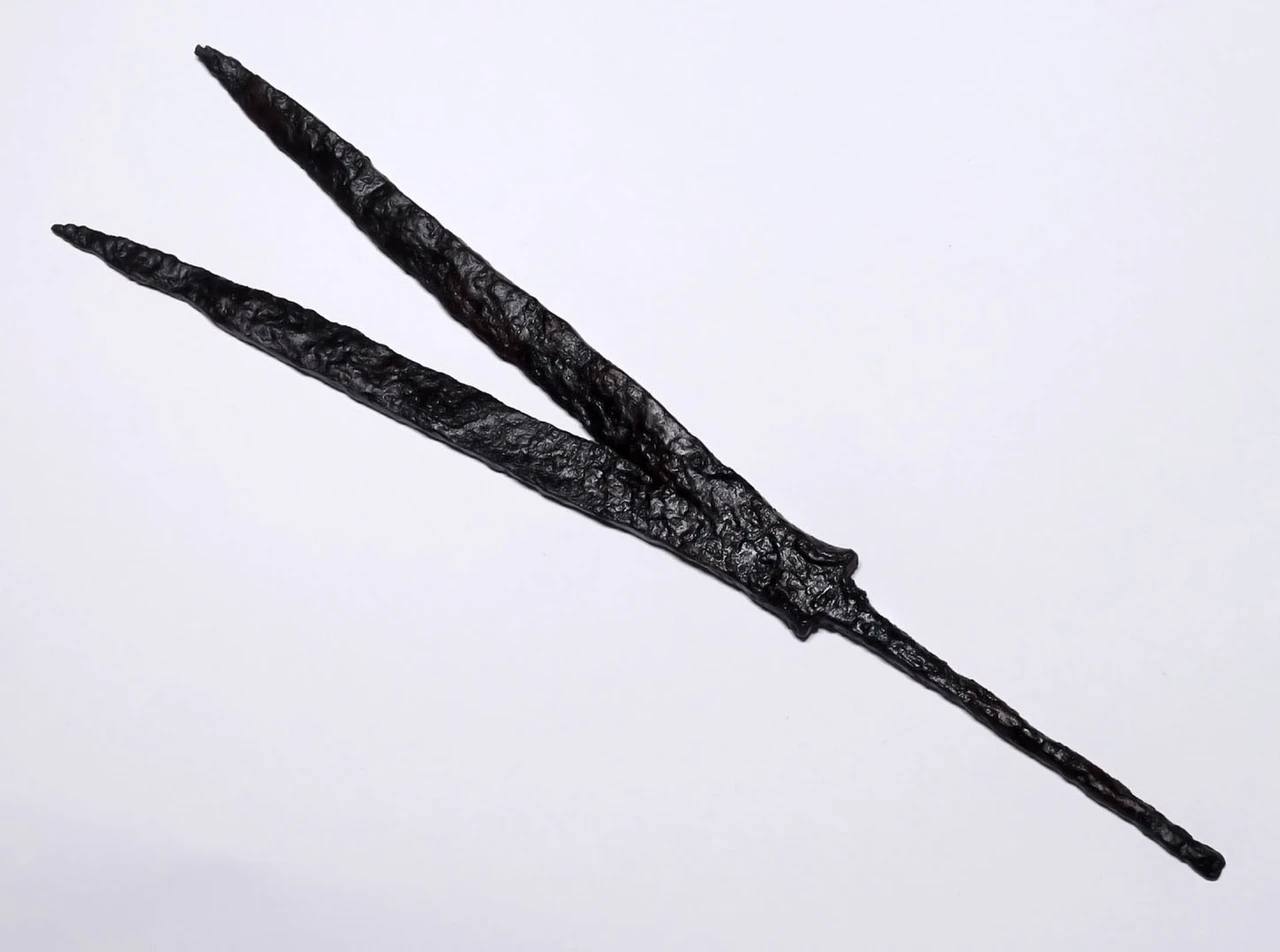
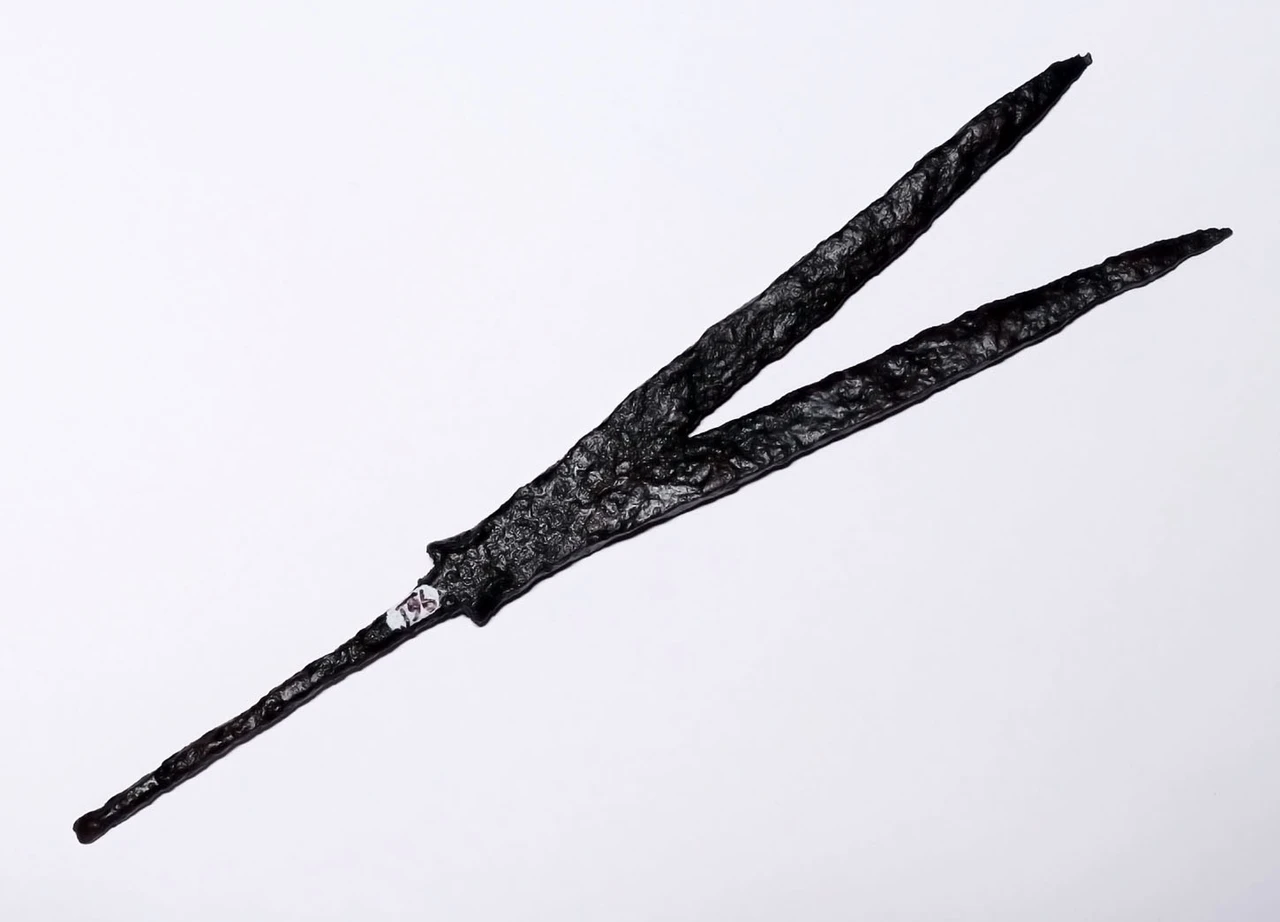
Ancient weapons from the horseback warriors of the Eastern Saka Scythians are extremely rare, and their scarcity in any collection, private or institutional, proves that. The hallmark of the Scythians was their symbiotic living with, dependence and glorious decorations of their horses. They were a warring society famous for their fierce warriors, most notably many feared female warriors that were the basis for the Greek myth of Amazon women of war. This is one of the rarest Saka Scythian weapons we will ever offer. It is a very large bifurcated forked arrowhead from the Saka Scythian horseback warriors. In a link a little further below, an exact specialty arrowhead like this was found with the eldest noble woman in a Scythian burial of 4 Amazon female warriors.
Even in the days of the Scythians, this was an extremely rare weapon, likely carried as a specialty weapon compared to normal arrowheads. The massive forked cutting edges would have been devastating in battle, and equally effective in ritual hunting of dangerous large animals such as the Asiatic Lion, now extinct but alive in the days of the Scythians. The two very long bladed prongs would have had the same effect as being stabbed twice simultaneously, by a narrow knife. This was a weapon designed to inflict a mortal cutting wound to human foe, and also, to bleed and disable enemy cavalry as it would have been equally effective on their horses. Rarely have these special arrowheads been excavated but in 2019, an extravagant burial of four Scythian female warriors had the eldest female of noble descent wearing a gold crown, with an iron dagger, and one of these rare arrowheads buried only with her. https://www.smithsonianmag.com/smart-news/tomb-containing-three-generations-amazon-warrior-women-unearthed-russia-180973877/.
Reportedly found together in a pair with another identical arrowhead (offered here), this iron forged bifurcated forked arrowhead displays exceptional and rare complete preservation. Both long fork protrusions retain their sharp inner cutting blades. The outer edges were forged thicker, providing strength to pierce without bending. The long tang is complete and a rarity to be so well preserved. This is a once-in-a-lifetime opportunity to own something beyond museum-class rarity and a wise buyer would acquire BOTH specimens as they were found together with other Saka Scythian weapons, likely with a prestige ritual context. This artifact has been professionally cleaned and conserved in our lab, being treated with a special sealer developed and formulated by us specifically for ancient metal preservation.
The Greek myth of Amazon female warriors is no myth at all. As Greek civilization began to extend to areas around the Black Sea, the Greeks began to identify and associate these mythical wild and warlike foreign females with the Scythians in their artwork and literature. In particular, the Amazons were often portrayed similarly to steppe nomad horsewomen. As the Greeks became more aware of steppe nomad cultures, their depictions of the Amazons in art and literature began to integrate more realistic details corresponding to the artifacts (weaponry, attire, & equipment) found in kurgans (grave mounds) of Scythians.
Modern excavations in the 20th century have discovered more than 1,000 tombs of tribes such as the Saka-Scythians across the Eurasian steppes, of which about 300 of these burials have been identified to be those of armed warrior women. Female warriors were not rare exceptions but an accepted part of nomadic life. Excavations at Pokrovka (in the southern Urals) and Pazyryk (in the Altai Mountains) have uncovered dozens of women buried with bows, quivers, spears, daggers, and even armor. Many had clear signs of horseback riding — bowed leg bones, muscular attachments on the thighs — and some bore healed wounds consistent with combat injuries. A recent excavation of a grave of four Scythian warrior women is reported on here https://www.smithsonianmag.com/smart-news/tomb-containing-three-generations-amazon-warrior-women-unearthed-russia-180973877/.
HISTORY
The Saka were a group of nomadic Iranian peoples who historically inhabited the northern and eastern Eurasian Steppe and the Tarim Basin. Though closely related, the Sakas different from the Scythians of the Pontic Steppe and the Massagetae of the Aral Sea region, though they all form part of the wider Scythian cultures. Like the Scythians, the Sakas were ultimately derived from the earlier Andronovo culture. The Sakas were a group of Iranic peoples who spoke a language belonging to the Iranian branch of the Indo-European languages. The Saka were racially Europoid.
Historical records and scientific studies date the Saka as early as the 8th century BC. In the Achaemenid-era,ancient Persian inscriptions found at Persepolis, dated to the reign of Darius I (r. 522-486 BC), record the Saka as having lived just beyond the borders of Sogdia. An inscription dated to the reign of Xerxes I (r. 486-465 BC) has them associated with the Dahae people of Central Asia.
In the 2nd century BC, many Sakas were driven by the Yuezhi from the steppe into Sogdia and Bactria and then to the northwest of the Indian subcontinent, where they were known as the Indo-Scythians. Other Sakas invaded the Parthian Empire, eventually settling in Sistan, while others may have migrated to the Dian Kingdom in Yunnan, China. In the Tarim Basin and Taklamakan Desert region of Northwest China, they settled in Khotan, Yarkand, Kashgar and other places, which were at various times vassals to greater powers, such as Han China and Tang China.
The art of the Saka was of a similar styles as other Iranian peoples of the steppes, which is referred to collectively as Scythian art. Ancient influences from Central Asia became identifiable in China following contacts of metropolitan China with nomadic western and northwestern border territories from the 8th century BC. The Chinese adopted the Scythian-style animal art of the steppes (descriptions of animals locked in combat), particularly the rectangular belt-plaques made of gold or bronze, and created their own versions in jade and steatite.
Following their expulsion by the Yuezhi, some Saka may also have migrated to the area of Yunnan in southern China. Saka warriors could also have served as mercenaries for the various kingdoms of ancient China. Excavations of the prehistoric art of the Dian civilisation of Yunnan have revealed hunting scenes of Caucasoid horsemen in Central Asian clothing.