 US DOLLAR
 EURO
 AUSTRALIAN DOLLAR
 CANADIAN DOLLAR
 POUND STERLING



Product Description
While it may not be as fascinating as a weapon, when was the last time you saw genuine ancient iron chain? This genuine ancient hand-forged Roman iron chain shows first hand, what would have been seen and used in everyday live in days of the Late Eastern Roman Empire. This is an original 3 link section of iron chain from the Byzantine Roman Empire. Each link has a square cross-section from typical hand-forging, and is pinched in the center where another link would have been connected through. It is in remarkable preservation with all original encrustations still intact. No way to know what it was for but it is very strong and superbly crafted. An important window into a common item of the ancient world but never seen, today.
Unlike most metal artifacts sold on the market that are untreated and uncleaned, ALL our metal artifacts are properly cleaned, inspected and conserved in our museum conservation lab prior to being offered for sale to our clients. The vast majority of sellers of metal artifacts do NOT PROPERLY clean and treat their specimens and many do nothing at all. Metal artifacts NOT treated and stabilized correctly WILL CONTINUE TO CORRODE AND EVENTUALLY DISINTEGRATE.
HISTORY
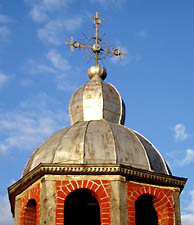 Perhaps no other epoch in history is so unique, extensive and yet, as much forgotten as that of the Byzantine Roman Empire. From the founding of its new capitol in Constantinople, 330 AD to its final fall to the Ottoman invaders in 1453, over eleven hundred years of history has virtually been lost in most minds of the Western world. Ironically, it is this exact history that has extensively shaped the Western cultures today, especially those of the Christian faith.
No event in Western history was probably more pivotal than that of the Christian conversion of the Roman emperor Constantine I. Up to that time, Christians were heavily persecuted by many of the previous emperors and the religion was outlawed. That would all change in 324 AD with a miraculous military victory and subsequent conversion to Christianity by Constantine I at the Milvian Bridge. From this point on, Christianity became the official religion of the Empire. A new capitol was established in Constantinople (present day Istanbul, Turkey) and power was fully transferred from Rome to Constantinople in 476 AD. It was not the end of the Roman Empire but a continuation and fascinating transformation of Roman rule that would last for another one thousand years!
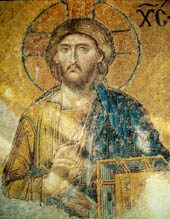 In the Byzantine Period, the Roman Empire and Christianity were completely interwoven. It was the quintessential example of the UNION of church and state. What was once the ancient world's greatest enemy of the faith, overnight became its most devoted advocate. The classic architecture, style of dress, and overall appearance of all that was "Old Rome" took on a new and intricate style that the world has never seen before or since. This was not only attributed to the influence of the capitol's new geographic location, but also to the foremost prominence of Christianity in the Roman world.
A well-known remnant of the Byzantine Period is the stunning and unique art of the religious Icons. This abstract spiritual style can be immediately recognized and is evident in not only paintings and mosaics but also the era's architecture and coins. What was once thought of as crude numismatic issues are now appreciated as highly stylized symbols of the Romans' devout faith.
After the establishment of Constantinople as the new capitol and navel of the Roman world, the Empire continued for almost a millennium eventually bridging ancient and medieval history but not without its share of enemies. Numerous challenges of foreign armies took its toll on defenses and finally, on May 29, 1453 AD, the Muslim Ottomans overran the crumbling city walls and the sun set forever on the greatest empire that the ancient world had ever known.