 US DOLLAR
 EURO
EURO
 AUSTRALIAN DOLLAR
 CANADIAN DOLLAR
 POUND STERLING









Product Description
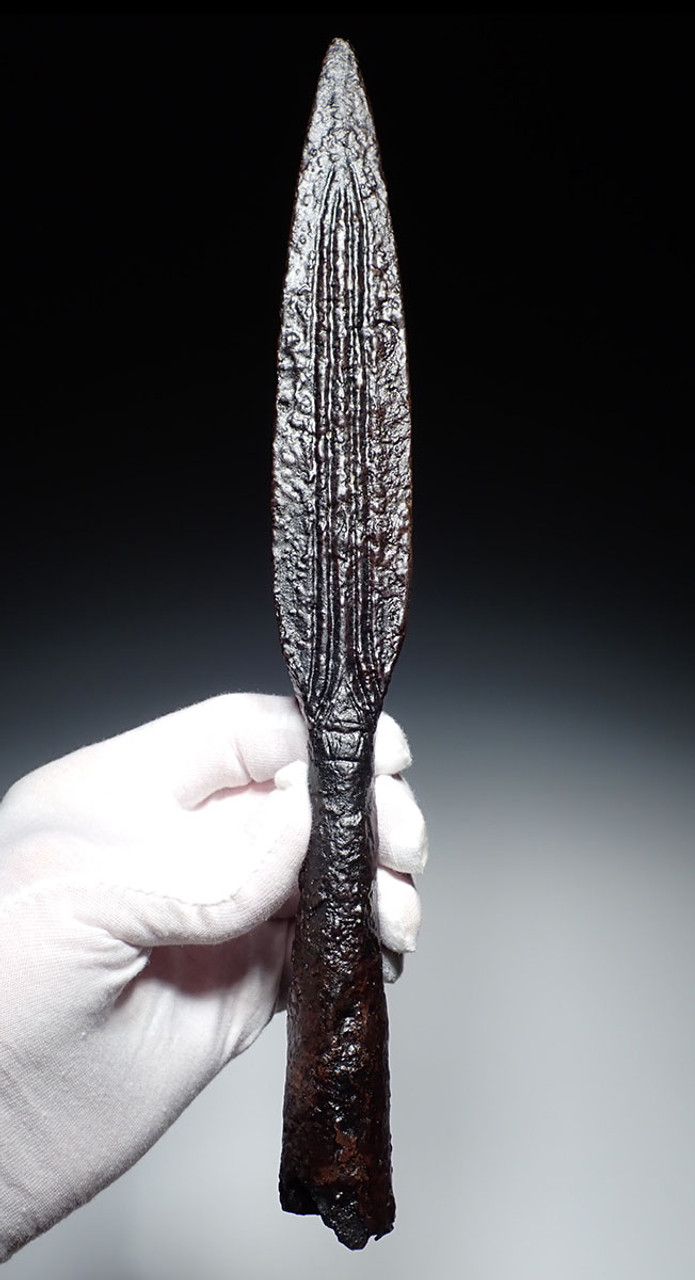
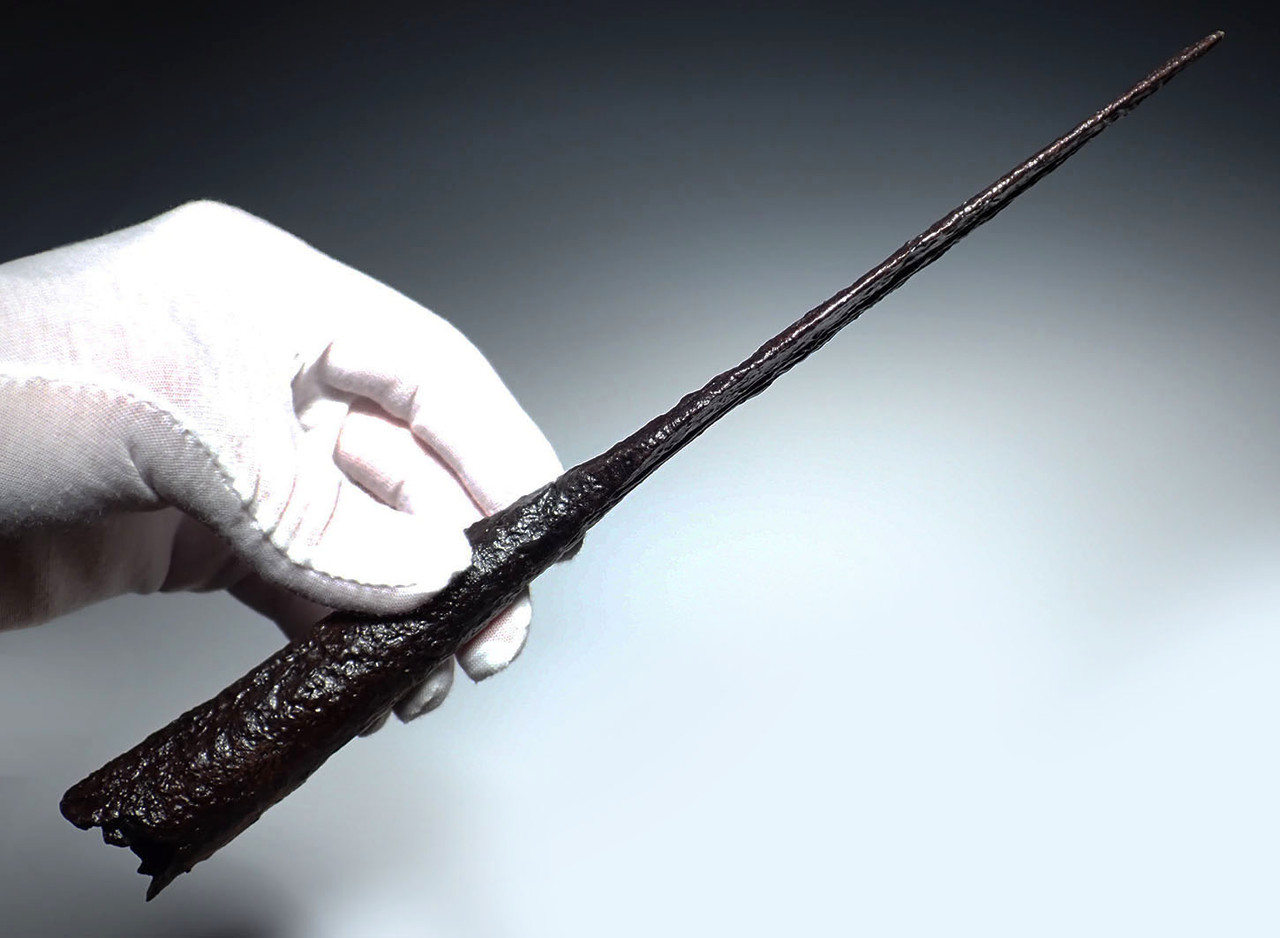
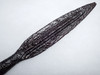
A classic and important weapon of troops of the ancient Achaemenid armies, this socketed iron cavalry lance spearhead was a feared weapon of enemy troops. This lance would have been affixed to a long wooden shaft and used in devastatingly effective cavalry charges against enemy mounted soldiers, or ground infantry.
This extremely rare iron lance head was once used by a noble knight horseman serving in the first heavy cavalry of the Achaemenid cataphracts. The Achaemenid cataphract was a form of armored heavy cavalry that originated in ancient Persia. They were deployed in ancient warfare throughout Eurasia and Northern Africa. Historically, the cataphract was a very heavily armored horseman, with both the rider and mount almost completely covered in scale or lamellar armor over chain mail, and typically wielding a kontos (lance) as his primary weapon. Cataphracts served as the elite cavalry force for most empires and nations that fielded them, primarily used for charges to break through opposing heavy cavalry and infantry formations. Chronicled by many historians from the earliest days of antiquity up until the High Middle Ages, they may have influenced the later European knights, through contact with the Eastern Roman Empire.
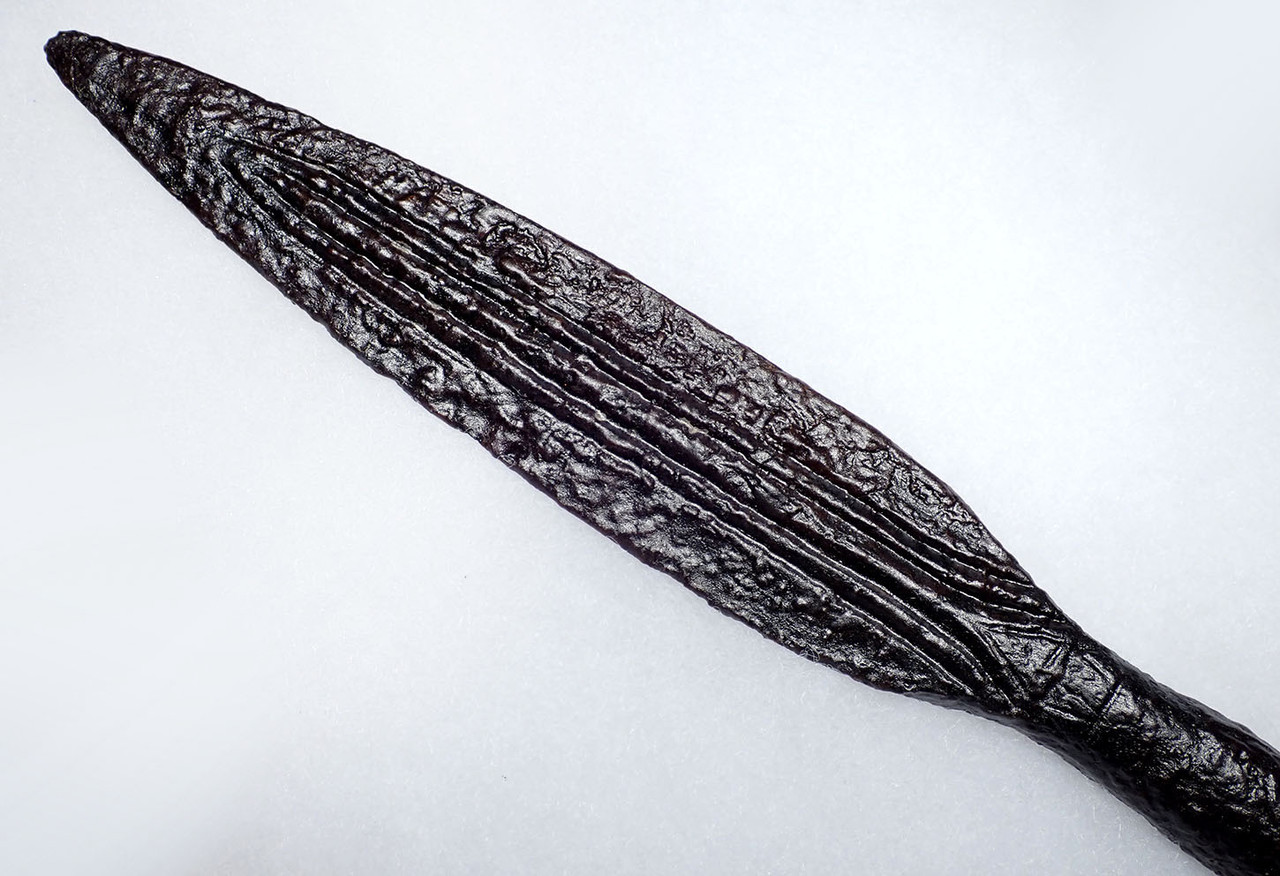
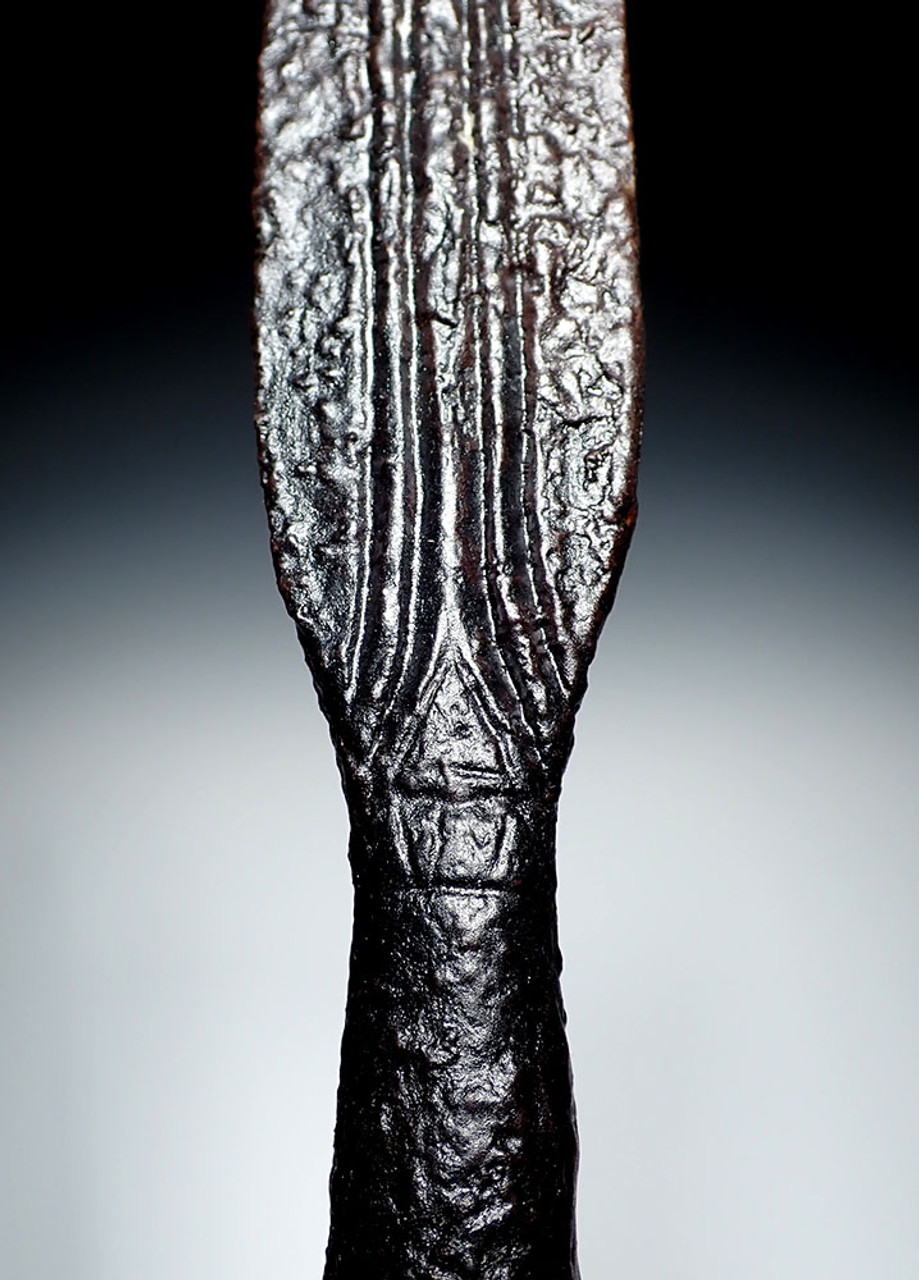
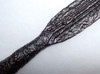
This very rare, highly decorative lance head is not only beautiful in its design, but the multiple decorative geometric linear ribs would have served to strengthen the blade so that it would have sustained impact into enemy armor. Such a weapon was beyond the ownership of an ordinary mounted warrior. This would have been an expensive weapon to craft in the ancient world - only affordable to noble class knights serving in the Achaemenid Empire. The narrow head would have been effective in piercing iron and leather enemy armor in a charging attack. This is the most elaborate, well-preserved iron spearhead we have ever offered from the ancient Near East. It remains the best specimen of its kind that we had our private collection over over 30 years. RARELY is iron preserved to this degree where such detail is retained. The large socket indicates it would have been mounted on a heavy wooden pole. Weapons of this ancient empire are uncommon.
This artifact has been professionally cleaned and conserved in our lab, being treated with a special sealer for ancient metal preservation. The patina shows beautiful traits only found in authentic ancient weapons. It is a patina like this that the finest ancient bronzes are prized for and it is a patina like this that brings a premium in price and value of the specimen. No active bronze disease. Bronze disease can be a problem in bronze artifacts and untreated, it can literally eat away an artifact over a short time of a matter of years and turn the piece to powder.
WARNING: There is an increasing number of fake "ancient" weapons on the market. As fine quality intact, original specimens become more scarce and techniques have become more sophisticated to fake these weapons. We have personally handled numerous extremely well-done fakes with extremely convincing patinas. The degree to which the fakers have been able to replicate patina to disguise their work requires an expert examination by highly experienced individuals. It is common to find very reasonably priced weapons that are made up of part original and part modern components or wholly modern pieces displaying elaborate artificial patinas. All purchases should include from the dealer a written guarantee of authenticity with unconditional and lifetime return policies regarding such guarantee.
HISTORY
The Achaemenid Empire (c. 550–330 BC), also called the First Persian Empire, was an empire based in Western Asia, founded by Cyrus the Great. At its greatest extent, it ranged from the Balkans and Eastern Europe in the west, to the Indus Valley in the east. It was larger than any previous empire in history, spanning 5.5 million square kilometers. Incorporating various peoples of different origins and faiths, it is notable for its successful model of a centralized, bureaucratic administration (through satraps under the King of Kings), for building infrastructure such as road systems and a postal system, the use of an official language across its territories, and the development of civil services and a large professional army. The empire's successes inspired similar systems in later empires.
By the 7th century BC, the Persians had settled in the southwestern portion of the Iranian Plateau in the region of Persis, which came to be their heartland. From this region, Cyrus the Great advanced to defeat the Medes, Lydia, and the Neo-Babylonian Empire, establishing the Achaemenid Empire.
Alexander the Great, an avid admirer of Cyrus the Great, conquered most of the empire by 330 BC. Upon Alexander's death, most of the empire's former territory came under the rule of the Ptolemaic Kingdom and Seleucid Empire, in addition to other minor territories which gained independence at that time. The Iranian elites of the central plateau reclaimed power by the second century BC under the Parthian Empire.
The Achaemenid Empire is noted in Western history as the antagonist of the Greek city-states during the Greco-Persian Wars. The empire was instrumental in the spread of Zoroastrianism as far east as China. The empire also set the tone for the politics, heritage and history of modern Iran.
The Persian cavalry was crucial for conquering nations, and maintained its importance in the Achaemenid army to the last days of the Achaemenid Empire. The cavalry were separated into four groups. The chariot archers, horse cavalry, the camel cavalry, and the war elephants.
In the later years of the Achaemenid Empire, the chariot archer had become merely a ceremonial part of the Persian army, yet in the early years of the Empire, their use was widespread. The chariot archers were armed with spears, bows, arrows, swords, and scale armour. The horses were also suited with scale armour similar to scale armour of the Sassanian cataphracts. The chariots would contain imperial symbols and decorations. The horses used by the Achaemenids for cavalry were often suited with scale armour, like most cavalry units. The riders often had the same armour as infantry units, wicker shields, short spears, swords or large daggers, bow and arrow and scale armour coats. The camel cavalry was different, because the camels and sometimes the riders, were provided little protection against enemies, yet when they were offered protection, they would have spears, swords, bow, arrow, and scale armour. The camel cavalry was first introduced into the Persian army by Cyrus the Great, at the Battle of Thymbra. The elephant was most likely introduced into the Persian army by Darius I after his conquest of the Indus Valley. They may have been used in Greek campaigns by Darius and Xerxes I, but Greek accounts only mention 15 of them being used at the Battle of Gaugamela.

