US DOLLAR
 EURO
EURO
 AUSTRALIAN DOLLAR
 CANADIAN DOLLAR
 POUND STERLING








Product Description
SEE MORE ANCIENT NEAR EASTERN ARTIFACTS
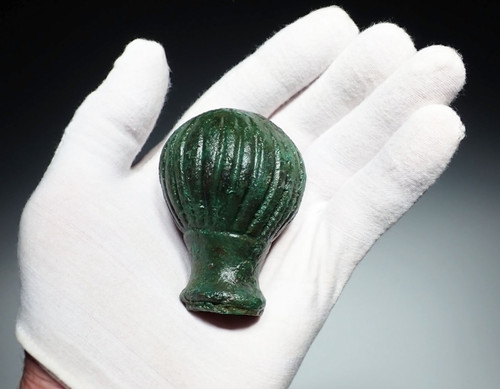
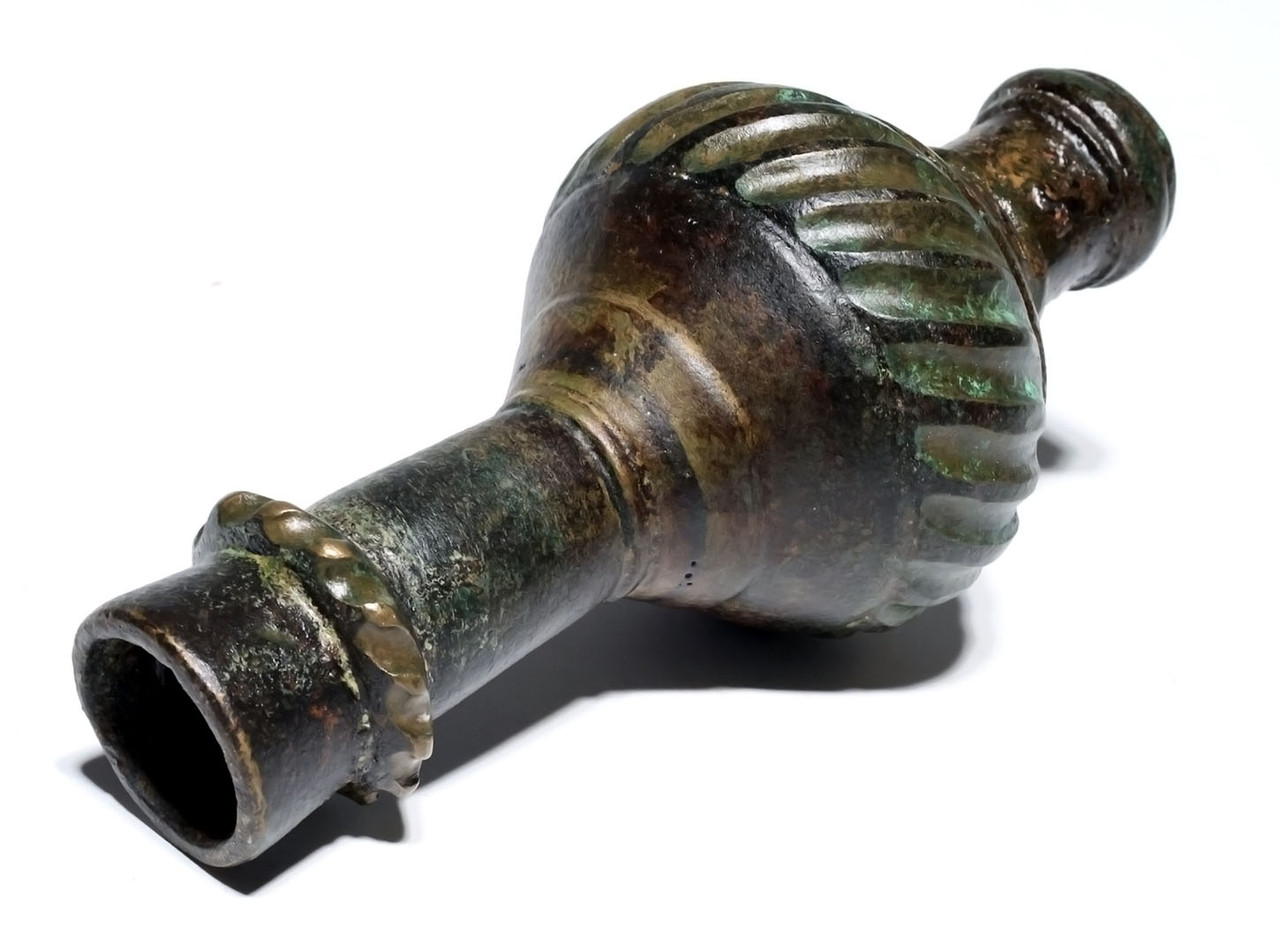
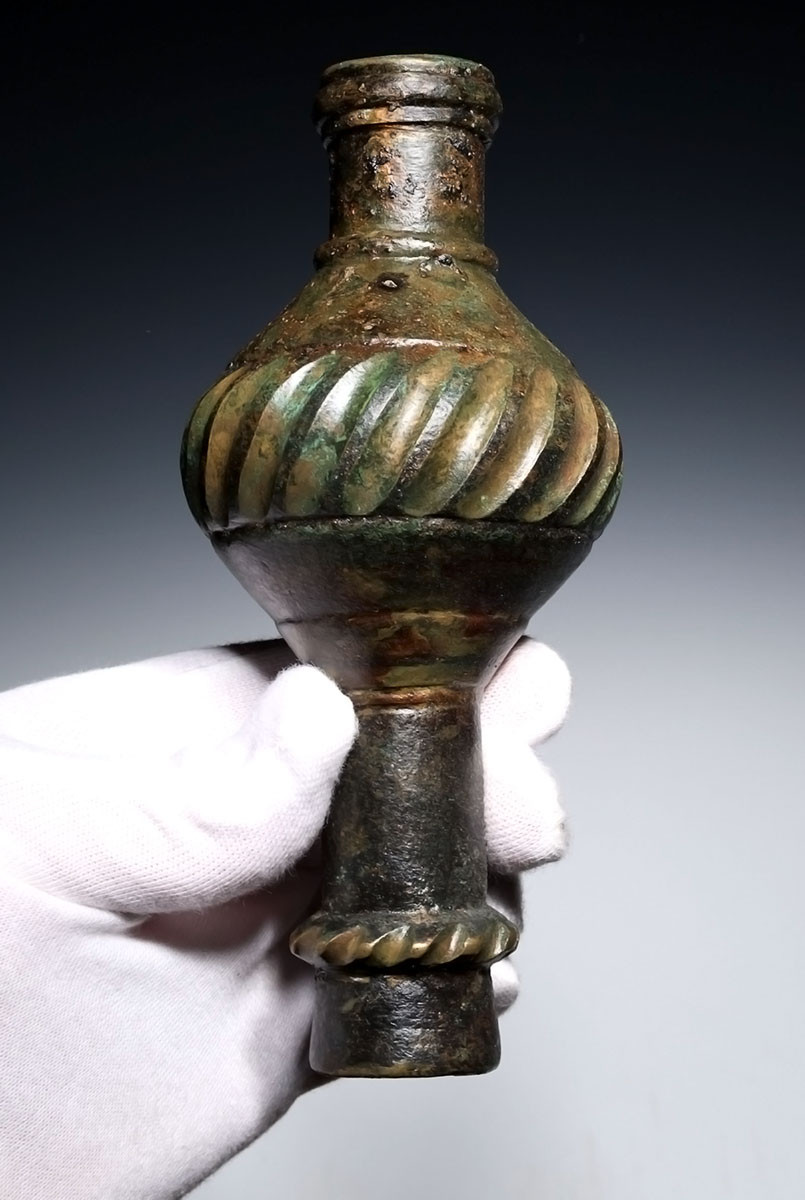
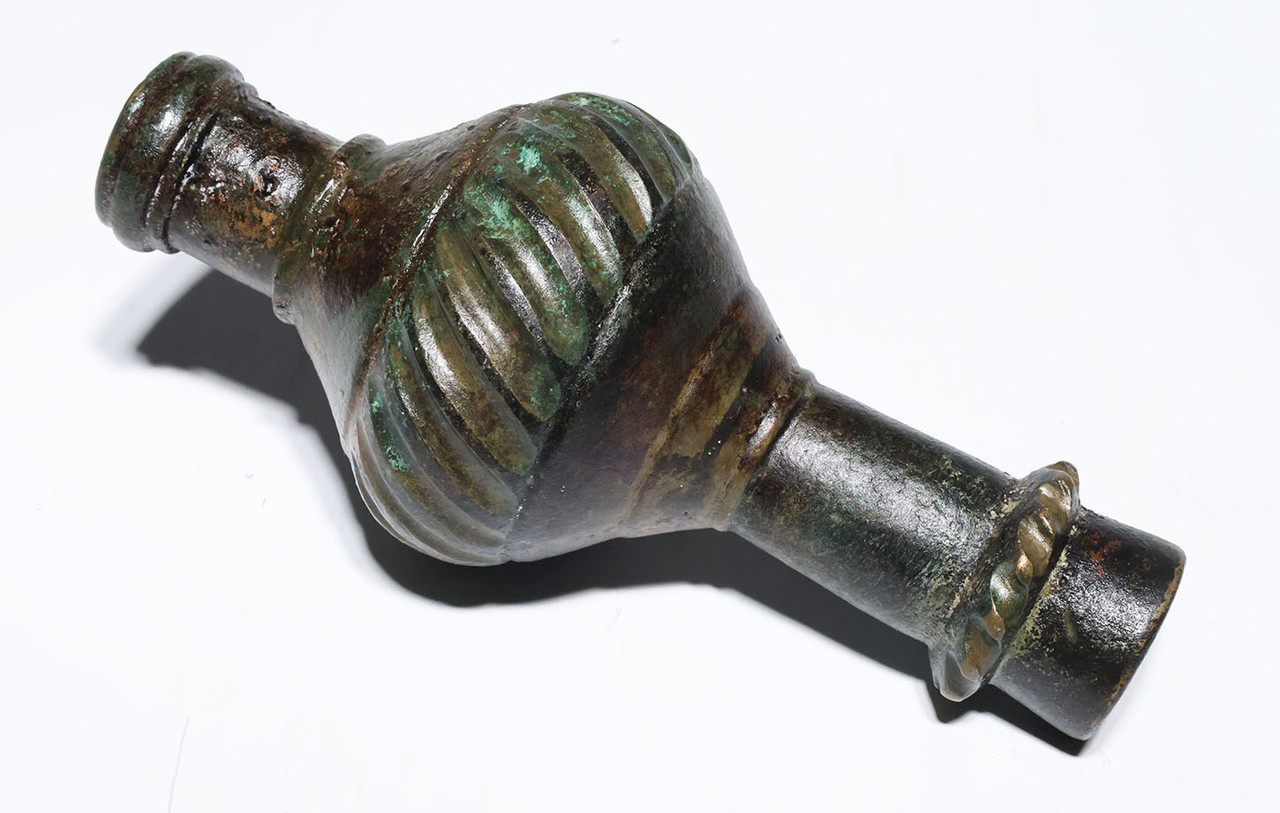
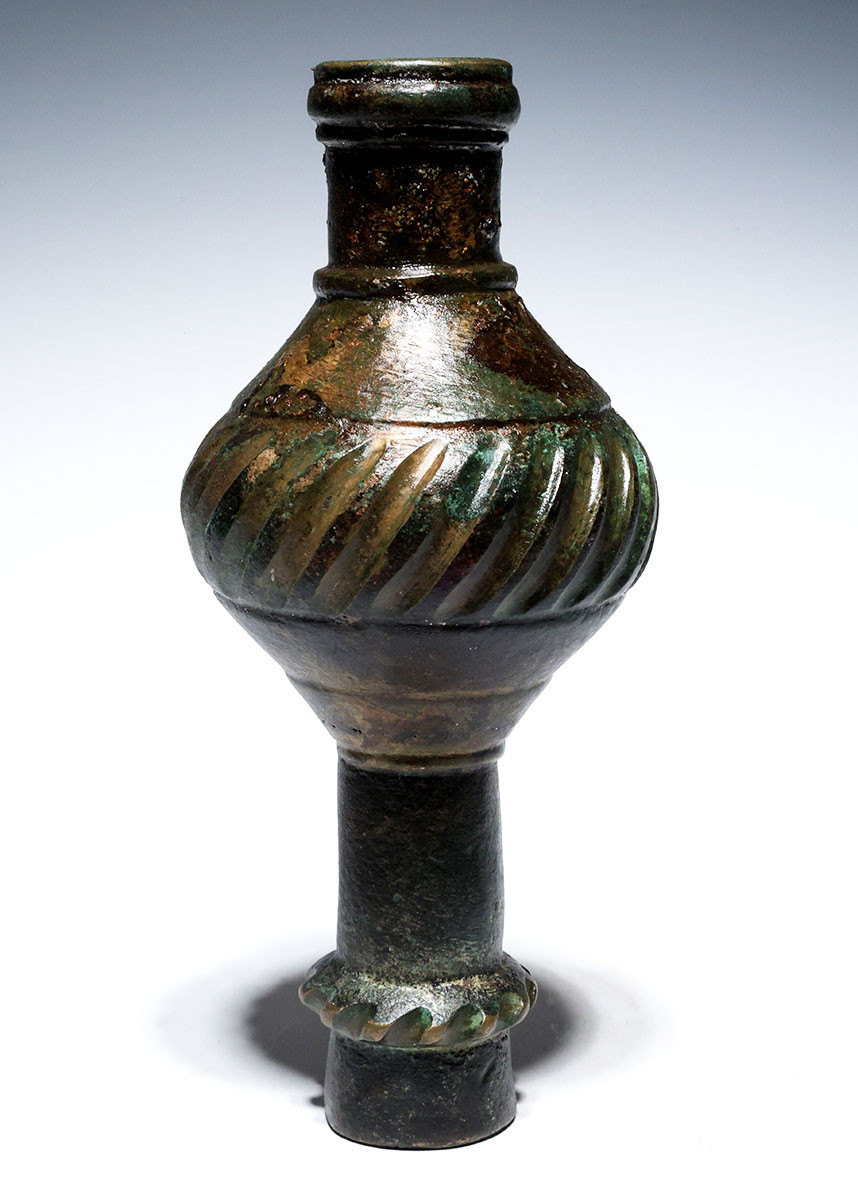
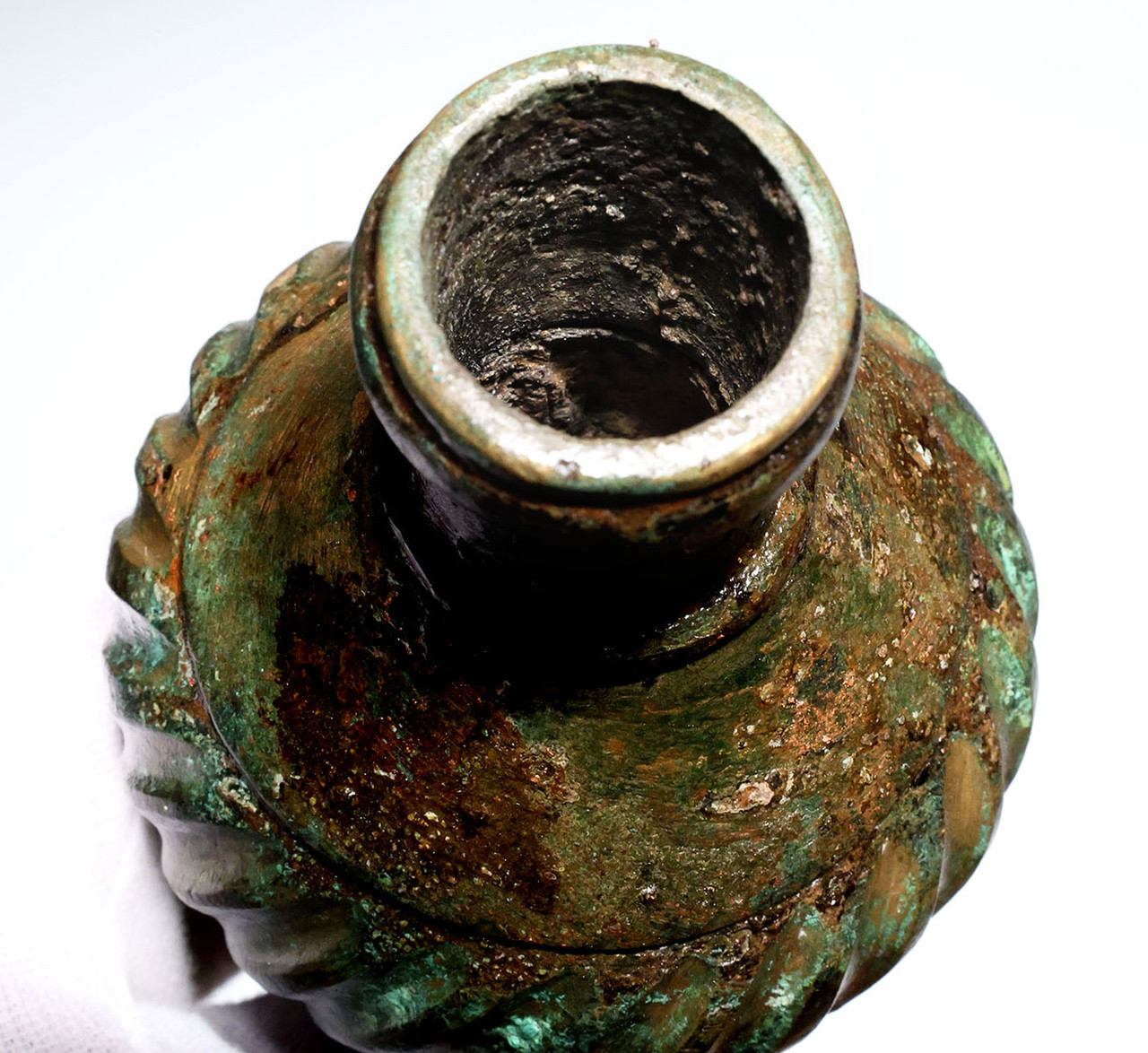
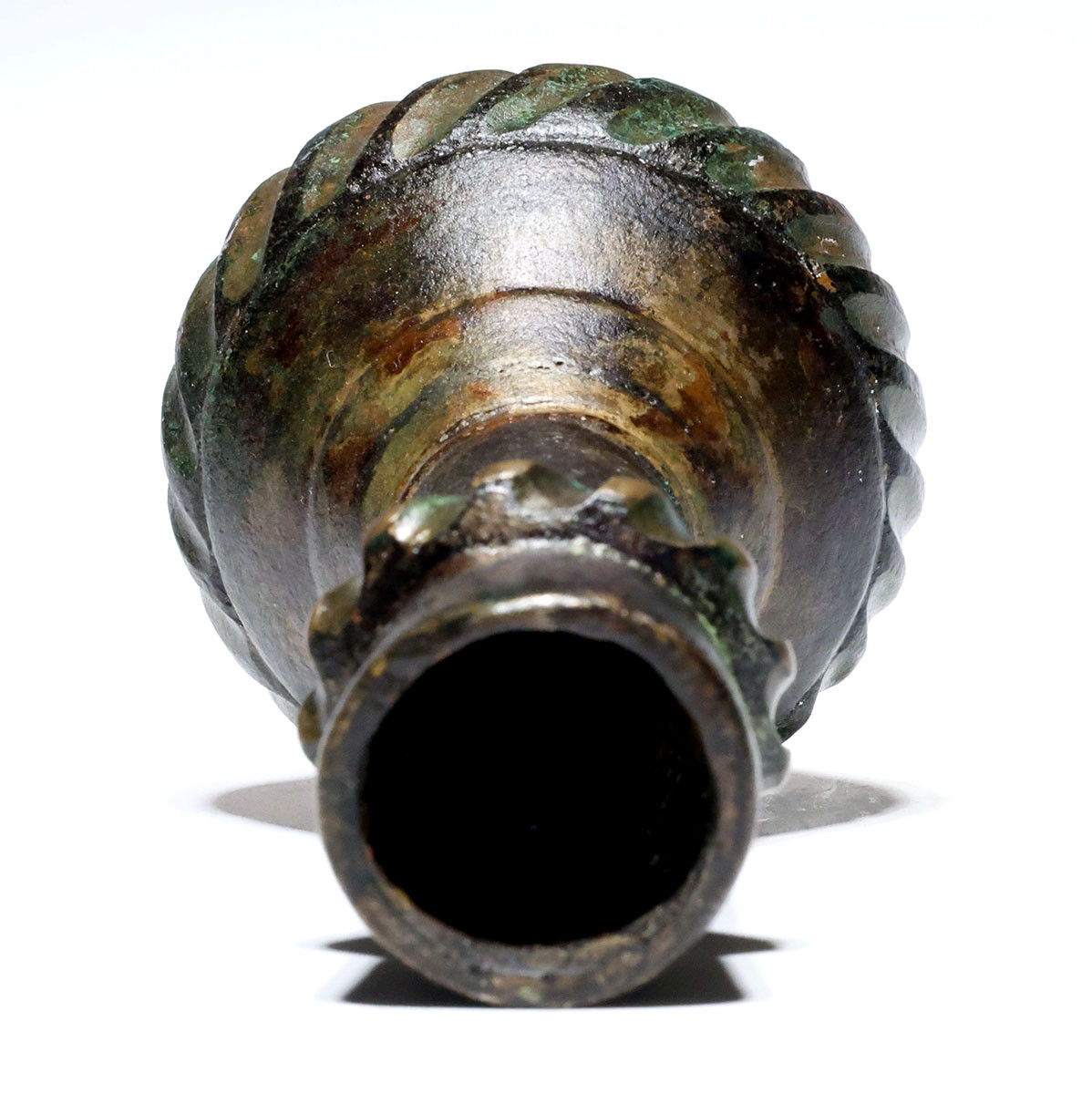
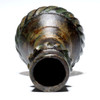
Of substantial size and weight, this decorated and functional war mace head is of the Indo-Persian culture and dates from the 13th to the 16th centuries A.D.. Made of gilded copper, the swirled globular section is integral to a shaft support portion below AND above the striking surface - designed to sustain the maximum impact without breaking off the shaft. Much of the gilding remains with the underlying copper surface showing in several areas. Deposits and patina are still intact on all surfaces.
This would make a unique and exceptional addition to any ancient / medieval militaria collection of impressive specimens! The only Indo-Persian Islamic mace head we have ever offered.
This artifact has been professionally cleaned and conserved in our lab, being treated with a special sealer developed and formulated by us specifically for ancient metal preservation.
HISTORY
Indo-Persian culture refers to a cultural synthesis present on the Indian subcontinent. It is characterized by the absorption or integration of Persian aspects into the various cultures of modern-day republics of Bangladesh, India, and Pakistan. The earliest introduction of Persian influence and culture to the subcontinent was by various Muslim Turko-Persian rulers, such as the 11th-century Sultan Mahmud Ghaznavi, rapidly pushed for the heavy Persianization of conquered territories in northwestern Indian subcontinent, where Islamic influence was also firmly established. This socio-cultural synthesis arose steadily through the Delhi Sultanate from the 13th to 16th centuries, and the Mughal Empire from then onwards until the 19th century. Various dynasties of Turkic, Iranian and local Indian origin patronized the Persian language and contributed to the development of a Persian culture in India. The Delhi Sultanate developed their own cultural and political identity which built upon Persian and Indic languages, literature and arts, which formed the basis of an Indo-Muslim civilization.
Persian was the official language of most Muslim dynasties in the Indian subcontinent, such as the Delhi Sultanate, the Kashmir Sultanate, the Bengal Sultanate, the Mughal Empire and their successor states, and the Sikh Empire. It was also the dominant cultured language of poetry and literature. Many of the Sultans and nobility in the Sultanate period were Persianised Turks from Central Asia who spoke Turkic languages as their mother tongues. The Mughals were also culturally Persianised Central Asians (of Turko-Mongol origin on their paternal side), but spoke Chagatai Turkic as their first language at the beginning, before eventually adopting Persian. Persian became the preferred language of the Muslim elite of northern India. Muzaffar Alam, a noted scholar of Mughal and Indo-Persian history, suggests that Persian became the official lingua franca of the Mughal Empire under Akbar for various political and social factors due to its non-sectarian and fluid nature. The influence of these languages led to a vernacular called Hindustani that is the direct ancestor language of today's Hindi–Urdu varieties.