US DOLLAR
 EURO
EURO
 AUSTRALIAN DOLLAR
 CANADIAN DOLLAR
 POUND STERLING








Product Description
SEE MORE MOUSTERIAN NEANDERTHAL TOOLS
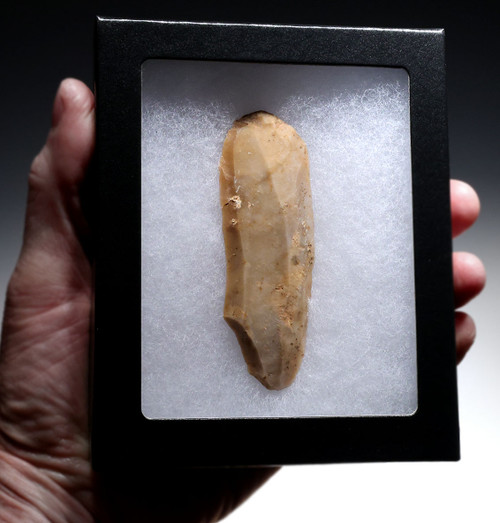
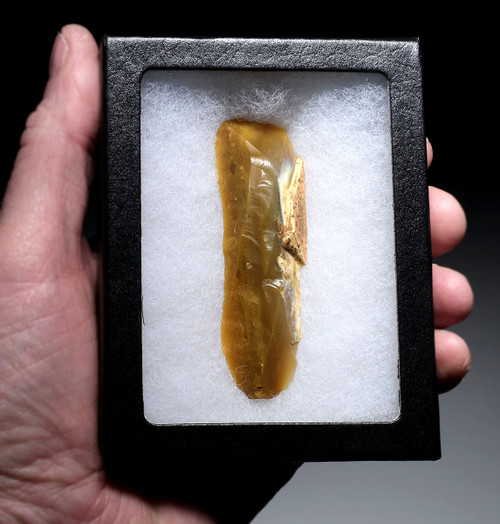
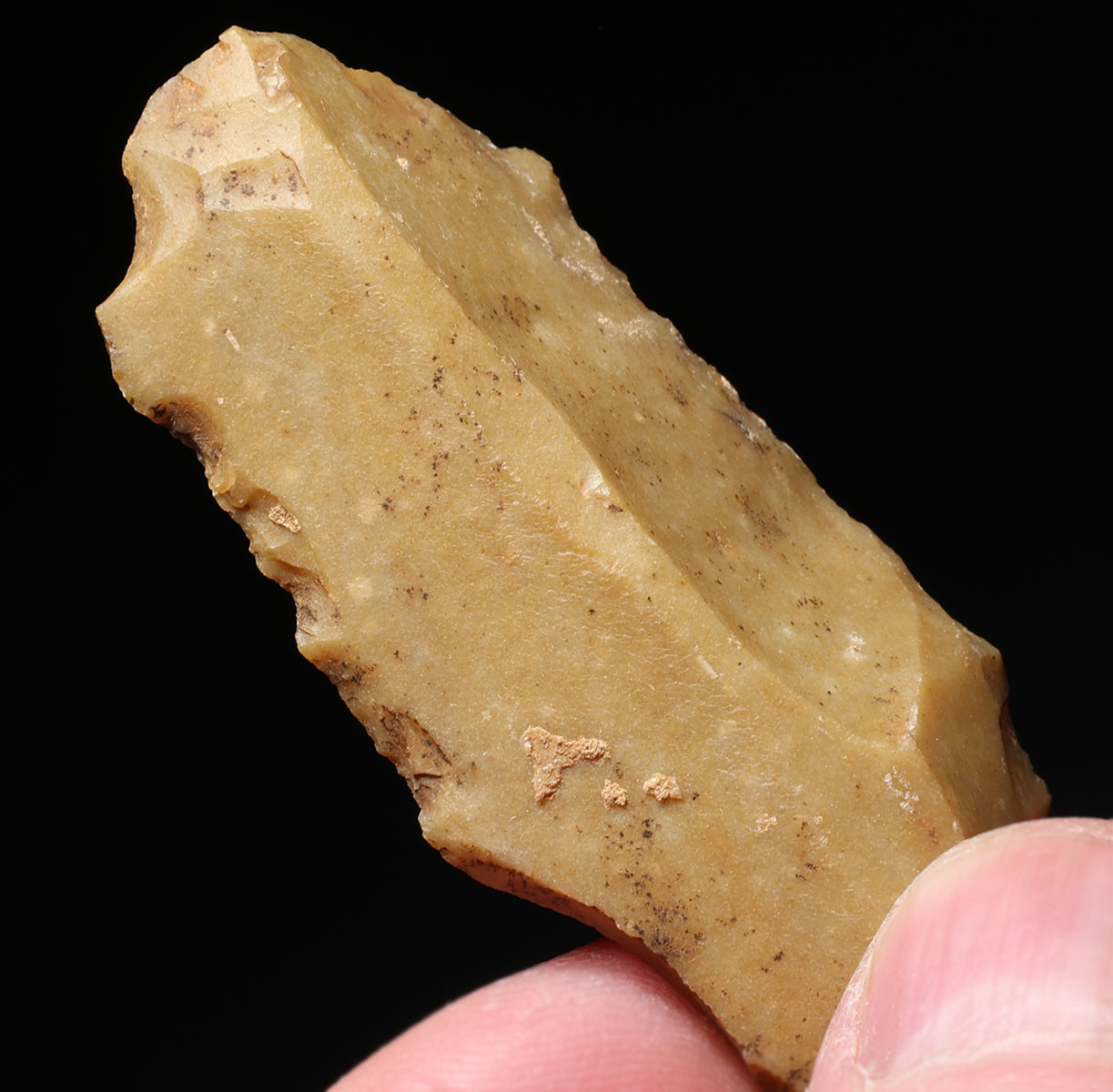
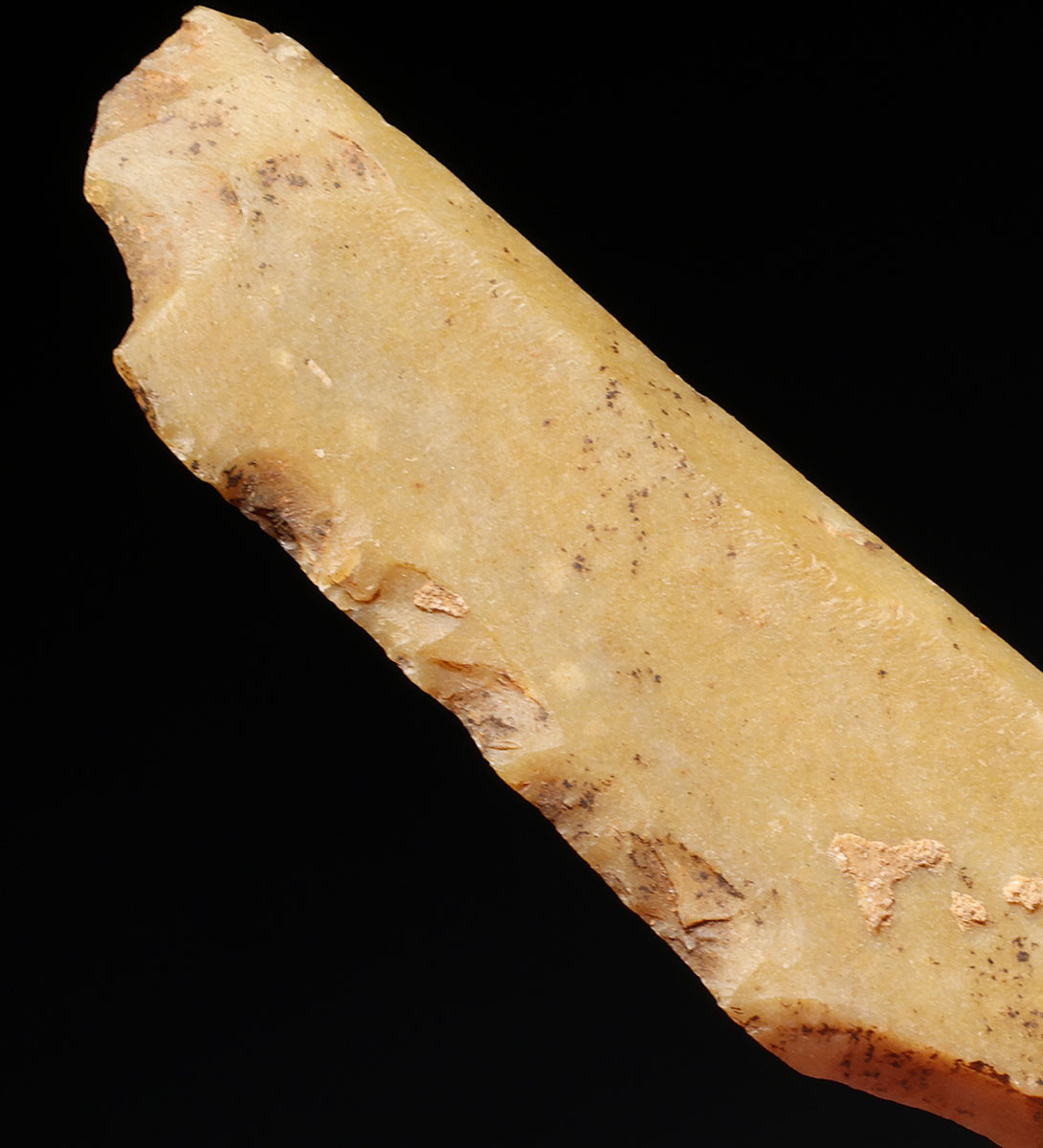
With this offer comes a RARE opportunity to acquire an authentic Neanderthal flint tool artifact from the famous La Gane prehistoric Neanderthal and Cro-Magnon habitation rock shelter site in the Dordogne Valley of France. The Dordogne Region in France is considered one of the most important regions of human prehistory in Europe. This specimen came from a collection dating back to the early 1900's by a French collector who excavated the Paleolithic layers of the shelter to reveal a Middle Paleolithic level of Mousterian (Neanderthal) occupation lying directly below another level of Upper Paleolithic (Cro-Magnon) occupation. Such a collection provides a fantastic and rare window into long-term prehistoric human habitation spanning two Paleolithic periods - from Neanderthal to Cro-Magnon life. In this collection were not only tools from both periods but also, many fossil remains of animals killed and eaten by these prehistoric humans. The remains included numerous bones and teeth of horse, red deer, reindeer, aurochs and steppe bison. The presence of animal bone fragments indicates the process of smashing bones to get to the marrow which was prized for its rich food value as much if not more than the meat itself. Collections like this come maybe once in a lifetime, if that. This rare chance to acquire such objects will end when we sell out the limited number of specimens we have. Because collecting these artifacts has been off-limits for many decades, genuine fine grade Middle Paleolithic Neanderthal remains from an iconic region such as this specimen, have already proven to continue to appreciate in value as time goes on.
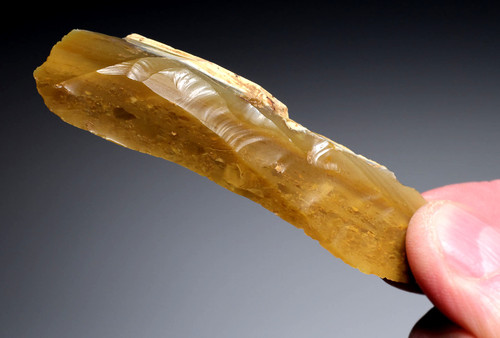
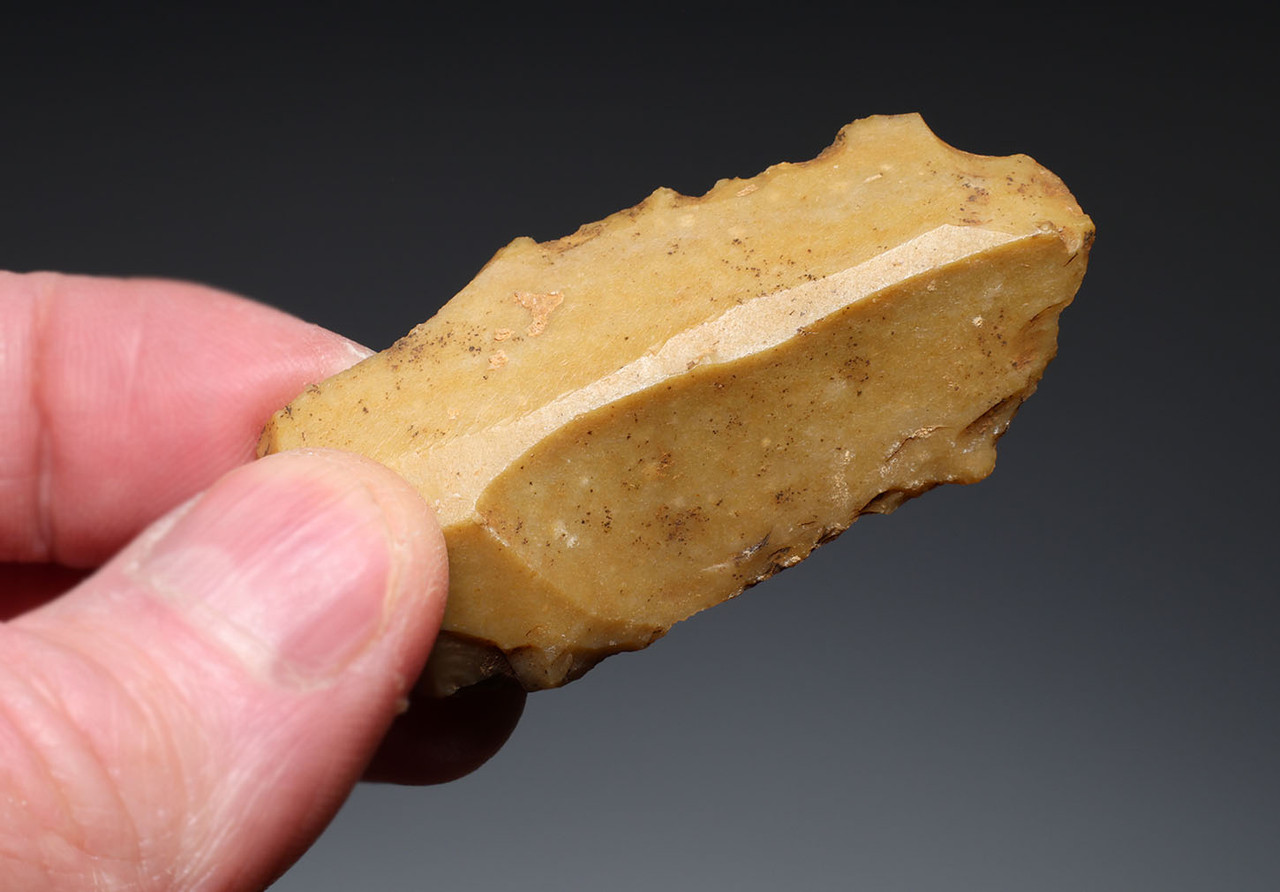
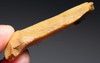
This is a superb Neanderthal flint tool classified as a BLADE or KNIFE. It is complete with no modern damage and all its original flaking. It was made by striking a flake off a prepared blade core, and then further refined on the ends with secondary flaking. Extensive use wear and prehistoric resharpening is visible on the cutting edges. Intact mineral encrustations and deposits exist on all flint surfaces and hinge fractures to testify to authenticity and lack of any modern alterations.
This is a superb example of a Middle Paleolithic flint tool from this famous Neanderthal and later, Cro-Magnon site with an interesting story of long-term use by two human species!
HISTORY
The Prehistoric Sites and Decorated Caves of the Vézère Valley is a UNESCO World Heritage Site in France since 1979. It specifically lists 15 prehistoric sites in the Vézère valley in the Dordogne department, mostly in and around Les Eyzies-de-Tayac-Sireuil, which has been called the "Capital of Prehistory". This valley is exceptionally rich in prehistoric sites, with more than 150 known sites including 25 decorated caves, and has played an essential role in the study of the Paleolithic era and its art. Three of the sites are the namesakes for prehistoric periods; the Micoquien (named after La Micoque), Mousterian (after Le Moustier), and Magdalenian (after Abri de la Madeleine). Furthermore, the Cro-Magnon rock shelter gave its name to the Cro-Magnon, the generic name for the European early modern humans. Many of the sites were discovered or first recognized as significant and scientifically explored by the archaeologists Henri Breuil and Denis Peyrony in the early twentieth century, while Lascaux, which has the most exceptional rock art of these, was discovered in 1940.
The sites cover a period of nearly 400,000 years of human habitation, starting at La Micoque, inhabited from ca. 400,000 years ago until 100,000 years ago and ending about 8,000 years ago. Excavations in the Dordogne region started in 1810, but only in 1863 were the first scientific researches made by the paleontologist Edouard Lartet together with the Englishman Henry Christy; in a period of five months they visited numerous sites in Les Eyzies, including the Grotte Richard, some shelters in the Gorge d'Enfer, Laugerie Basse, Laugerie Haute, La Madeleine and Le Moustier. In 1872 the latter two became the eponymous sites for the Magdalenian and Micoquian cultures, so-called by Gabriel de Mortillet. Lartet previously already had excavated the Cave of Aurignac, which gave its name to the Aurignacian, and had published his finds of a few of the earliest decorated objects from the Upper Paleolithicum.
In 1864 they found at La Madeleine an engraving on ivory, showing a mammoth: this was the first definitive piece of evidence that the inhabitants of these rock shelters had lived at the same time as some long-extinct animals.
In 1868 the human remains of the Cro-Magnon rock shelter were discovered, and in 1872 a prehistoric skeleton was found at Laugerie Basse. The first decorated cave of the region was found in 1896 at La Mouthe: it was the fourth decorated cave found in Europe, some 20 years after the other three had been discovered.