US DOLLAR
 EURO
EURO
 AUSTRALIAN DOLLAR
 CANADIAN DOLLAR
 POUND STERLING



Product Description
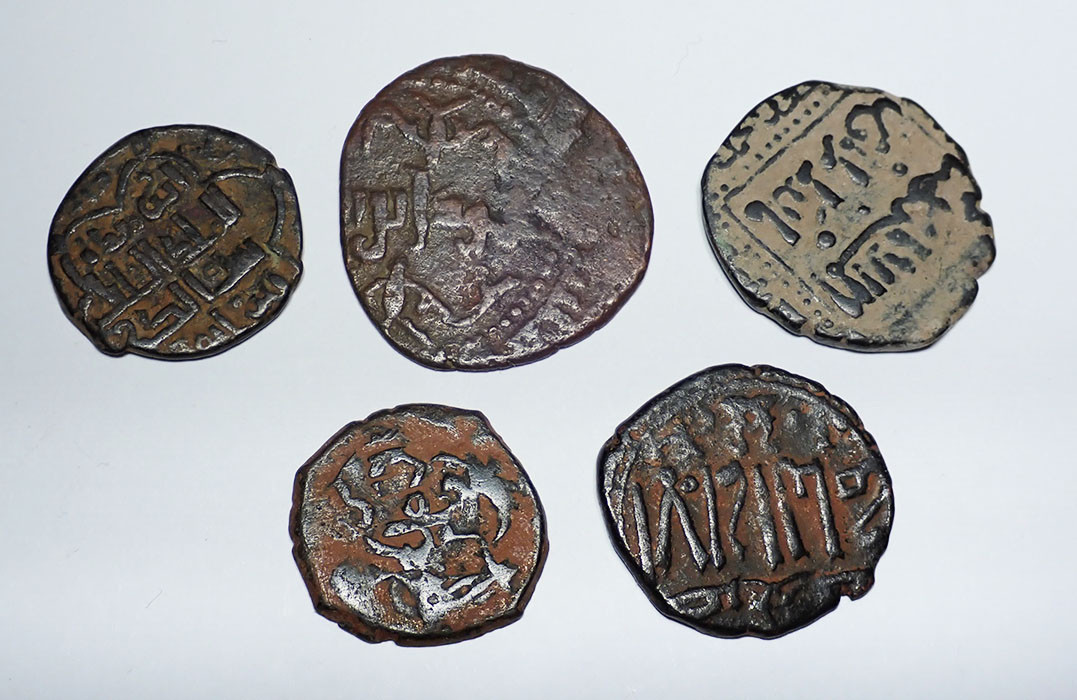
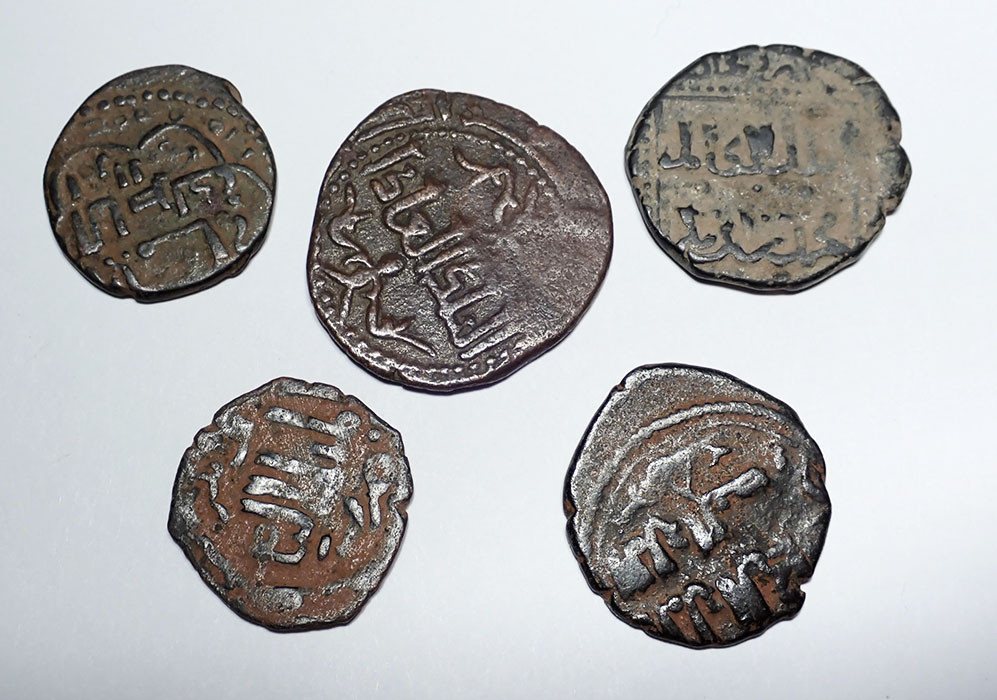
This genuine fine quality ancient coin group includes five EXCELLENT collector quality bronze fals coins of the Ayyubid Dynasty. They are all in uncleaned condition as they were found. All coins show a wonderful original patina with encrustations, and can be identified with research.
Perfect for collectors, jewelers, teachers, treasure hunts, and display.
HISTORY
The Ayyubid dynasty was the founding dynasty of the medieval Sultanate of Egypt established by Saladin in 1171, following his abolition of the Fatimid Caliphate of Egypt. A Sunni Muslim of Kurdish origin, Saladin had originally served Nur ad-Din of Syria, leading Nur ad-Din's army in battle against the Crusaders in Fatimid Egypt, where he was made Vizier. Following Nur ad-Din's death, Saladin was proclaimed as the first Sultan of Egypt, and rapidly expanded the new sultanate beyond the frontiers of Egypt to encompass most of the Levant, in addition to Hijaz, Yemen, northern Nubia, Tarabulus, Cyrenaica, southern Anatolia, and northern Iraq, the homeland of his Kurdish family.
Saladin's military campaigns in the first decade of his rule, aimed at uniting the various Arab and Muslim states in the region against the Crusaders, set the general borders and sphere of influence of the Sultanate of Egypt for the almost three and a half centuries of its existence. Most of the Crusader states, including the Kingdom of Jerusalem, fell to Saladin after his victory at the Battle of Hattin in 1187. However, the Crusaders reconquered the coast of Palestine in the 1190s.
The Ayyubid decline in Egypt was completed with the Mamluk accession to power following the battle at Al-Manṣūrah (1250), but the dynasty persisted in some areas of Syria until 1260. In Ḥamāh, Ayyubid rule was marginally in place, in the first half of the 14th century. The local Ayyubids survived with particular longevity at Ḥiṣn Kayfā, where, following the Mongol invasion in 1260, they continued to govern under Il-Khanid and later Turkmen suzerainty until the Ak Koyunlu conquest in the late 15th century.
Despite their relatively short tenure, the Ayyubids had a transformative effect on the region, particularly Egypt. While Egypt had previously been a Shi'a caliphate, it became the dominant Sunni political and military force under the Ayyubids, a status that it would retain until it was conquered by the Ottomans in 1517. Throughout the sultanate, Ayyubid rule ushered in an era of economic prosperity, and the facilities and patronage provided by the Ayyubids led to a resurgence in intellectual activity in the Islamic world.