 US DOLLAR
 EURO
EURO
 AUSTRALIAN DOLLAR
 CANADIAN DOLLAR
 POUND STERLING









Product Description
SEE MORE PRE-COLUMBIAN ARTIFACTS
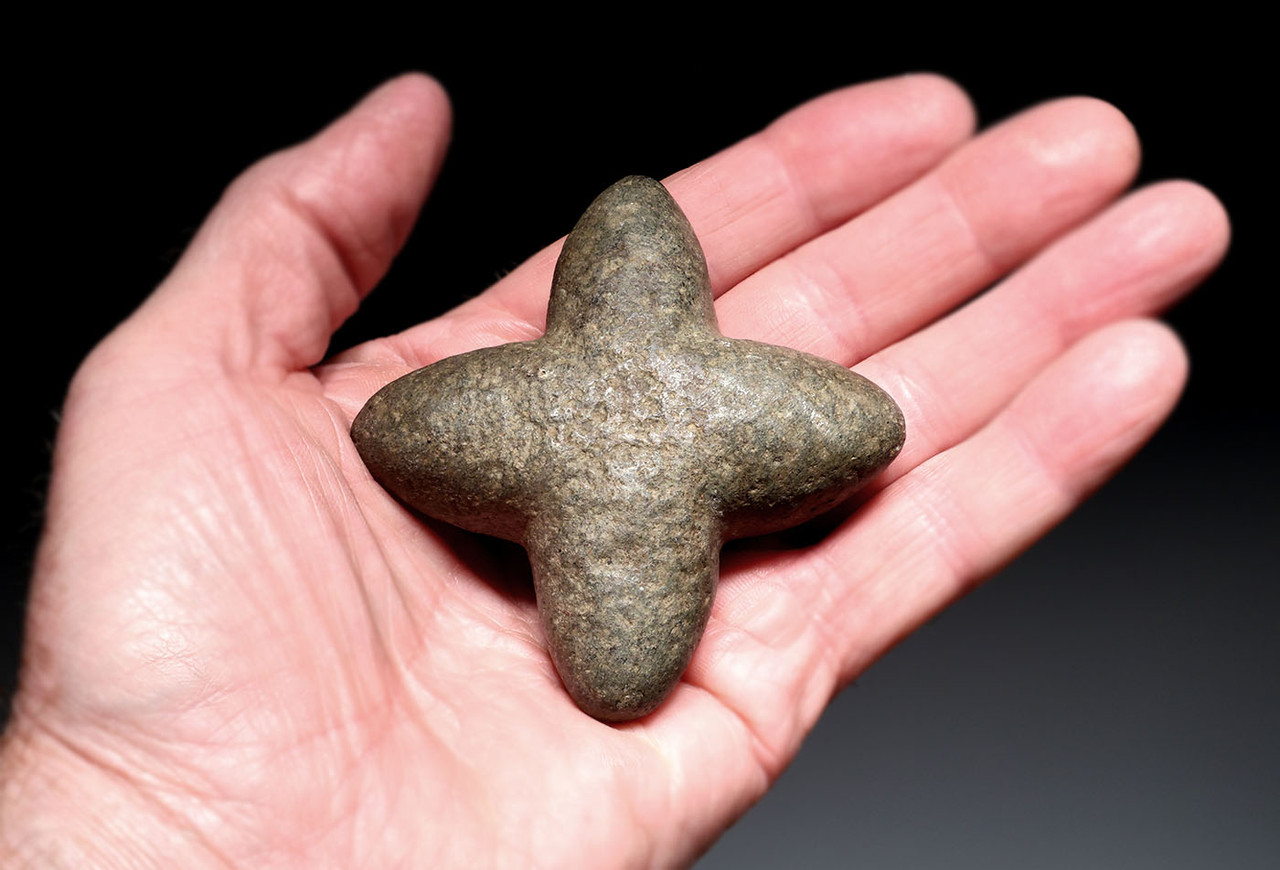
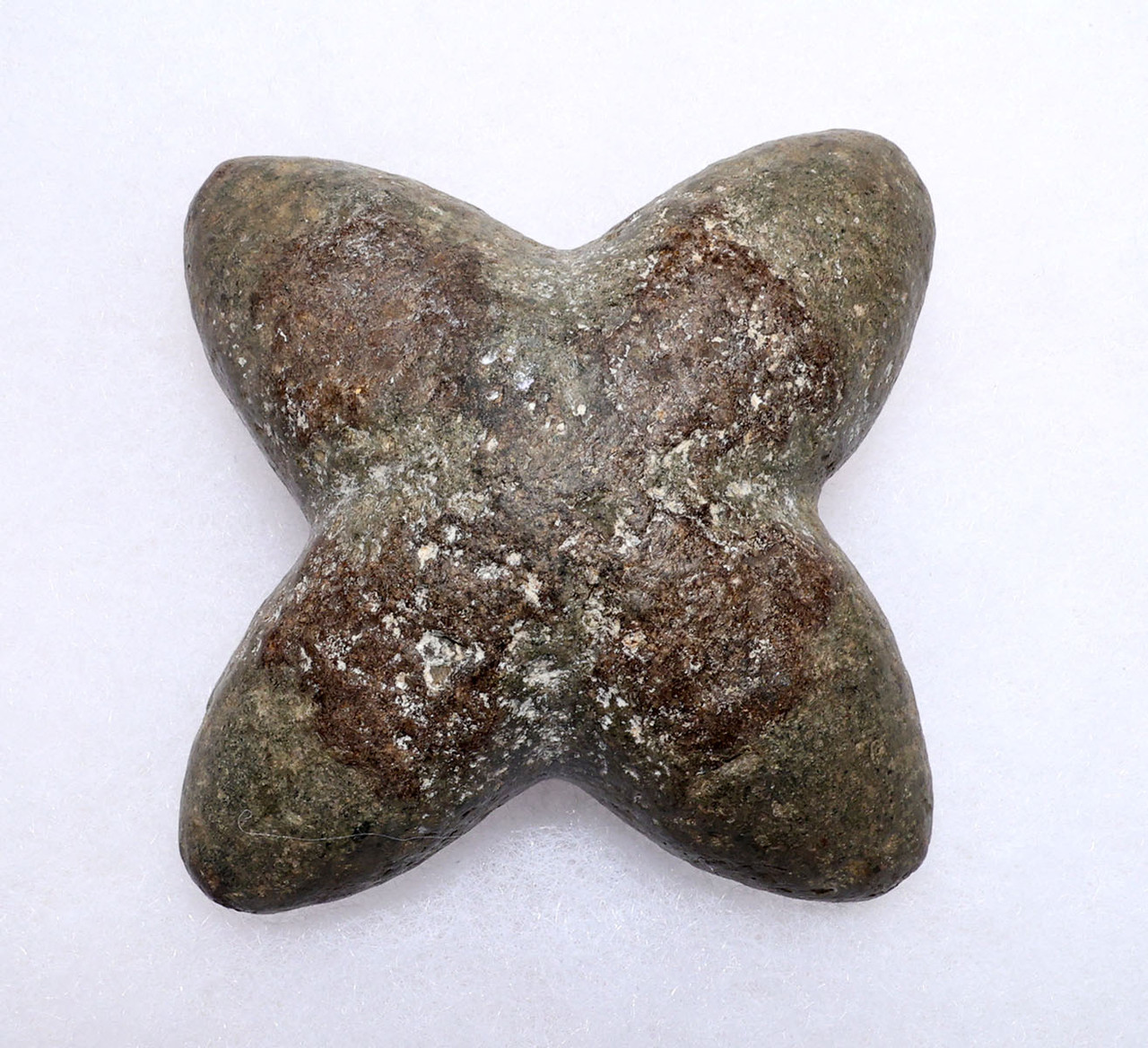
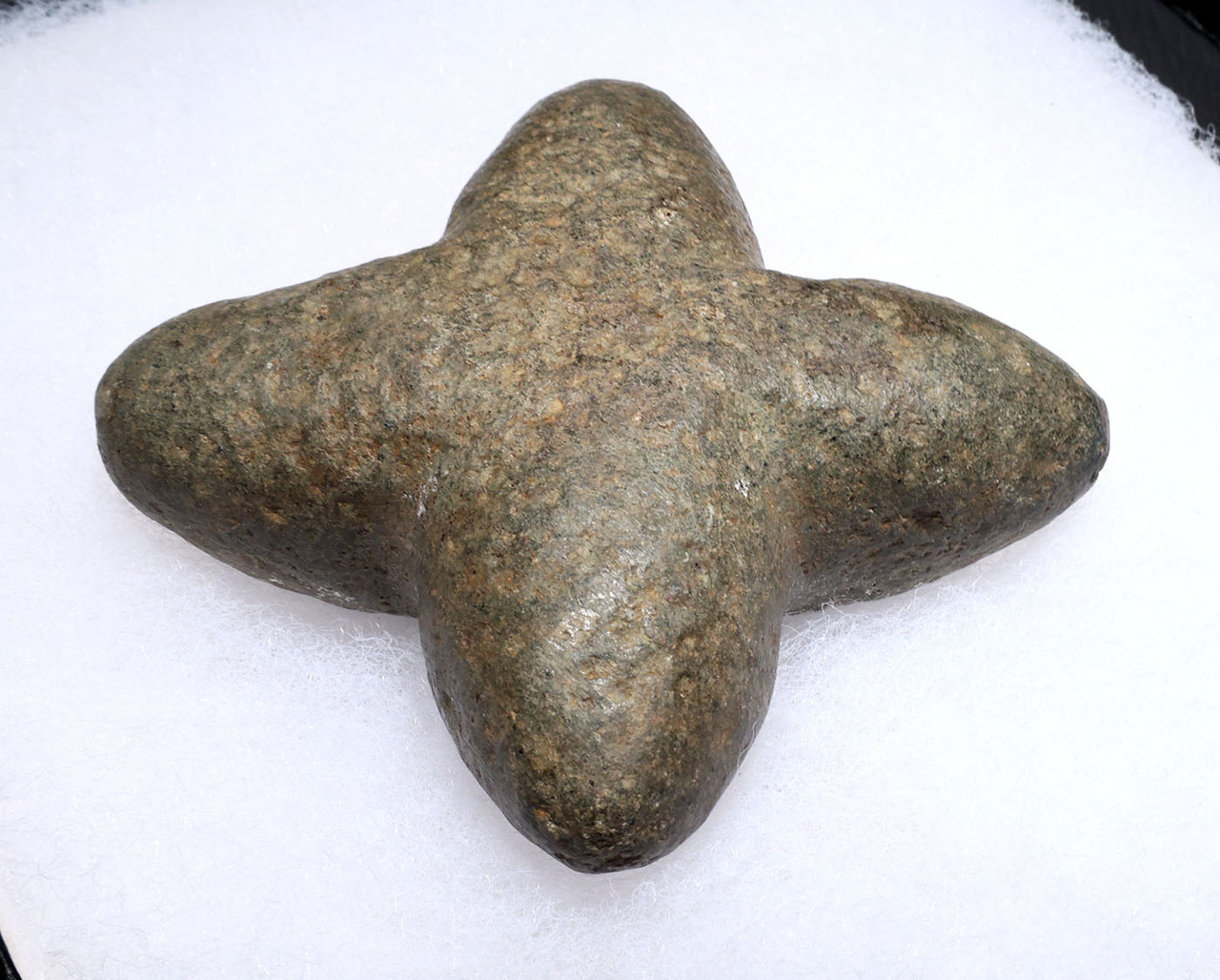
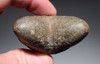
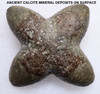
In the 40 years we have been collecting, this is the only specimen of its kind we have ever seen outside of publications. It is an EXTREMELY RARE 4-pointed star stone throwing weight from a Pre-Columbian Inca BOLA PERDIDA ("lost ball") weapon. The bola perdida was a single weight throwing weapon, first used by the Inca warriors. To this day, remote villagers in some communities of the Andes of Peru still use a weapon like this.
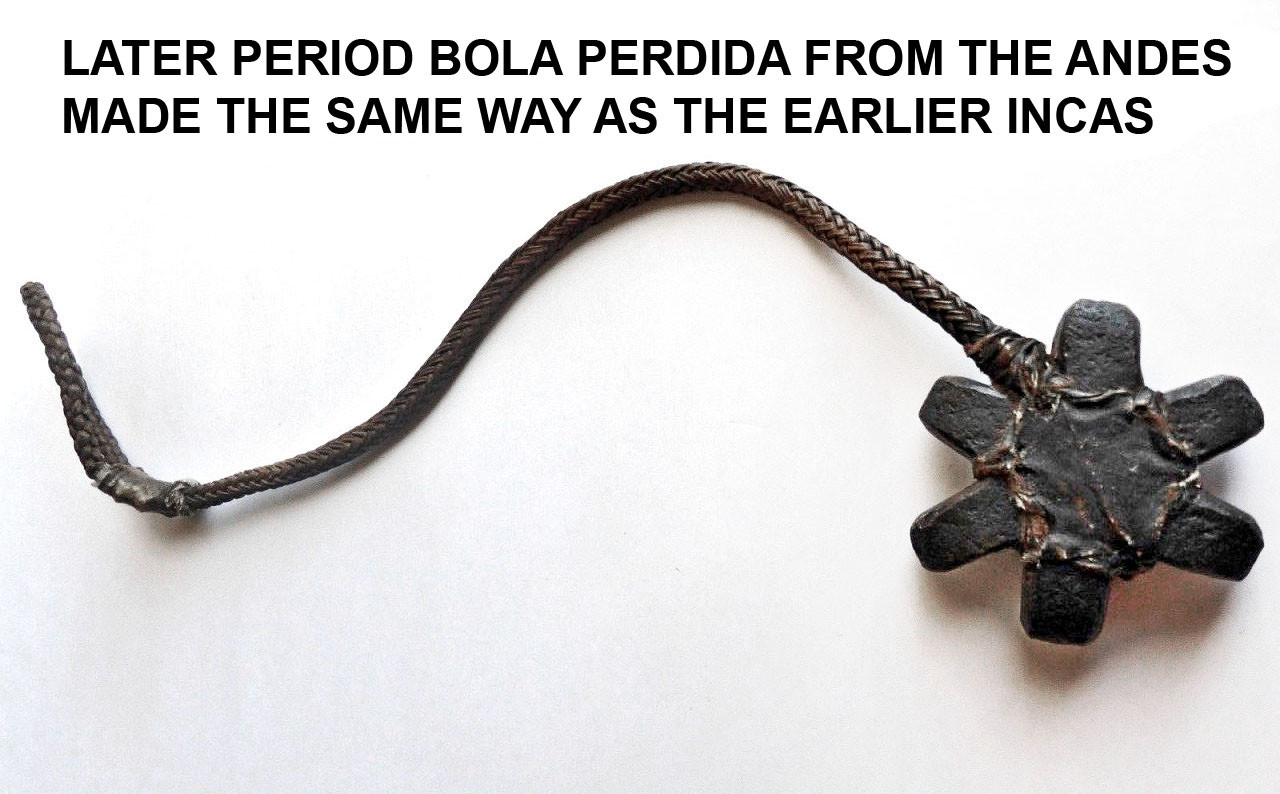
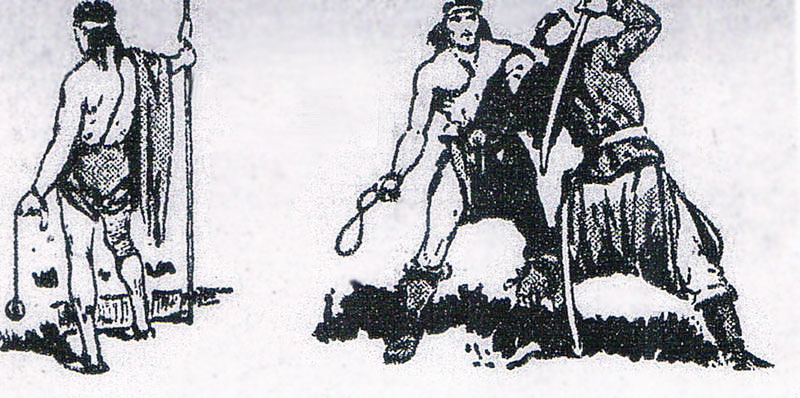
The bola perdida weight came in different shapes, both as a pointed star, and as a globular form. The weight was attached to a long leather or braided fiber cord with the cord being lashed over the recesses of the star and affixed with bitumen where the cord crosses over one side. On this specimen, the area where the cord crossed over the stone and was sealed in bitumen has darkened the stone on one side. There are traces of ancient calcite deposits in the stone recesses of the area where it once covered and still had small uncovered areas for minerals to form. The star bola weight is in perfect preservation, complete and with no combat damage. It must have been a terrifying weapon, able to strike and reach beyond the normal length of an arm, and with speed so fast that it would have been difficult to shield against. A single strike to the skull would have been fatal. The small weight being better suited to swift deployment and high velocity.
An image is shown below of the weapon with the cord, and how it was used.
This is such an impressive weapon and a prize acquisition for any advanced collection featuring a complete array of Pre-Columbian weapons and war items.
Bolas or bolases (from Spanish and Portuguese bola, "ball", also known as a boleadora or boleadeira) is a type of throwing weapon made of weights on the ends of interconnected cords, used to capture animals by entangling their legs. Bolas were most famously used by the gauchos, but have been found in excavations of Pre-Columbian settlements, especially in Patagonia, where indigenous peoples (particularly the Tehuelche) used them to catch 200-pound guanacos and rheas. The Mapuche and the Inca army used them in battle.
Bolas can be named depending on the number of weights used:
Perdida (one weight)
Avestrucera or ñanducera (two weights, for rheas)
Somai (two weights)
Achico (three weights)
Boleadora (three weights)
HISTORY
Starting in the beginning of the 13th century A.D. until their final defeat to the Spanish in 1572, the Inca Empire grew to become the largest empire in pre-Columbian America. Their peak was between the years 1438 and 1533 where they ruled an area as large as the historical empires of Eurasia. Their territory included Peru, southwest Ecuador, western and south central Bolivia, northwest Argentina, the majority of modern Chile, and southwest Colombia, controlled from their center in the city of Cusco in southeastern Peru.
A number of religious cults existed in the empire with regional beliefs but the Incan leadership practiced the worship of their main sun god, INTI. The Incas considered their king, the Sapa Inca, to be the "son of the sun.".
Despite the Incas building one of the largest imperial states in human history, they lacked many basic inventions. They had no wheeled vehicles, did not use animals for transportation or pulling plows, had no knowledge of iron or steel, and used no form of writing. The Inca Empire functioned largely without money or markets, instead using the barter system for the exchange of goods and services. In light of this, they were far from being a primitive society. The Incas built monumental stone architecture that to this day, still defies explanation. They also developed an extensive system of roads and highways reaching all ends of the empire. Their achievements in finely-woven textiles are legendary, and they developed innovations in farming and architecture in the extreme terrain of the Andes where most civilizations would have never dared occupy.


