US DOLLAR
 EURO
EURO
 AUSTRALIAN DOLLAR
 CANADIAN DOLLAR
 POUND STERLING






Product Description
SEE MORE ARTIFACTS OF ANCIENT ASIA
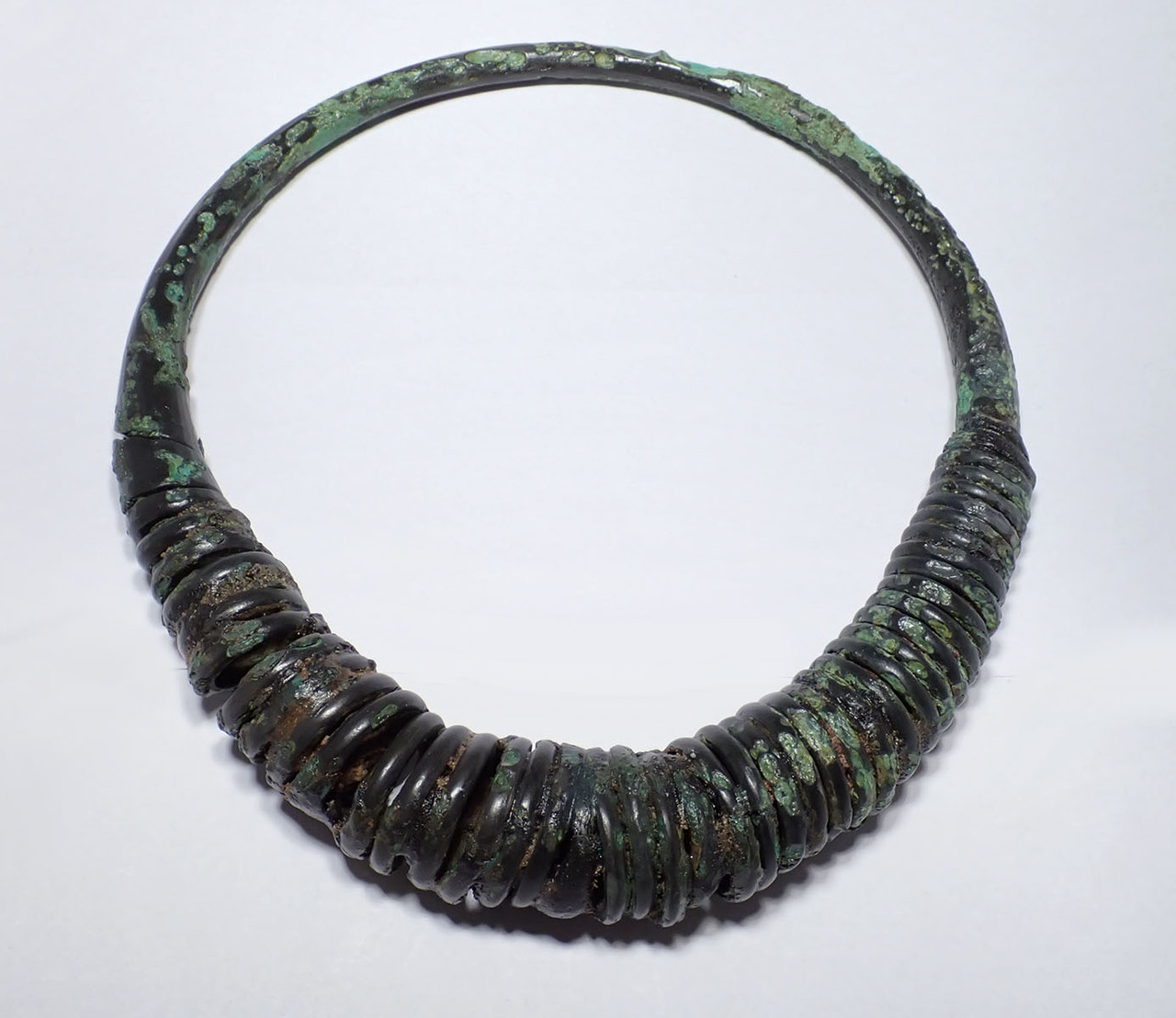
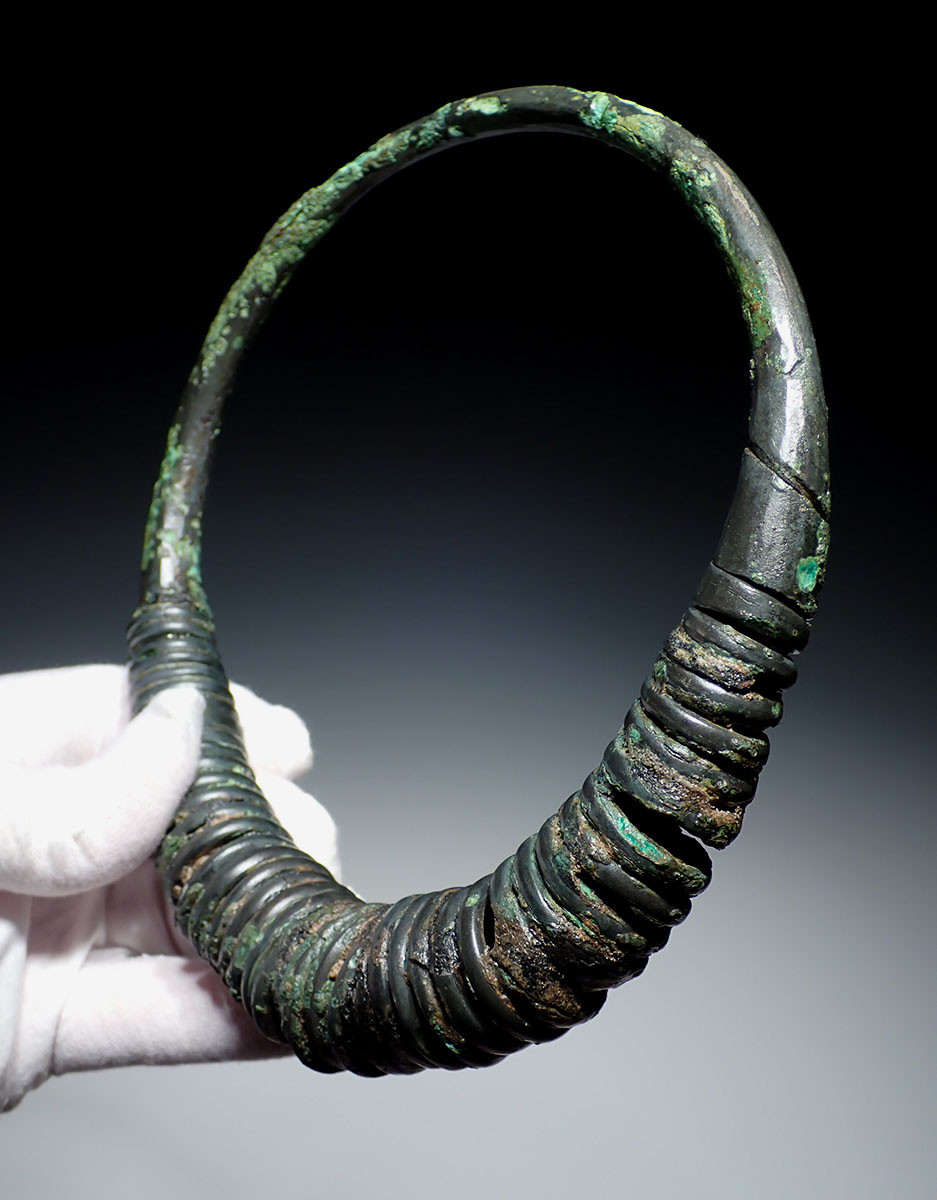
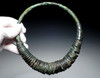
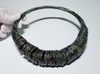
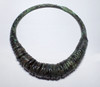
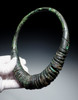
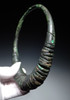
This spectacular, RARE ancient bronze coil torc necklace is the most unique and unusual ancient jewelry piece we have ever handled. It comes from the Angkor civilization (or Khmer Empire) dating between 800 to 1300 AD. The Khmer Empire is the name given to an important civilization of southeast Asia that included all of Cambodia, southeastern Thailand, and northern Vietnam. It is also the name of one of the medieval Khmer capital cities, containing some of the most spectacular temples in the world, such as Angkor Wat. Objects from this lost civilization are intriguing, scarce, and highly desirable.
Crafted entirely of bronze, this exceptional example is complete. It is of a design that is extremely creative and unusual with a long coiled ribbon band of bronze encircling half of a solid bronze ring necklace. No longer flexible to open and close, it once opened by pulling out the ring from one end of the coiled ribbon portion on the lower half. Such a substantial necklace would have been the highest level of status and wealth display for a noblewoman or princess from this ancient empire. Minor repair to the ribbon coil was necessary to preserve its fragile nature.
Monumental Khmer Empire jewelry on this level is rarely seen outside of major Asian museums. A piece that would greatly enhance any collection of ancient jewelry or the former splendor of the crafts of ancient Asia. The unique and ingenious construction and design of this torc necklace is fitting for this enigmatic kingdom that left behind the famous architectural mysteries of Angkor Wat!
This genuine ancient metal object has been professionally cleaned and conserved in our lab, the metal treated to protect against corrosion. Caution when acquiring UNTREATED ancient metal objects as they are extremely hygroscopic (attract moisture from the atmosphere), and are highly prone to corrosion and severe deterioration, over time. Every metal antiquity we sell is always cleaned and conserved in ways that exceed museum standards, to protect and preserve the object for the future. This is extremely rare in the public antiquity market.
HISTORY
The Khmer Empire, also known as the Angkor Empire, was a Hindu-Buddhist empire in Southeast Asia. The beginning of the era of the Khmer Empire is conventionally dated to 802 when King Jayavarman II declared himself chakravartin ("universal ruler") on Phnom Kulen. The empire ended with the fall of Angkor in the 15th century. The empire, which grew out of the former kingdoms of Funan and Chenla, at times ruled over and/or vassalised most of mainland Southeast Asia and parts of Southern China, stretching from the tip of the Indochinese Peninsula northward to modern Yunnan province, China, and from Vietnam westward to Myanmar. Satellite imaging has revealed that Angkor, during its peak in the 11th to 13th centuries, was the largest pre-industrial urban center in the world!
Its greatest legacy is Angkor, in present-day Cambodia, which was the site of the capital city during the empire's zenith. The majestic monuments of Angkor, such as Angkor Wat and Bayon, bear testimony to the Khmer Empire's immense power and wealth, impressive art and culture, architectural technique, aesthetics achievements, and the variety of belief systems that it patronised over time.