 US DOLLAR
 EURO
EURO
 AUSTRALIAN DOLLAR
 CANADIAN DOLLAR
 POUND STERLING







Product Description
SEE MORE ANCIENT NEAR EASTERN ARTIFACTS
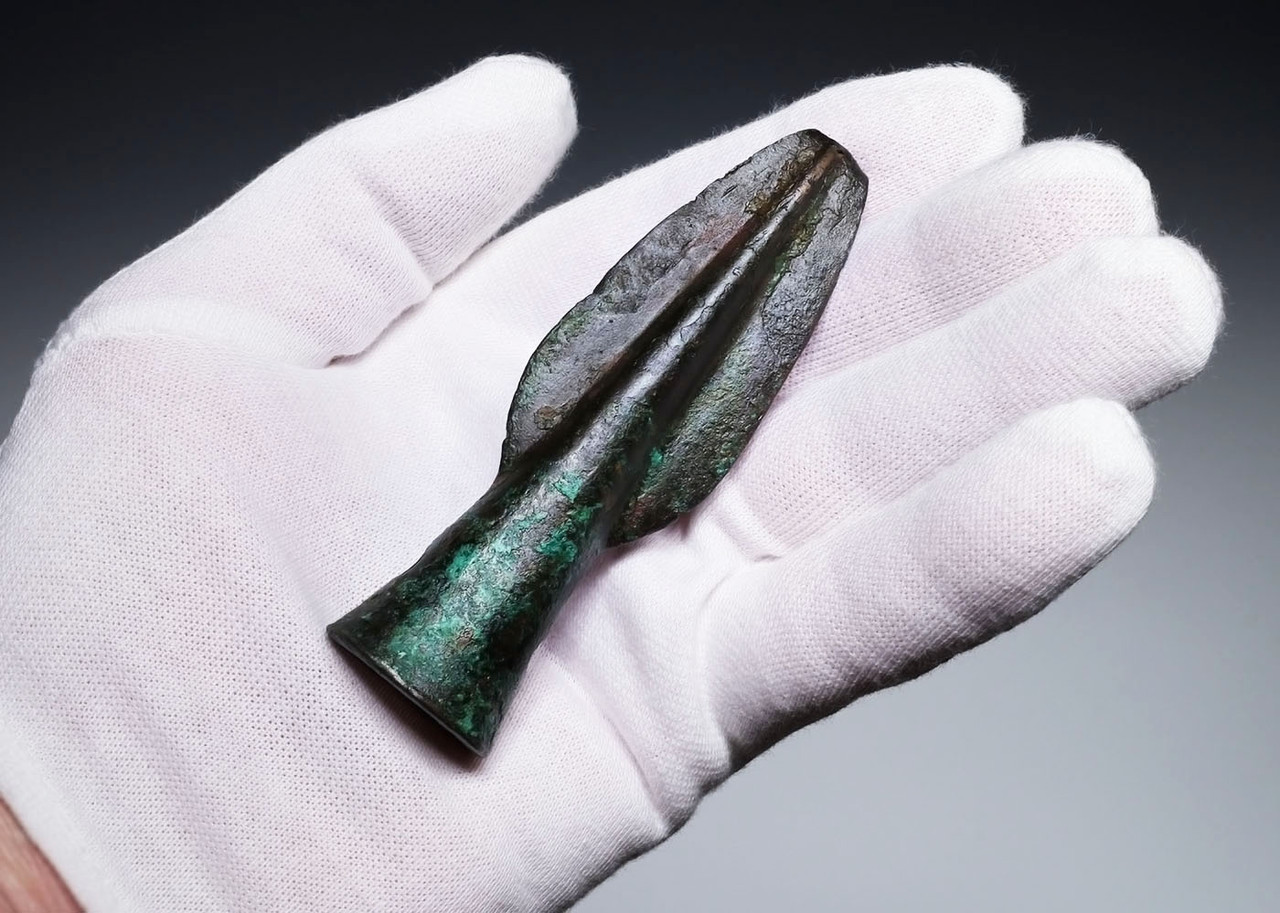
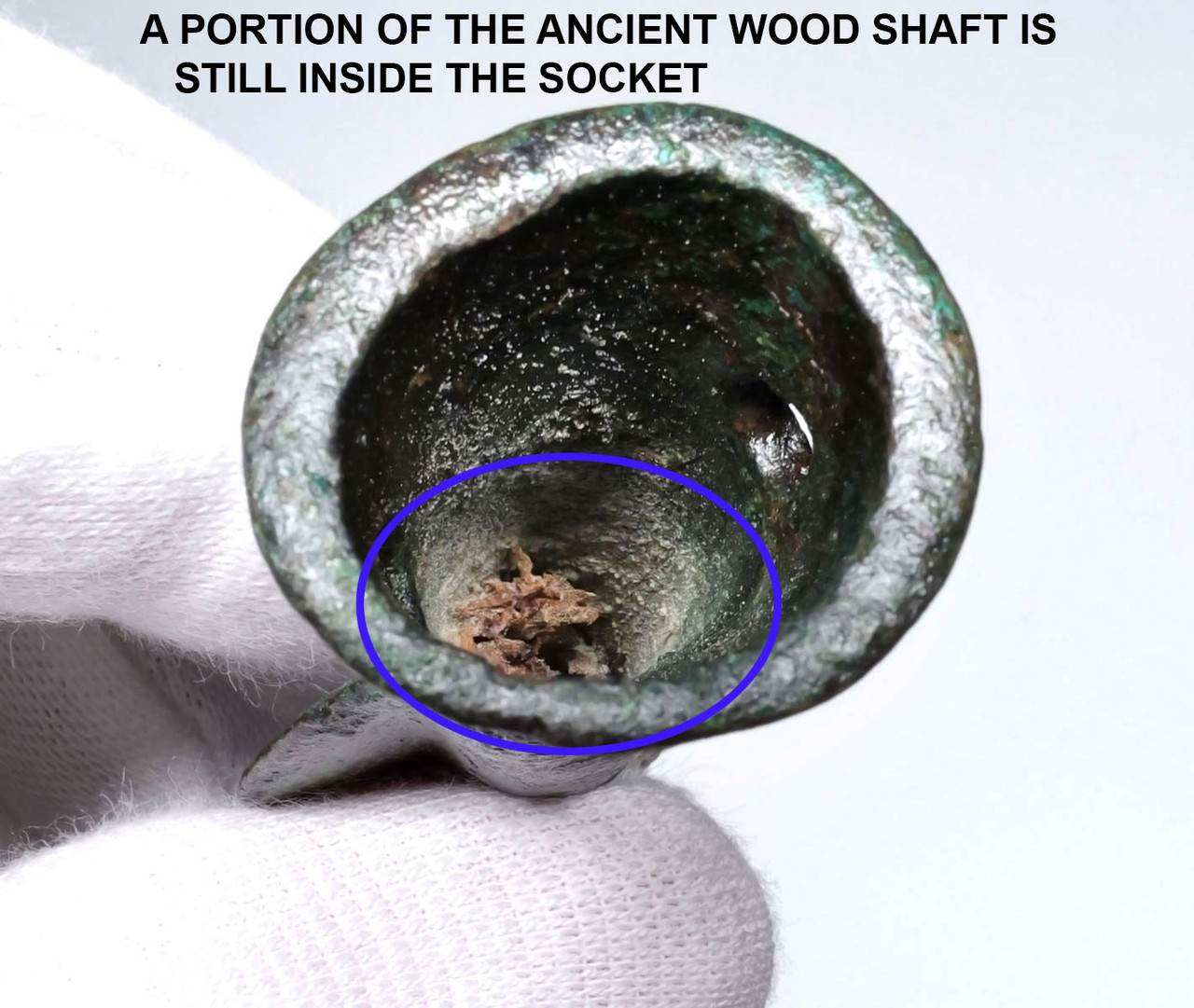
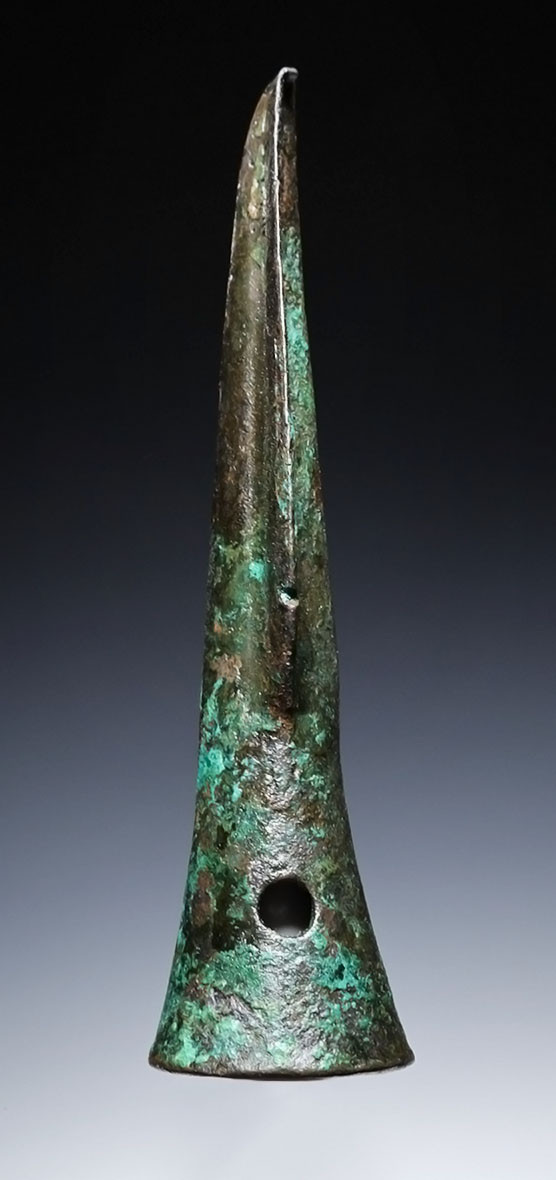
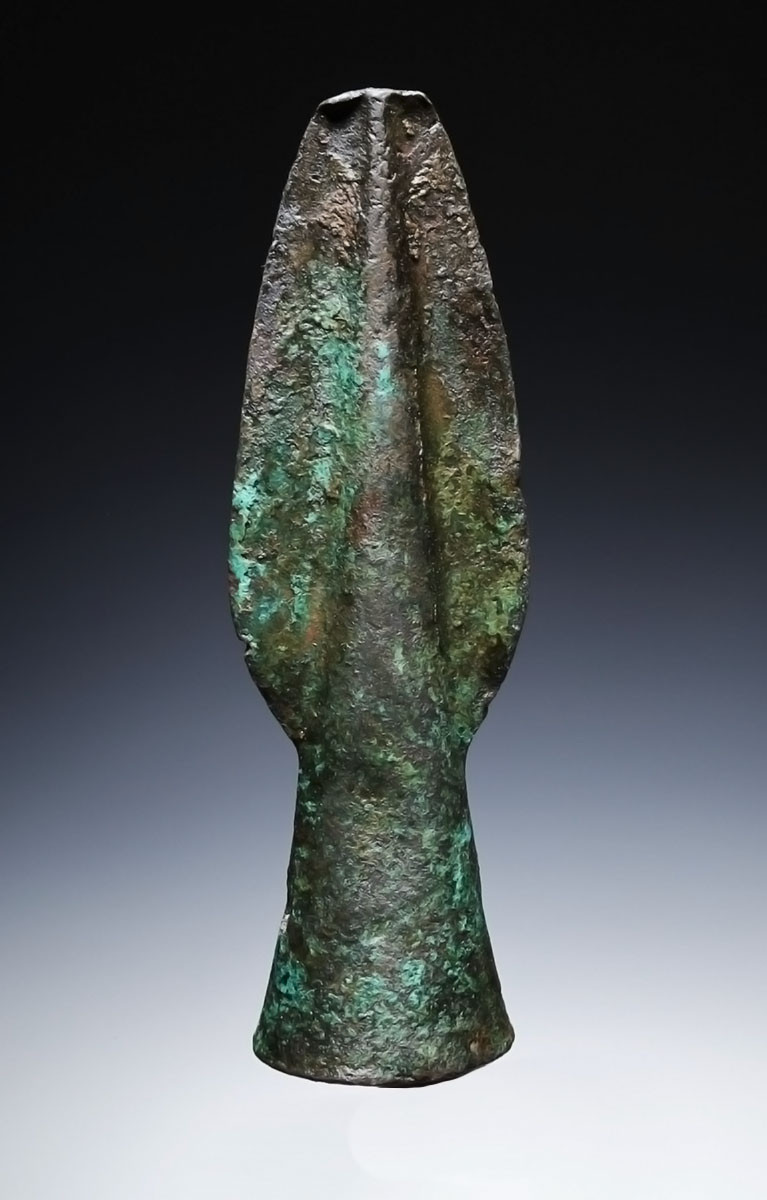
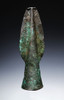
With excellent preservation, this socketed ancient bronze throwing javelin spearhead is a rare weapon from the ancient kingdom of Bactria. Very few ancient bronze objects from Bactria are ever seen in private hands, making this a scarce offering. The large socket shows this would have been mounted on a functional wooden shaft and hurled at enemy troops as a javelin weapon. An amazing feature of this spearhead is the presence of a remnant of the ancient wooden shaft still deeply embedded in the socket! The tip shows impact damage from actual combat use. The entire specimen is perfectly preserved in its original condition with all original intact ancient encrustations to provide proof of age and authenticity.
For an identical spearhead to this specimen offered, see Figure 4, group C at the REFERENCES link of the published paper at the end of this page.
This object has been professionally cleaned and conserved in our lab, being treated with a special sealer developed and formulated by us specifically for ancient metal preservation. The patina shows beautiful traits only found in authentic ancient weapons such as a layered mineralized patina with encrustations. No active bronze disease exists on its surfaces. Bronze disease can be a problem in bronze artifacts and untreated, it can literally eat away an artifact over a matter of years and destroy it.
HISTORY
Bactria or Bactriana, was an ancient Iranian civilization in Central Asia centered on Northern Afghanistan or areas that comprises most of modern-day Afghanistan, and including parts of southwestern Tajikistan and southeastern Uzbekistan. To the south and east, it was bordered by the Hindu Kush Mountain range. On its western side, the region was bordered by the great Carmanian desert and to the north it was bound by the Oxus river.
Called "beautiful Bactria, crowned with flags" by the Avesta, the region is considered in Zoroastrianism to be one of the seventeen perfect Iranian lands that the supreme deity Ahura Mazda had created, and is one of the earliest centers of ancient Zoroastrianism. Bactria was the homeland of Indo-Iranians who moved south-west into Iran and the north-west of the South Asian subcontinent around 2500–2000 BC. It was in these regions, where the fertile soil of the mountainous country is surrounded by the Turan Depression, that the prophet Zoroaster was said to have been born and gained his first adherents. Avestan, the language of the oldest portions of the Zoroastrian Avesta, was one of the Old Iranian languages, and is the oldest attested member of the Eastern Iranian languages.
The main Bronze Age culture of the region dated from 2200 BC to 1700 BC is the Bactria–Margiana Archaeological Complex (BMAC) and also known as the "Oxus civilization". Several important trade routes from India and China (including the Silk Road) passed through Bactria and, as early as the Bronze Age, this had allowed the accumulation of vast amounts of wealth by the mostly nomadic population. The first proto-urban civilization in the area arose during the 2nd millennium BC. Control of these lucrative trade routes, however, attracted foreign interest, and in the 6th century BC the Bactrians were conquered by the Persians, and in the 4th century BC by Alexander the Great. These conquests marked the end of Bactrian independence. From around 304 BC the area formed part of the Seleucid Empire, and from around 250 BC it was the centre of a Greco-Bactrian kingdom, ruled by the descendants of Greeks who had settled there following the conquest of Alexander the Great.
REFERENCES
https://www.frontiersin.org/journals/earth-science/articles/10.3389/feart.2023.1224873/full