US DOLLAR
 EURO
EURO
 AUSTRALIAN DOLLAR
 CANADIAN DOLLAR
 POUND STERLING





Product Description
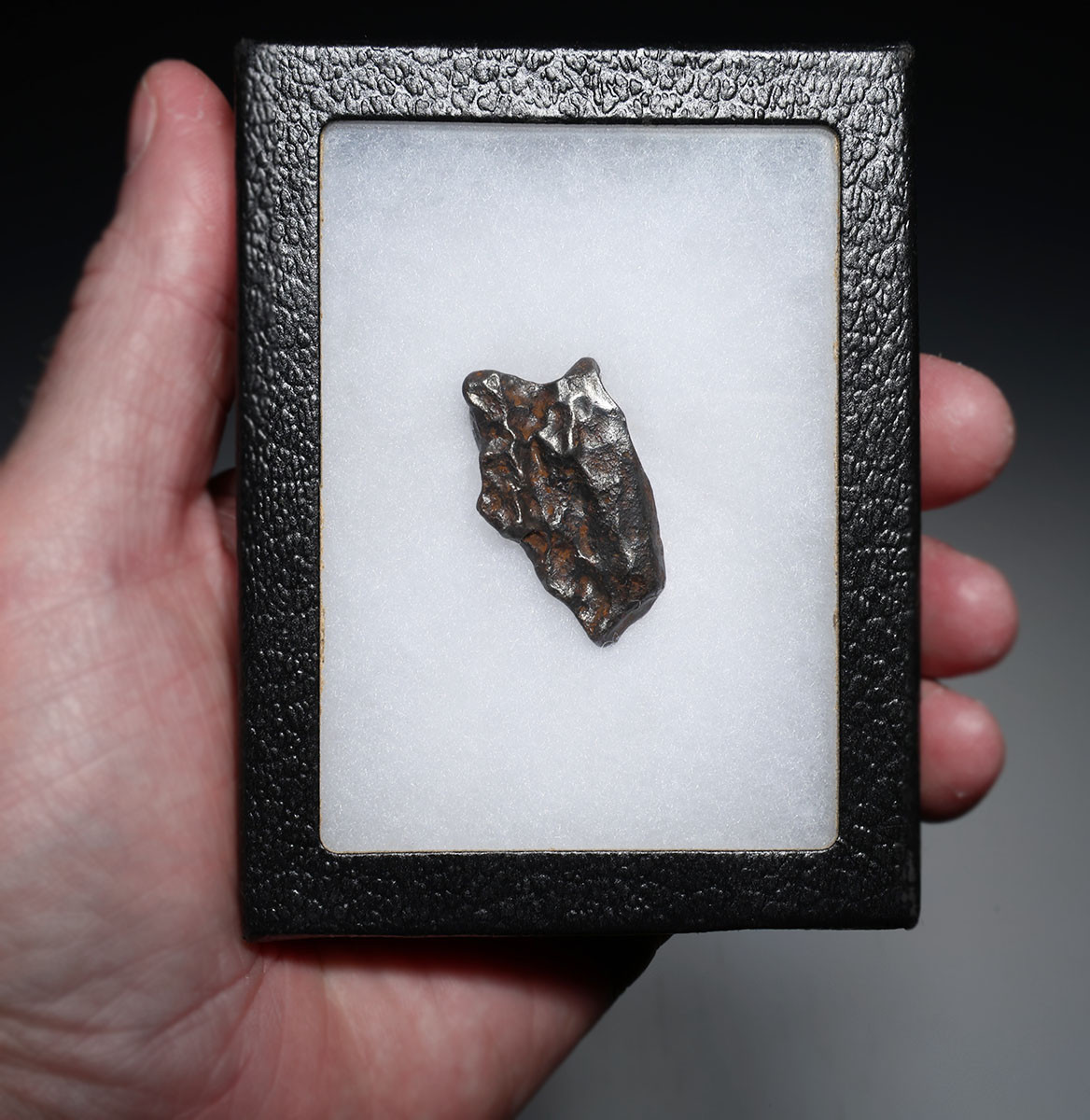
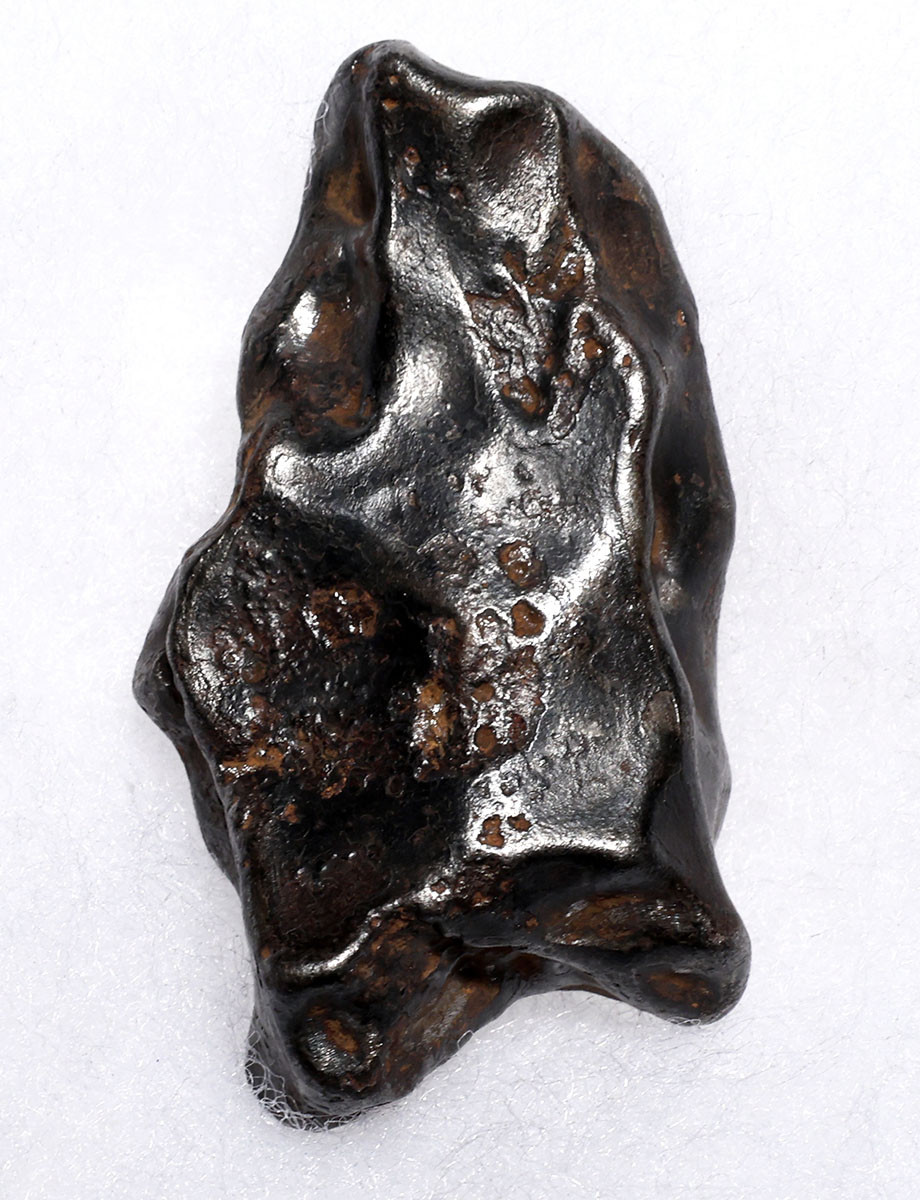
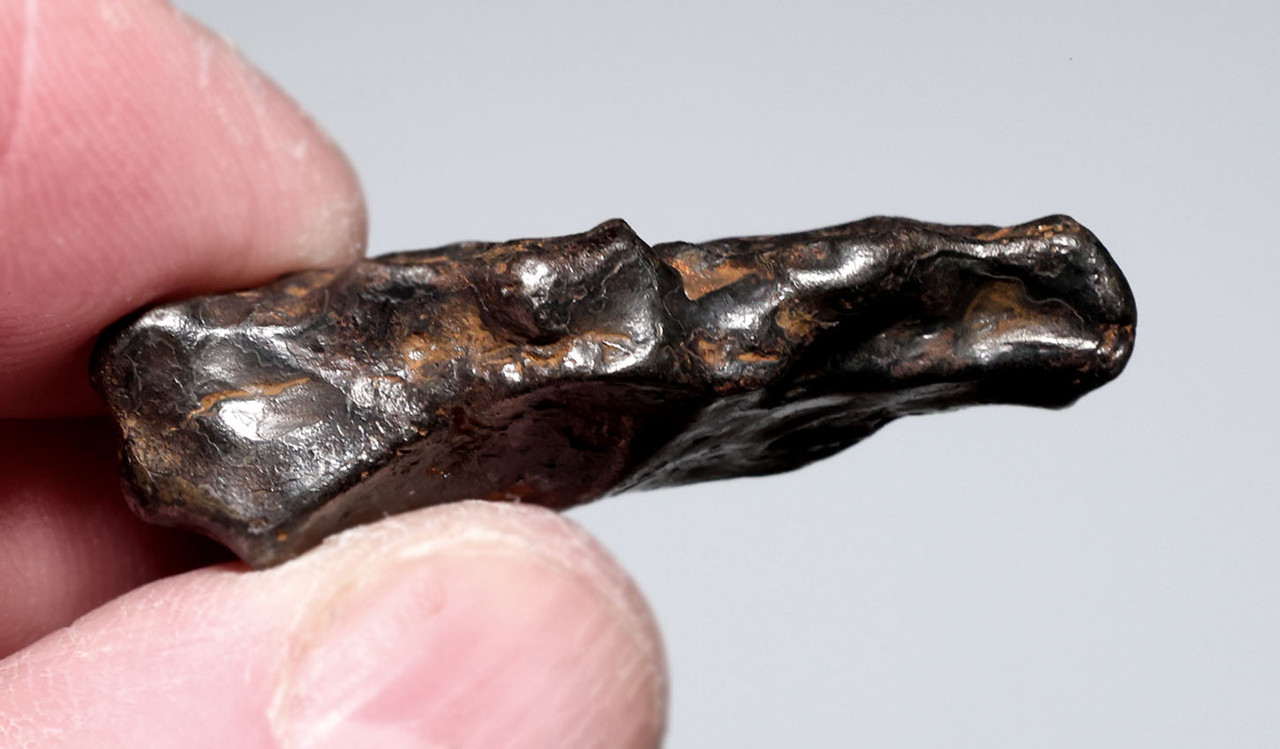
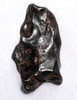
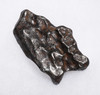
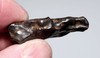
This beautiful Sikhote-Alin meteorite weighs 28.7 grams and shows features that are considered ideal and highly desirable in this type of meteorite. Its flattened form shows both sides covered with thumbprints or regmaglypts (shallow depressions or dimples that form on the surface of some meteorites as they pass through Earth's atmosphere), as well as a fusion crust surface and evidence of atmospheric ablation. There are two types of these meteorites - actual meteorites that fell to earth in the form that they retain (THIS SPECIMEN), and shrapnel specimens that can be identified by sharp edges as a result of violent fragmentation as they struck the earth and broke apart.
The size and shape of this exquisite example makes it ideal to be a candidate for a jewelry centerpiece - either in a pendant or in a ring.
HISTORY
In the southeastern Russian SFSR, part of the Soviet Union, an iron meteorite fell on the Sikhote-Alin mountains in 1947. Large iron meteorite falls have been witnessed, and fragments have been recovered, but never before in recorded history has a fall of this magnitude occurred. An estimated 23 tonnes (25 short tons; 51,000 pounds) of fragments survived the fiery passage through the atmosphere and reached the Earth.
Specimens of the Sikhote-Alin Meteorite are basically of two types: individual, thumbprinted or regmaglypted specimens, showing fusion crust and signs of atmospheric ablation, and shrapnel or fragmented specimens, sharp-edged pieces of torn metal showing evidence of violent fragmentation. The first type probably broke off the main object early in the descent. These pieces are characterized by regmaglypts (cavities resembling thumbprints) on the surface of each specimen. The second type are fragments which were either torn apart during the atmospheric explosions or blasted apart upon impact on the frozen ground. Most resulted from the explosion at 5.6 km (3.5 mi) altitude.
Because the meteor fell during the daytime, it was observed by many eyewitnesses. Evaluation of this observational data allowed V. G. Fesenkov, then chairman of the meteorite committee of the USSR Academy of Science, to estimate the meteoroid's orbit before it encountered the Earth. This orbit was ellipse-shaped, with its point of greatest distance from the sun situated within the asteroid belt, similar to many other small bodies crossing the orbit of the Earth. Such an orbit was probably created by collisions within the asteroid belt.
The Sikhote-Alin meteorite is classified as an iron meteorite belonging to the meteorite group IIAB and with a coarse octahedrite structure. It is composed of approximately 93% iron, 5.9% nickel, 0.42% cobalt, 0.46% phosphorus and 0.28% sulfur, with trace amounts of germanium and iridium. Minerals present include taenite, plessite, troilite, chromite, kamacite and schreibersite.