 US DOLLAR
 EURO
EURO
 AUSTRALIAN DOLLAR
 CANADIAN DOLLAR
 POUND STERLING








Product Description
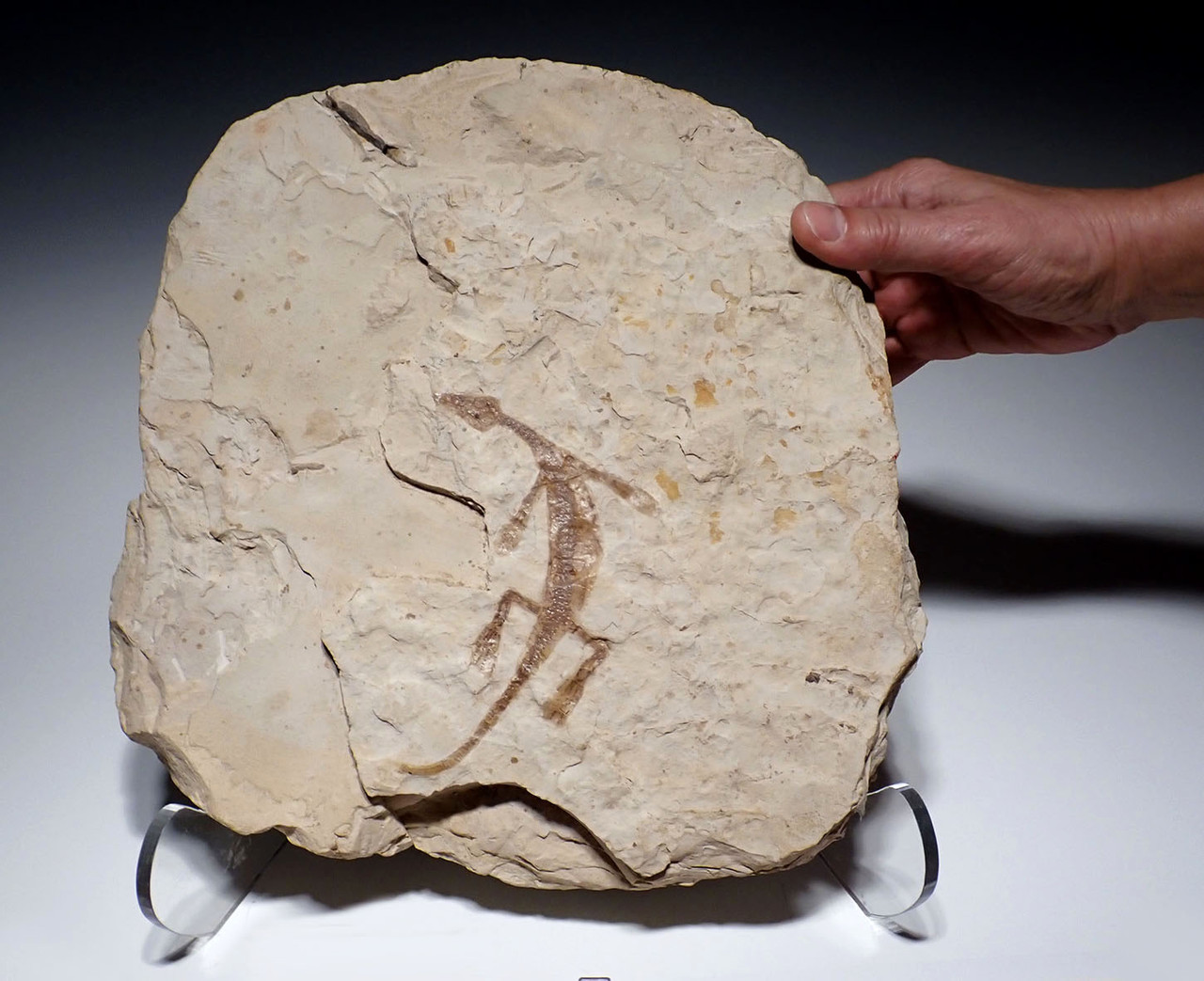
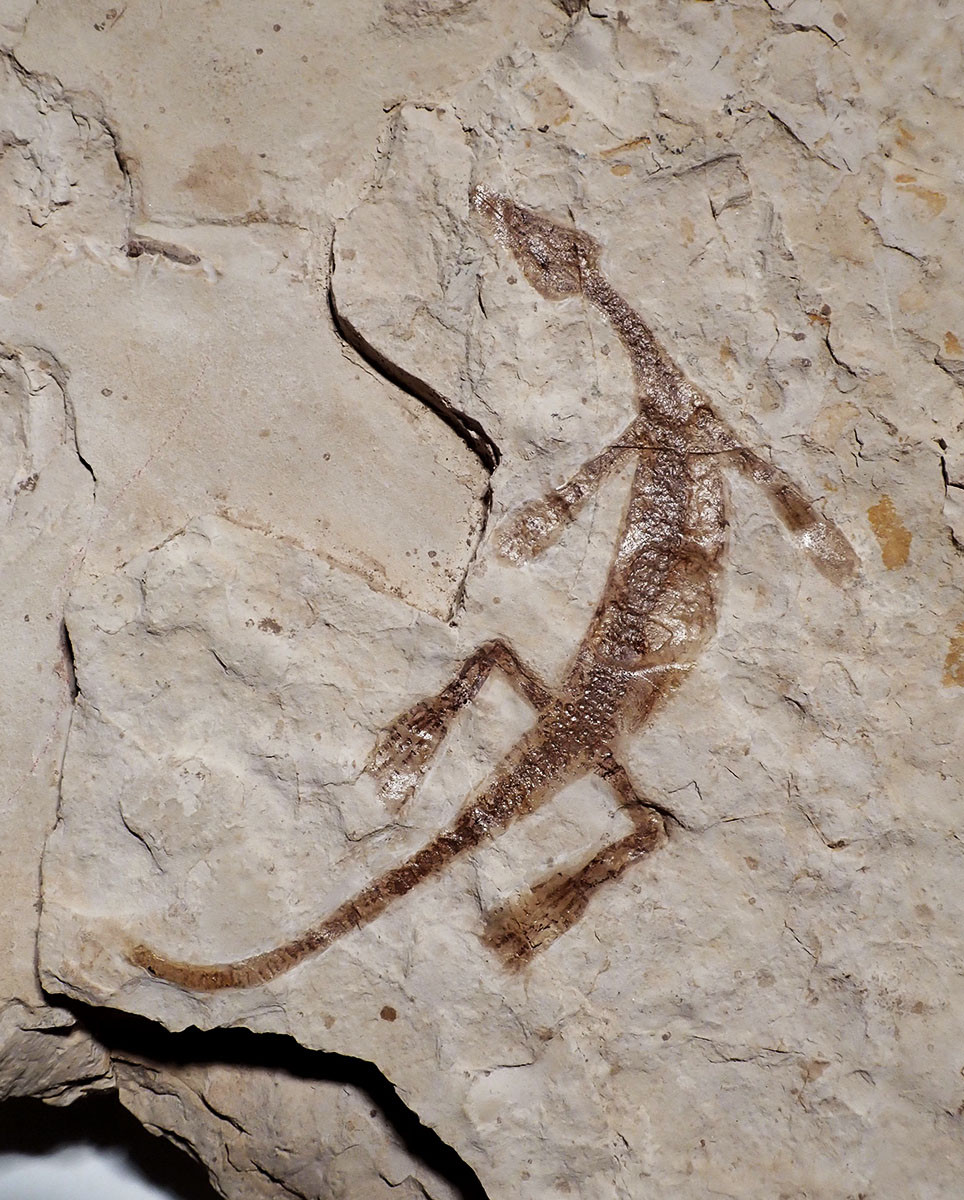
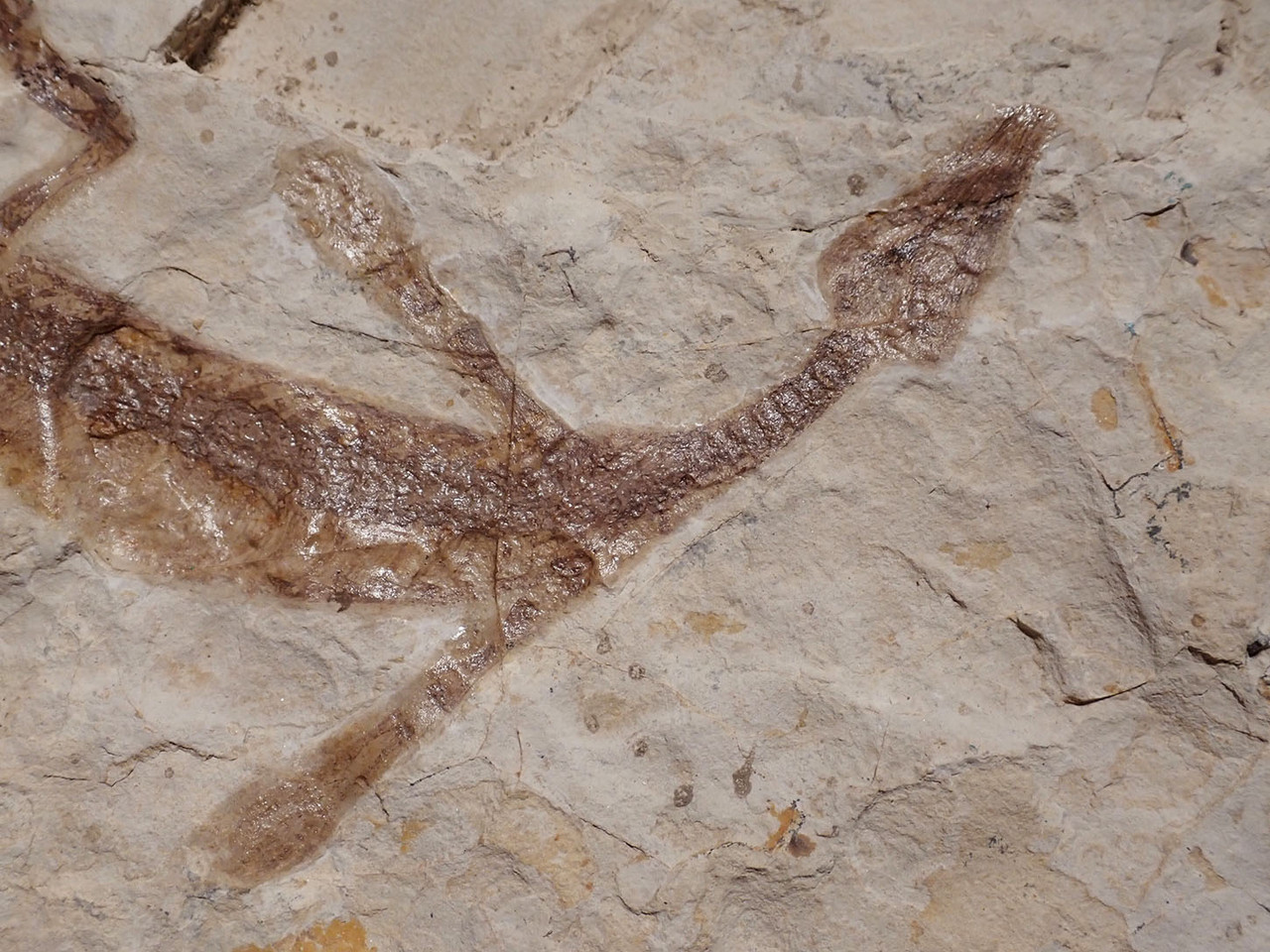
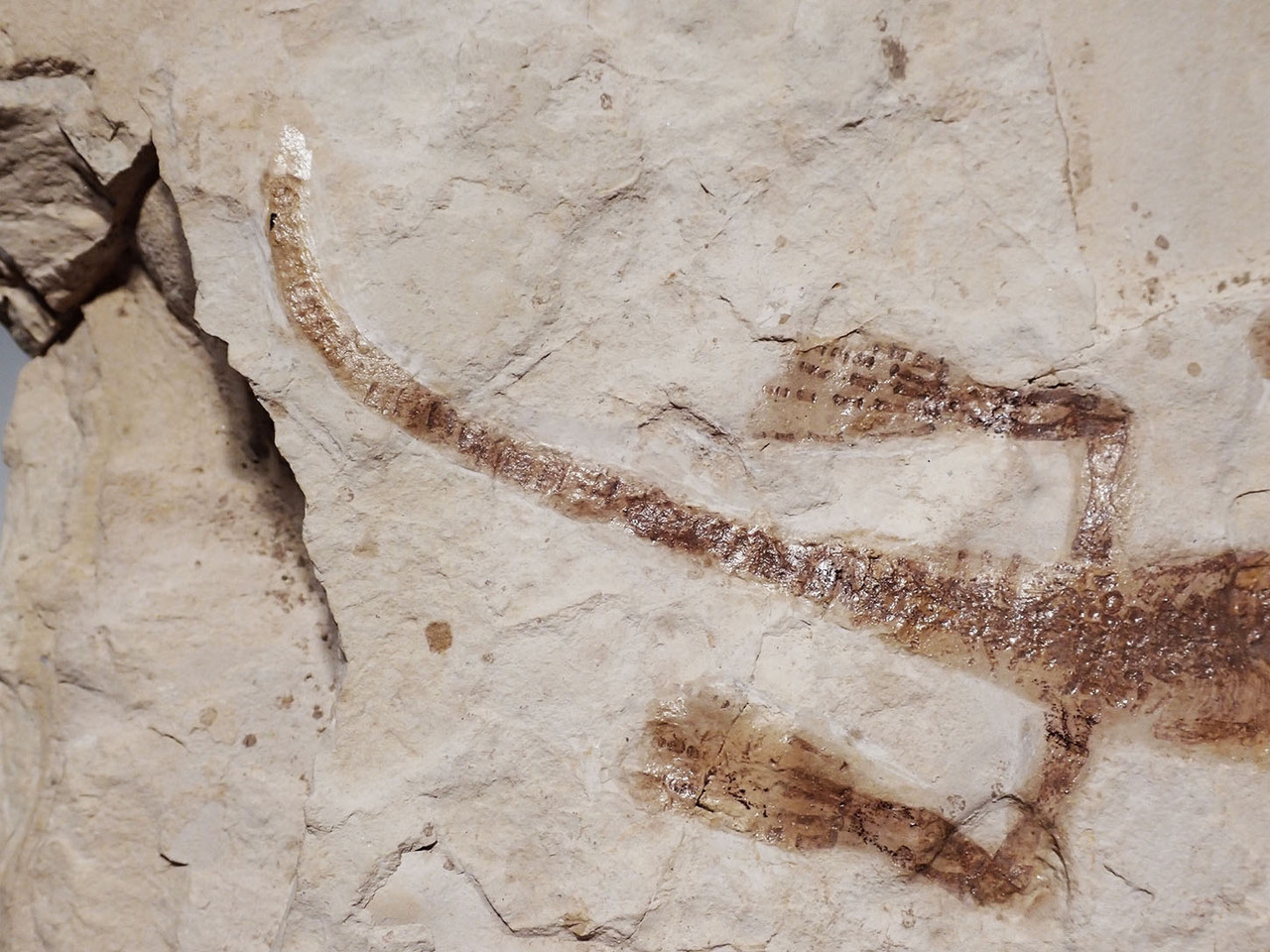
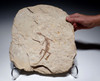
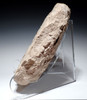
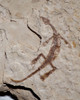
This is a RARE juvenile Mesosaurus brasiliensis fossil on its original host limestone as found. It was found in South America many decades ago and comes from an old private German fossil collection. Modern laws have forbid the collecting or export of these fossils from South America, making specimens like this scarce and the only way one can be legally acquired today.
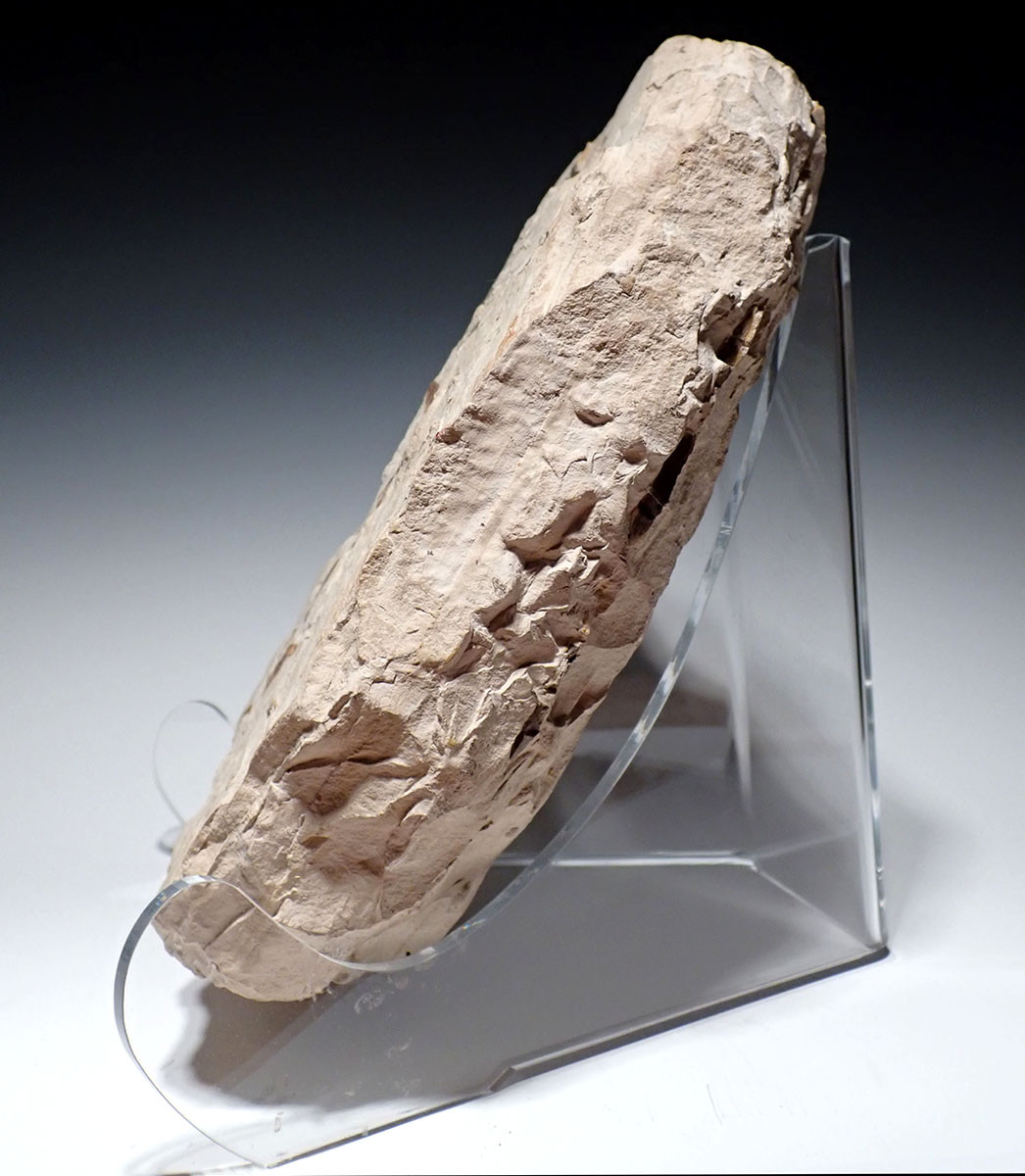
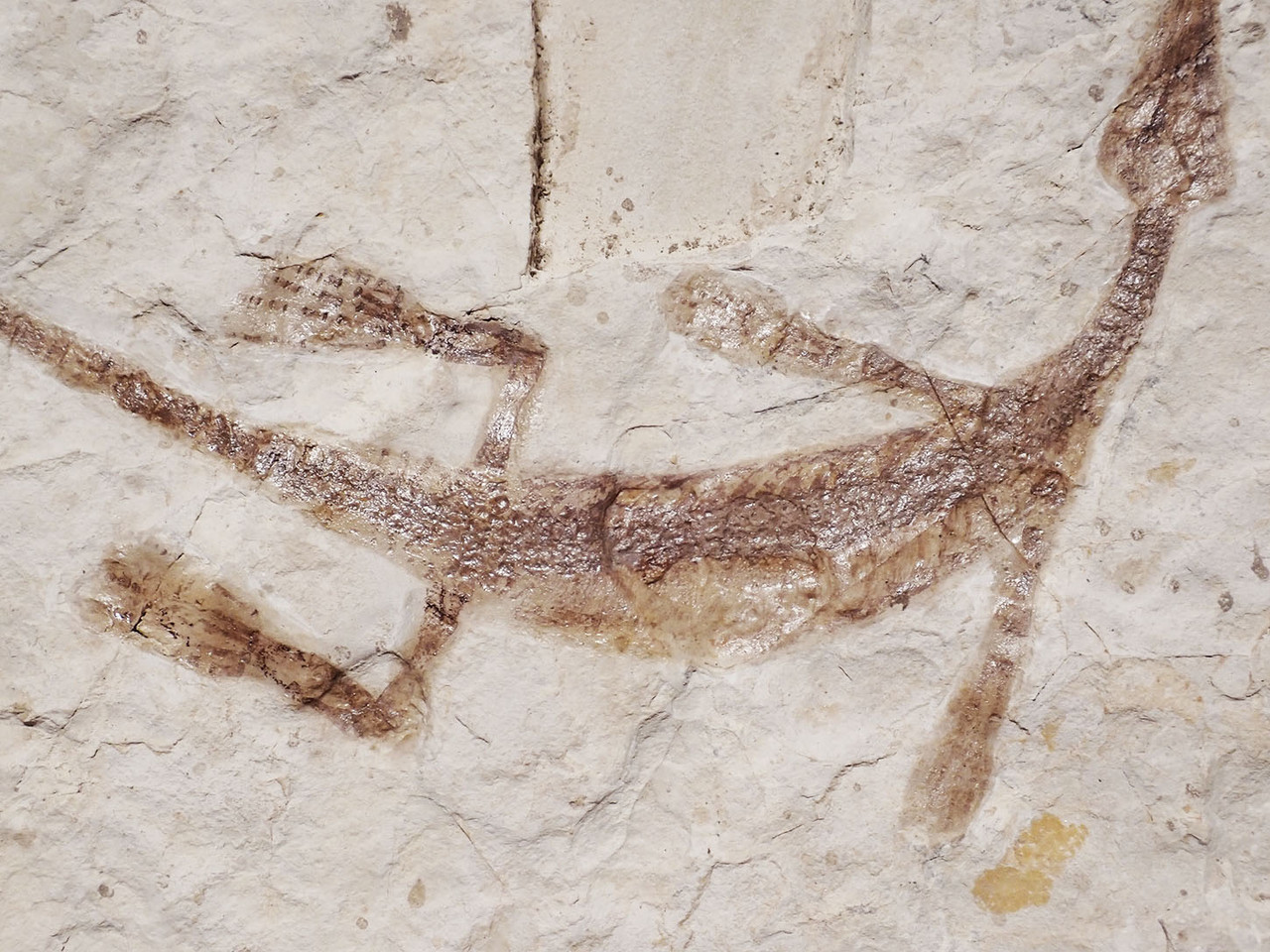
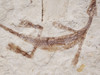
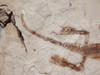
The complete skeleton is visible on the stone and because it is of a juvenile, the bones were very fragile and not fully ossified such that the pressure imparted to the fossil when it was forming, has compressed it to lack much relief off the stone. This is the first time we have seen a juvenile baby Mesosaurus fossil! The host rock is unbroken and only a coating of reversible preservative has been applied to the skeleton to keep it protected. The entire specimen weighs 16 lbs (7.3 kg), and is 2.5" thick.
We normally do not offer fossils of this nature because of their scarcity but this was part of a greater German estate collection we acquired 18 years ago and it is the only specimen we have to offer. Mesosaurus fossils were always rare and desirable but this unconventional offering is a super rare opportunity to add a highly unusual fossil vertebrate skeleton to your collection! Mesosaurus was one of the first reptiles known to have returned to the water after early tetrapods came to land in the Late Devonian, or later in the Paleozoic.
HISTORY
Mesosaurus (meaning "middle lizard") is an extinct genus of reptile from the Early Permian of southern Africa and South America. Along with it, the genera Brazilosaurus and Stereosternum, it is a member of the family Mesosauridae and the order Mesosauria. Mesosaurus was long thought to have been one of the first marine reptiles, although new data suggests that at least those of Uruguay inhabited a hypersaline water body, rather than a typical marine environment. In any case, it had many adaptations to a fully aquatic lifestyle.
Mesosaurus had a small skull with long jaws. Newly examined remains of Mesosaurus show that it had fewer teeth and that the dentition was suitable for catching small nektonic prey such as crustaceans. Mesosaurus was one of the first reptiles known to have returned to the water after early tetrapods came to land in the Late Devonian or later in the Paleozoic. It was around 1 metre (3.3 ft) in length, with webbed feet, a streamlined body, and a long tail that may have supported a fin. It probably propelled itself through the water with its long hind legs and flexible tail. Its body was also flexible and could easily move sideways, but it had heavily thickened ribs, which would have prevented it from twisting its body. The pachyostosis seen in the bones of Mesosaurus may have enabled it to reach neutral buoyancy in the upper few meters of the water column. The additional weight may have stabilized the animal at the water's surface. Alternatively, it could have given Mesosaurus greater momentum when gliding underwater.
Mesosaurus was significant in providing evidence for the theory of continental drift, because its remains were found in southern Africa, Whitehill Formation, and eastern South America (Melo Formation, Uruguay and Irati Formation, Brazil), two widely separated regions. As Mesosaurus was a coastal animal, and therefore less likely to have crossed the Atlantic Ocean, this distribution indicated that the two continents used to be joined together. .