 US DOLLAR
 EURO
EURO
 AUSTRALIAN DOLLAR
 CANADIAN DOLLAR
 POUND STERLING










Product Description
ID
|
Mammuthus primigenius
|
||
FOUND
|
Rhine River, West Central Germany
|
||
AGE
|
PLEISTOCENE: 150,000 - 20,000 years ago
|
||
SIZE
|
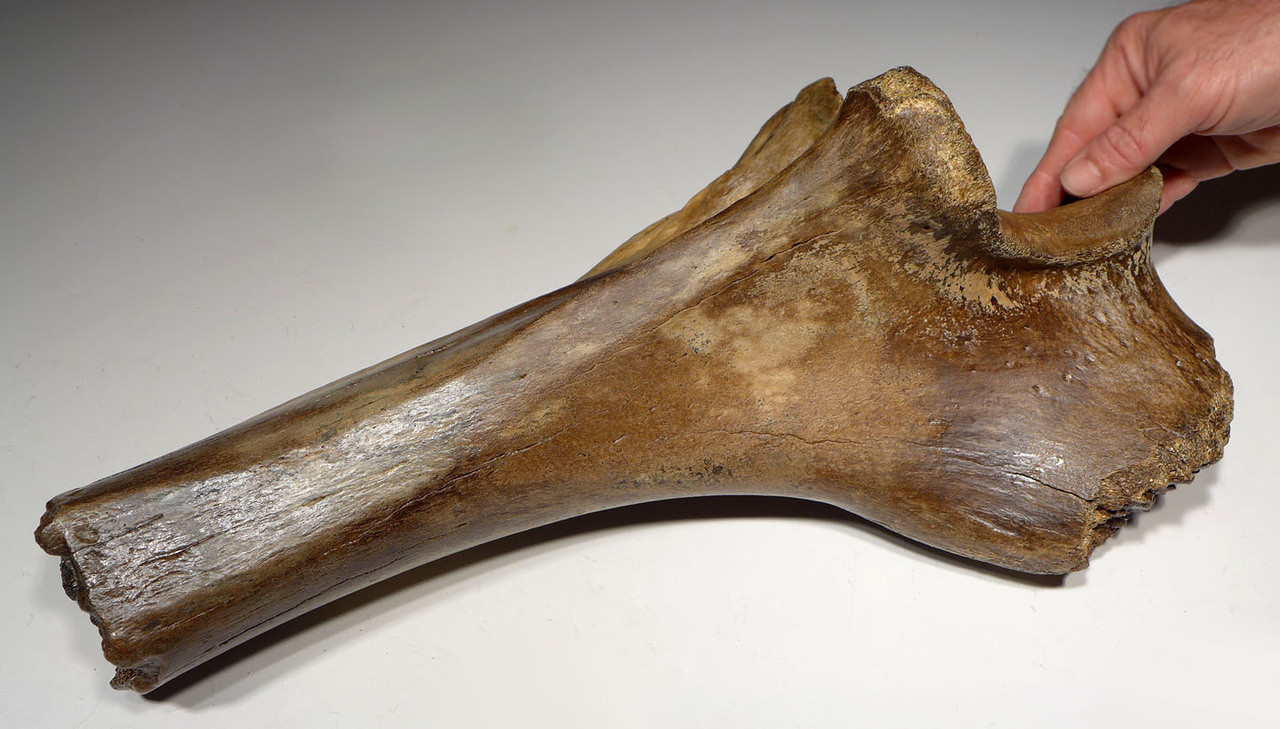
19" long x 10.5" wide
|
||
CONDITION
|
ONLY TIME IN 31 YEARS OF BUSINESS
|
||
NOTE
|
THE RAREST ICE AGE
|
||
Actual Item - One Only
|
|||
CLICK HERE TO LEARN MORE ABOUT WOOLLY MAMMOTH
This rare fossil is from Europe, was legally exported from Europe and can be legally shipped to any country. It was not illegally exported out of Russian (Siberia) as ALL Russian / Siberian Ice Age fossils are. Shipping Siberian fossils across country borders risks seizure of the shipment without reimbursement. http://www.dailymail.co.uk/news/article-3757538/Photographs-reveal-illegal-mining-selling-woolly-mammoth-tusks-Russia.html
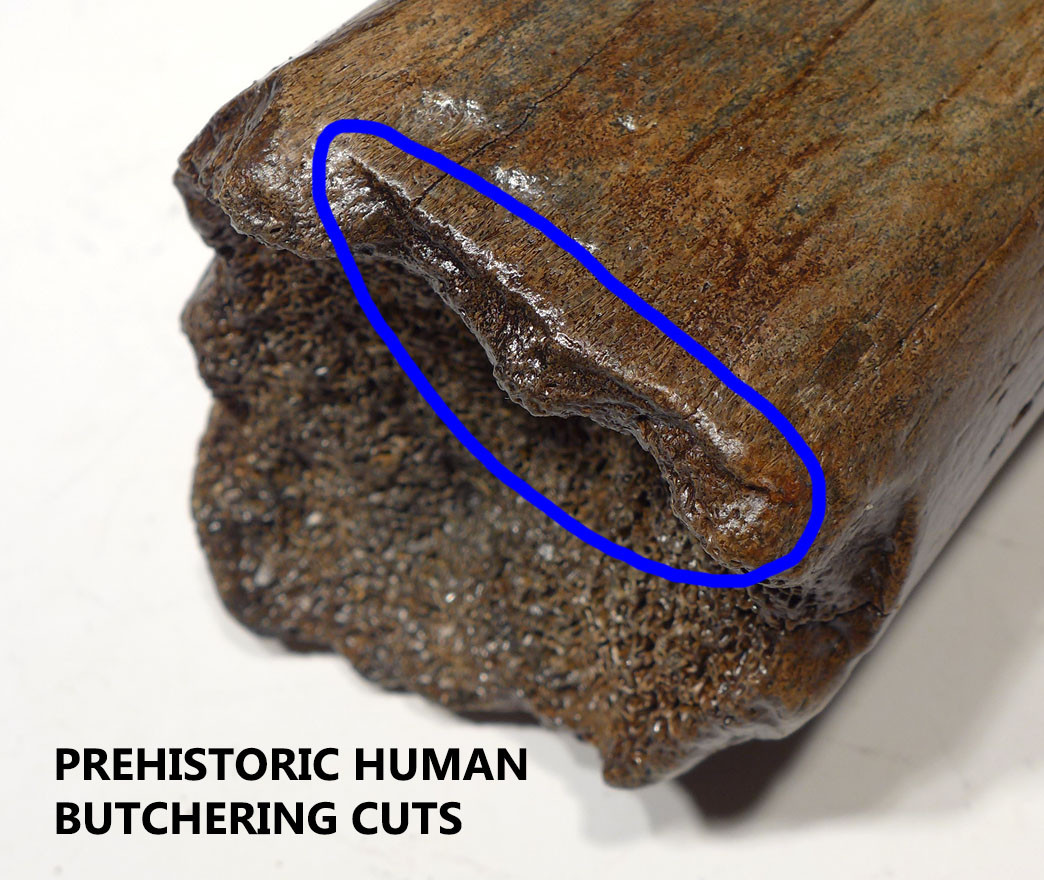
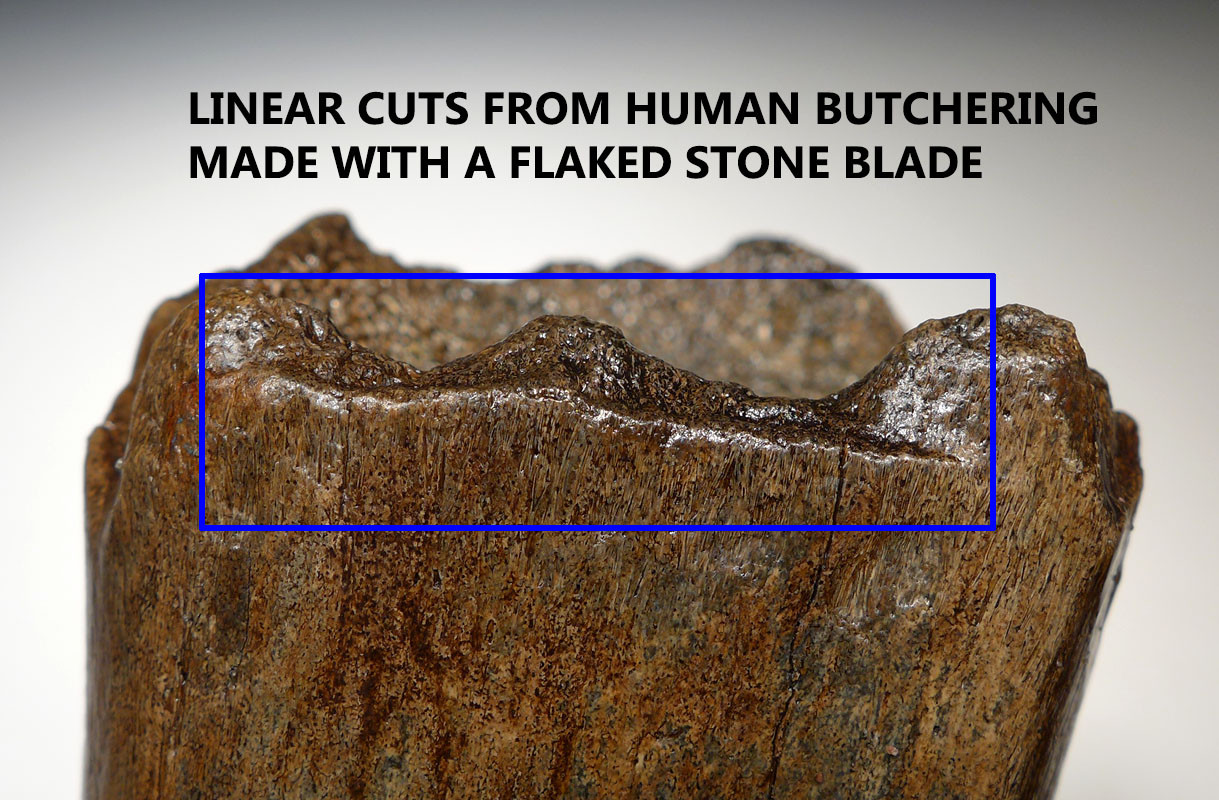
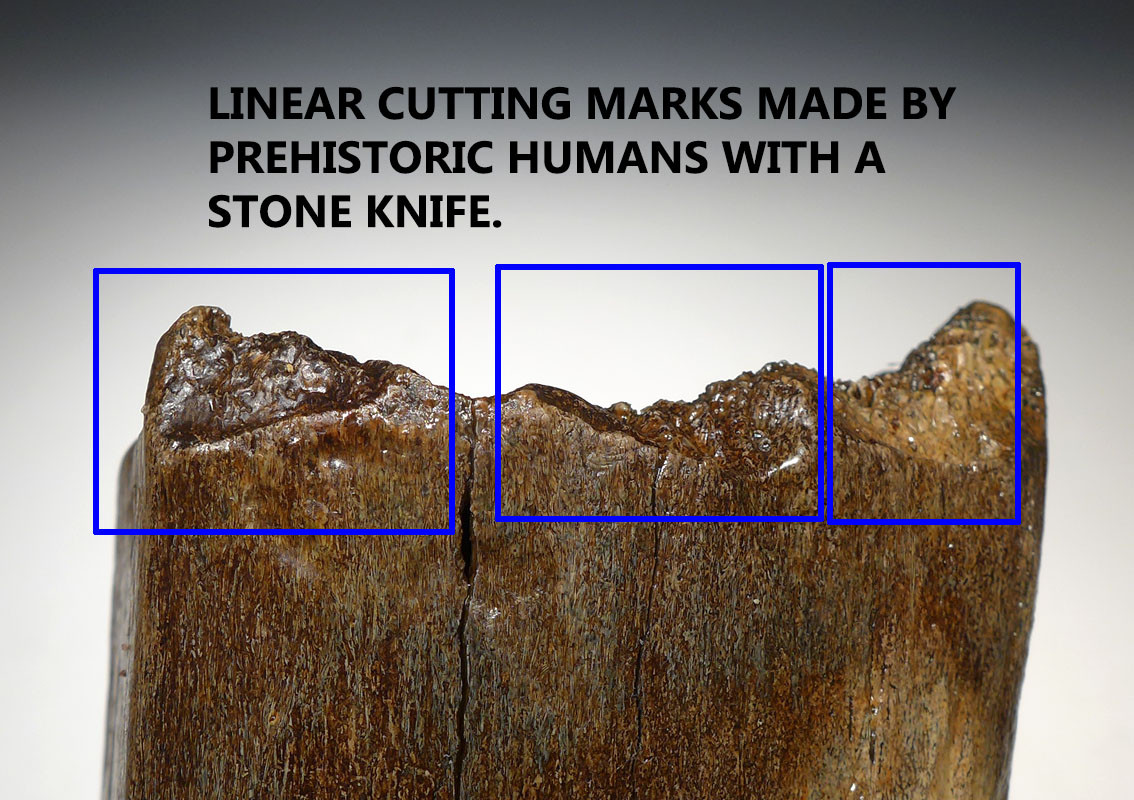
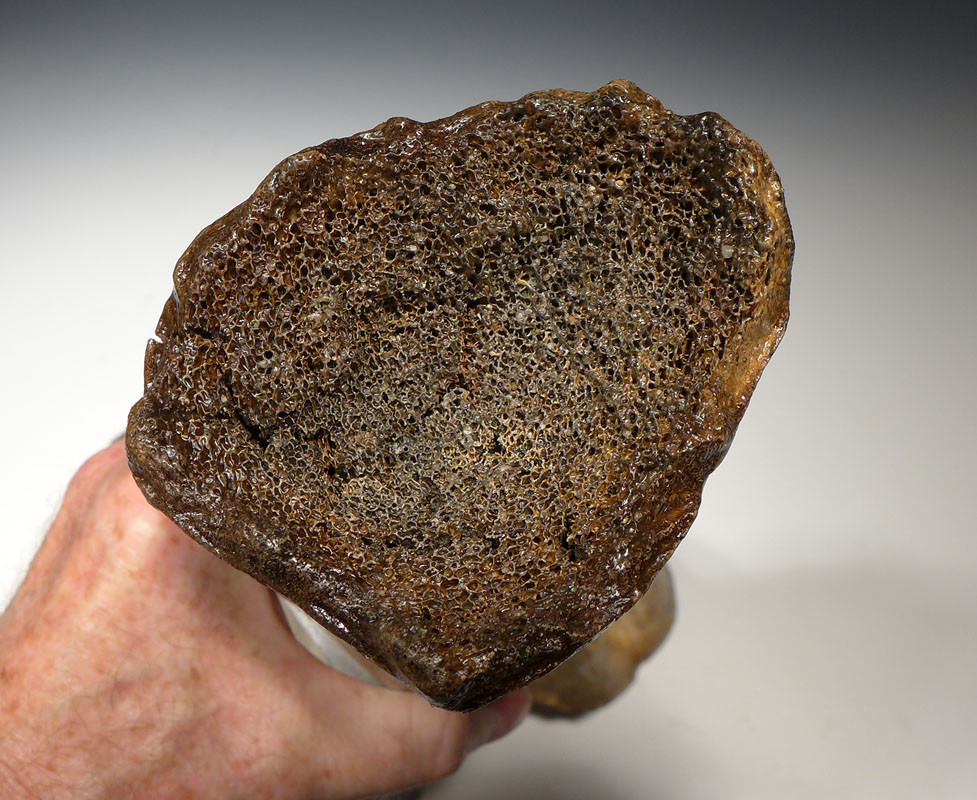
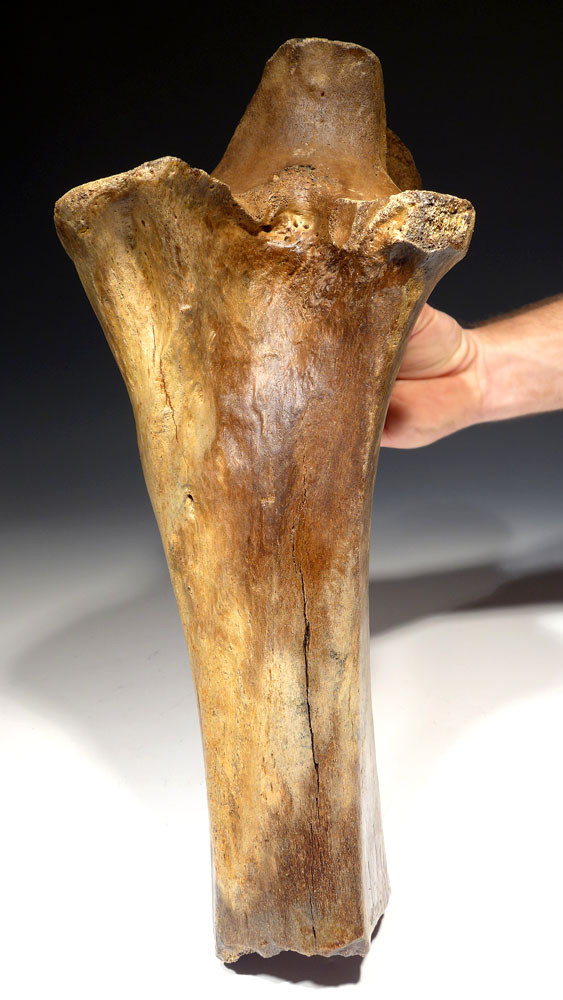
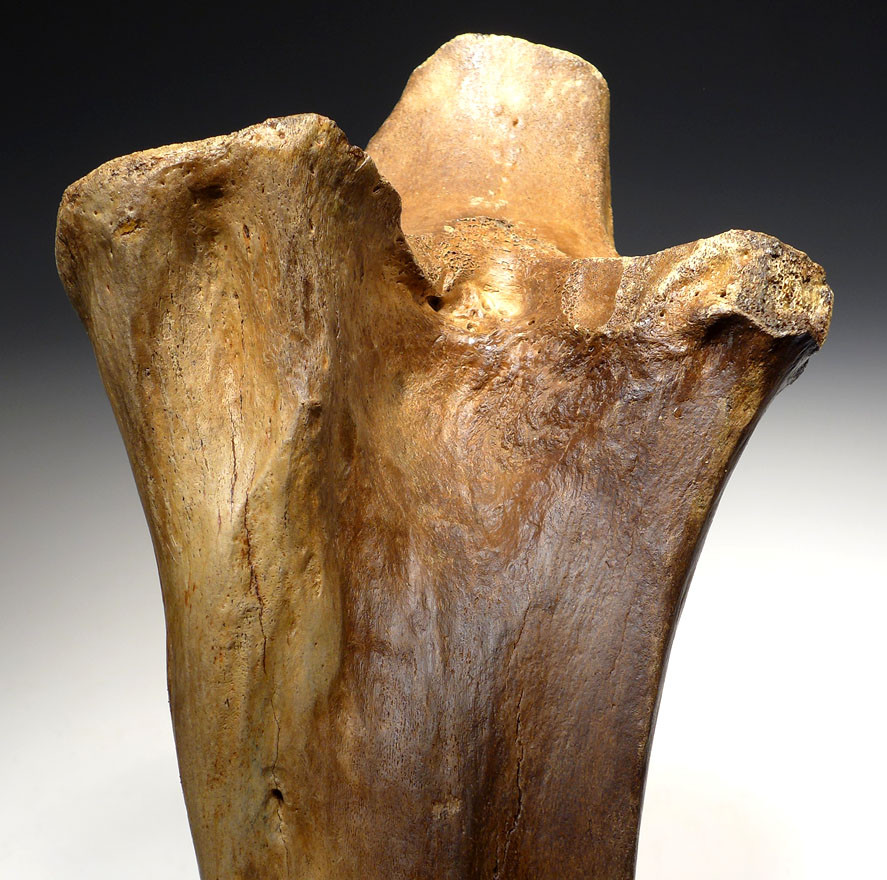
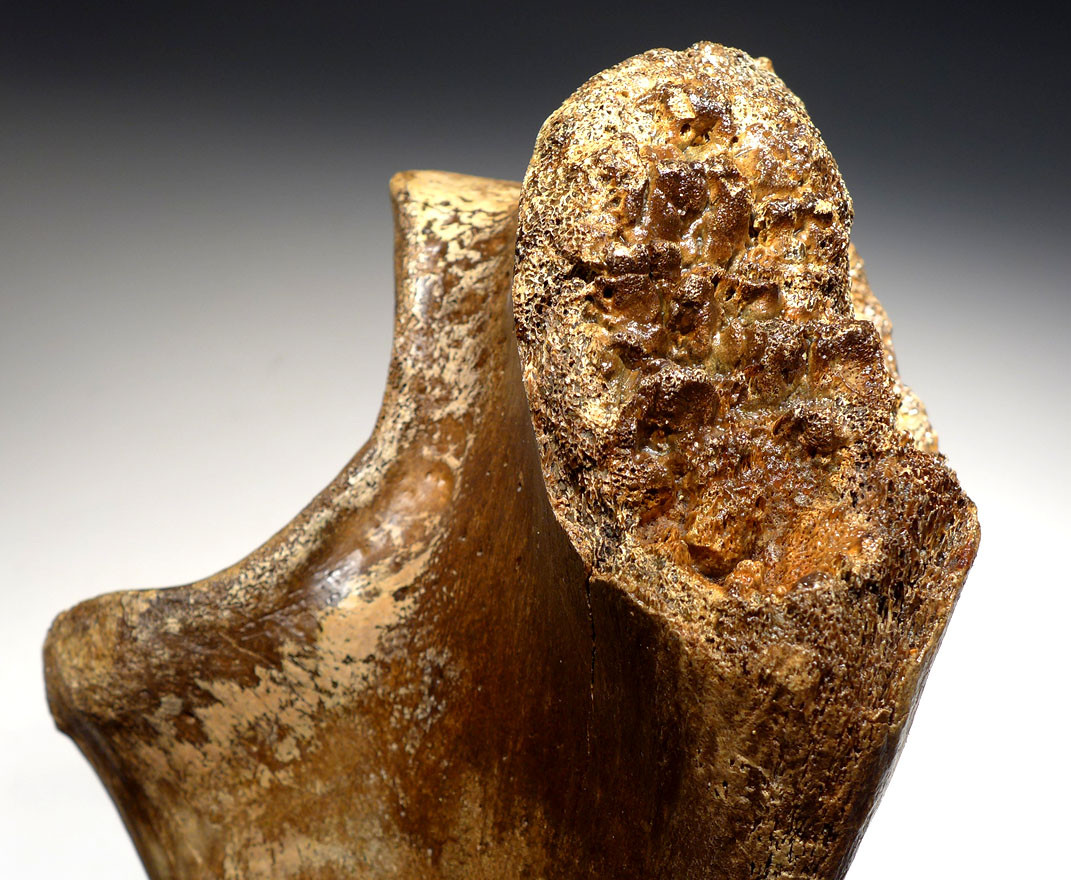
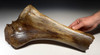
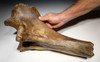
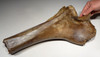
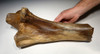
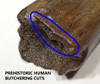
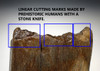
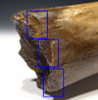
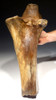
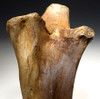
Without question, this is THE RAREST ICE AGE FOSSIL BONE WE EVER OFFERED. In 31 years of business, it is THE ONLY time we have offered a PREHISTORIC, not Neolithic or Bronze Age, fossil with obvious HUMAN BUTCHERING EVIDENCE. This is a lower arm ULNA limb bone from the Woolly Mammoth, known scientifically as Mammuthus primigenius. It is an extraordinary specimen with spectacular bone detail and fully preserved, dense end joint surfaces. What makes it a "crown jewel" specimen is the hand axe and flake knife cut marks on the end. This was likely first broken with a stone hand axe and then further cut open with a large, flint knife. The reason is that prehistoric Neanderthal and Cro-magnon humans would have highly prized the spongy bone marrow inside as a super high protein food source. A partially-ossified joint end on the opposing side, indicates this would have been a sub-adult mammoth, with more marrow and lesser density to its bones. A sub-adult mammoth would have also been slightly easier to kill than a full-grown animal. Juveniles are most often preyed upon by all predators, for this reason.
This is the single specimen we have ever offered, that displays prehistoric human butchering. While younger time period fossils of periods that date to the Holocene Era (Neolithic and newer) are far more abundant. Specimens that are truly prehistoric in nature, showing early human butchering, are IMMEASURABLY MORE RARE! This very rare specimen has NO REPAIR OR RESTORATION. It has been stabilized only sealer and is as found from a gravel deposit in the Rhine River, Germany.
Perfect to exhibit with Primitive Man tools and artifacts since these beasts played such an important part in so many ways of the lives of Neanderthals and Cro-Magnons.