 US DOLLAR
 EURO
EURO
 AUSTRALIAN DOLLAR
 CANADIAN DOLLAR
 POUND STERLING








Product Description
SEE MORE ANCIENT NEAR EASTERN ANTIQUITIES
see a similar specimen sold here
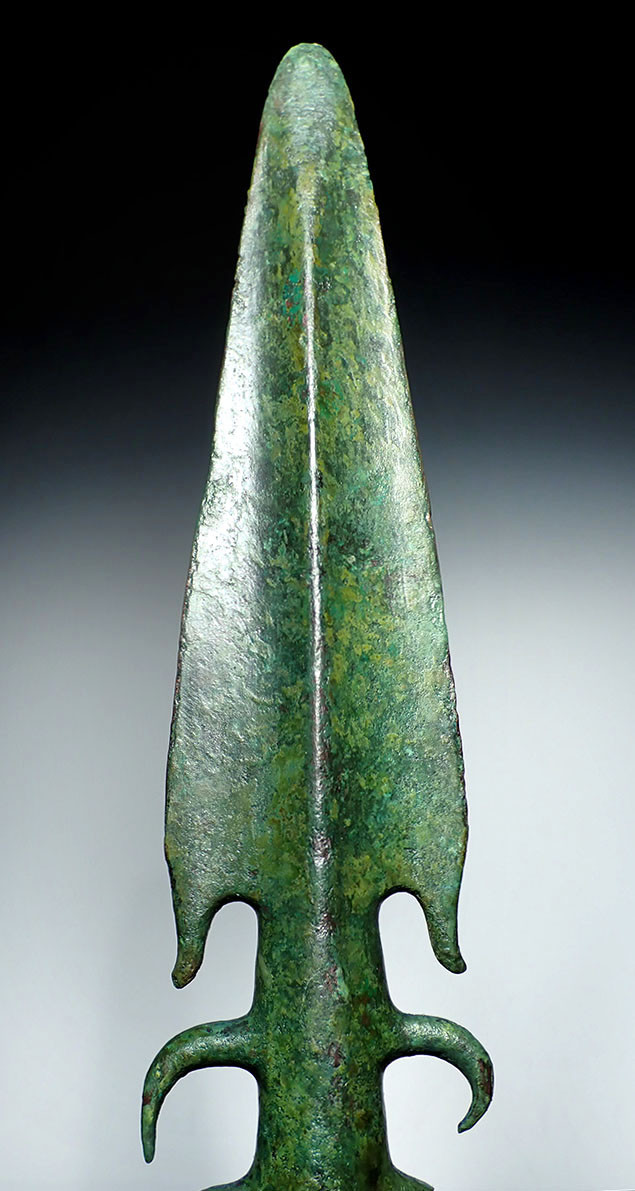
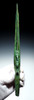
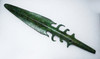
Of maximum size and with complete, exquisite preservation, this large, EXTREMELY RARE ancient copper harpoon spearhead comes from the Copper Hoard Culture (part of the Indus Valley Civilization), of the ancient Indo-Gangetic Plain. These harpoons are so unique that they are known ONLY from this region and culture with their massive proportions and dramatic barbs on both sides. It is not exactly known what these were used for and while it is theorized they were for fishing, their enormous heft and size seem overkill for that purpose. Spearheads like these would have made terrifying weapons, able to inflict incredibly nasty and lethal wounds if used on an enemy warrior.
These are scarce weapons on the open market. Very few Gangetic Copper Hoard harpoons of this size and complete preservation quality are ever seen available for sale. They are one of the most impressive weapons of any culture of the ancient world. Their appearance is both, eerie and aesthetic. We have handled thousands of ancient objects of all cultures, over the past 3 decades and yet, this is one of only three of these we have personally encountered in this condition and size. This amazing ancient weapon is the FIRST we have offered in our history of selling many of the finest ancient militaria. It is truly museum-class and will greatly enhance any collection, as well as impress ALL that experience it in person!
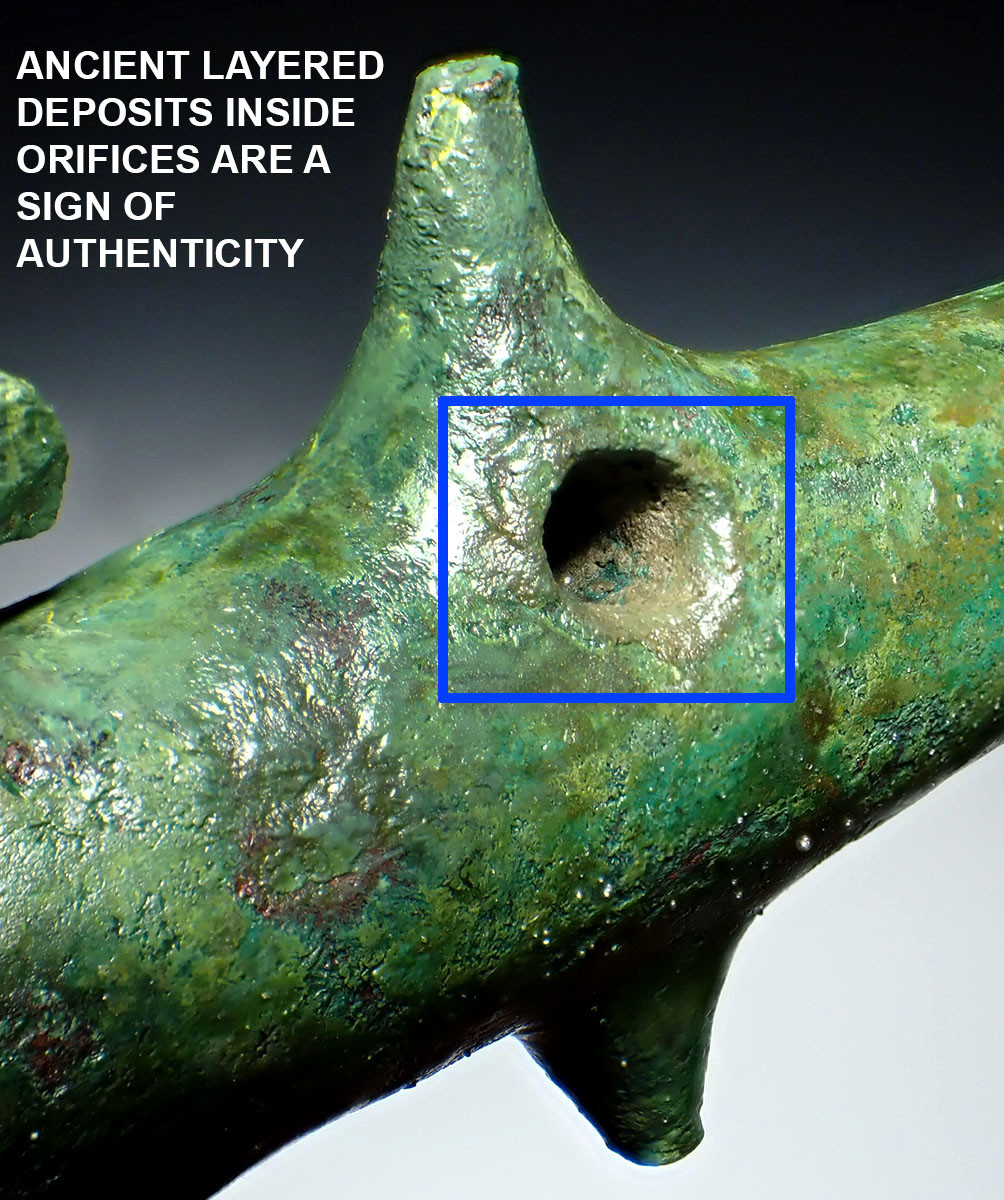
The copper displays the most incredible mottled green encrusted patina with ancient calcite deposits still intact in the lanyard hole that ensured the harpoon head was not lost if it broke off the wooden shaft. The massive size and extremely thick cross-section meant this was a functional and extremely lethal weapon, able to pierce armor of any kind.
This artifact has been professionally cleaned and conserved in our lab, being treated with a special sealer developed and formulated by us specifically for ancient metal preservation. The patina shows beautiful traits only found in authentic ancient weapons such as a layered mineralized patina with encrustations. No active bronze disease. Bronze disease can be a problem in bronze artifacts and untreated, it can literally eat away an artifact over a matter of years and destroy the piece.
WARNING: There is an increasing number of fake "ancient" bronze weapons on the market. As fine quality intact, original specimens become more scarce and techniques have become more sophisticated to fake these weapons. We have personally handled numerous extremely well-done fakes with extremely convincing patinas. The degree to which the fakers have been able to replicate patina to disguise their work requires an expert examination by highly experienced individuals. It is common to find very reasonably priced weapons that are made up of part original and part modern components or wholly modern pieces displaying elaborate artificial patinas. All purchases should include from the dealer a written guarantee of authenticity with unconditional and lifetime return policies regarding such guarantee.
HISTORY
Copper Hoard culture describes find-complexes which mainly occur in the western Ganges–Yamuna doab in the northern part of the Indian subcontinent. They occur in hoards large and small, and are dated to the first half of the 2nd millennium BCE, although very few derive from controlled and dateable excavation contexts. The copper hoards are associated with the Ochre Colored Pottery (OCP), which is closely associated with the Late Harappan (or Posturban) phase of the Indus Valley Civilization. Associations with the Indo-Aryan of the second millennium BCE have also been proposed, though association with the Vedic Aryans is problematic, since the hoards are found east of the territory of the Vedic Aryans.
Four regional find-groups are identifiable with their characteristic find-types: 1. Characteristic hoard-finds from South Haryana/North Rajasthan (recorded: 383) include flat axes, harpoons, double axes, swords with so-called antenna grips and others. 2. In the Ganges-Yamuna Doab (235) related types occur. 3. Those from Chota Nagpur differ (235) entirely from these. They include finely worked pieces, and mostly look at first like axe-heads but are probably ingots. 4. Fewer are those known from Madhya Pradesh (120), although originally there were some 424 from the Ghangharia hoard alone.
The copper hoards are associated with the Ochre Coloured Pottery (OCP), which is closely associated with the Late Harappan (or Posturban) phase of the IVC. They may also be associated with the Indo-Aryan migrants of the second millennium BCE, or with the BMAC, from where the Indo-Aryans came into India. The association with the Vedic Indo-Aryans is problematic, since the hoards are mostly found east of the territory of the Vedic Indo-Aryans. Falk proposes an association with the middle Vedic period and the realm of the Kuru-Pancalas, who had expanded eastwards. Asko Parpola associates the copper hoards with a first wave of Indo-Iranian migration into the Indian subcontinent, who reached farther east than the later Vedic Aryans.