 US DOLLAR
 EURO
EURO
 AUSTRALIAN DOLLAR
 CANADIAN DOLLAR
 POUND STERLING











Product Description
SEE MORE ANCIENT NEAR EASTERN AXES
see an identical specimen that sold here
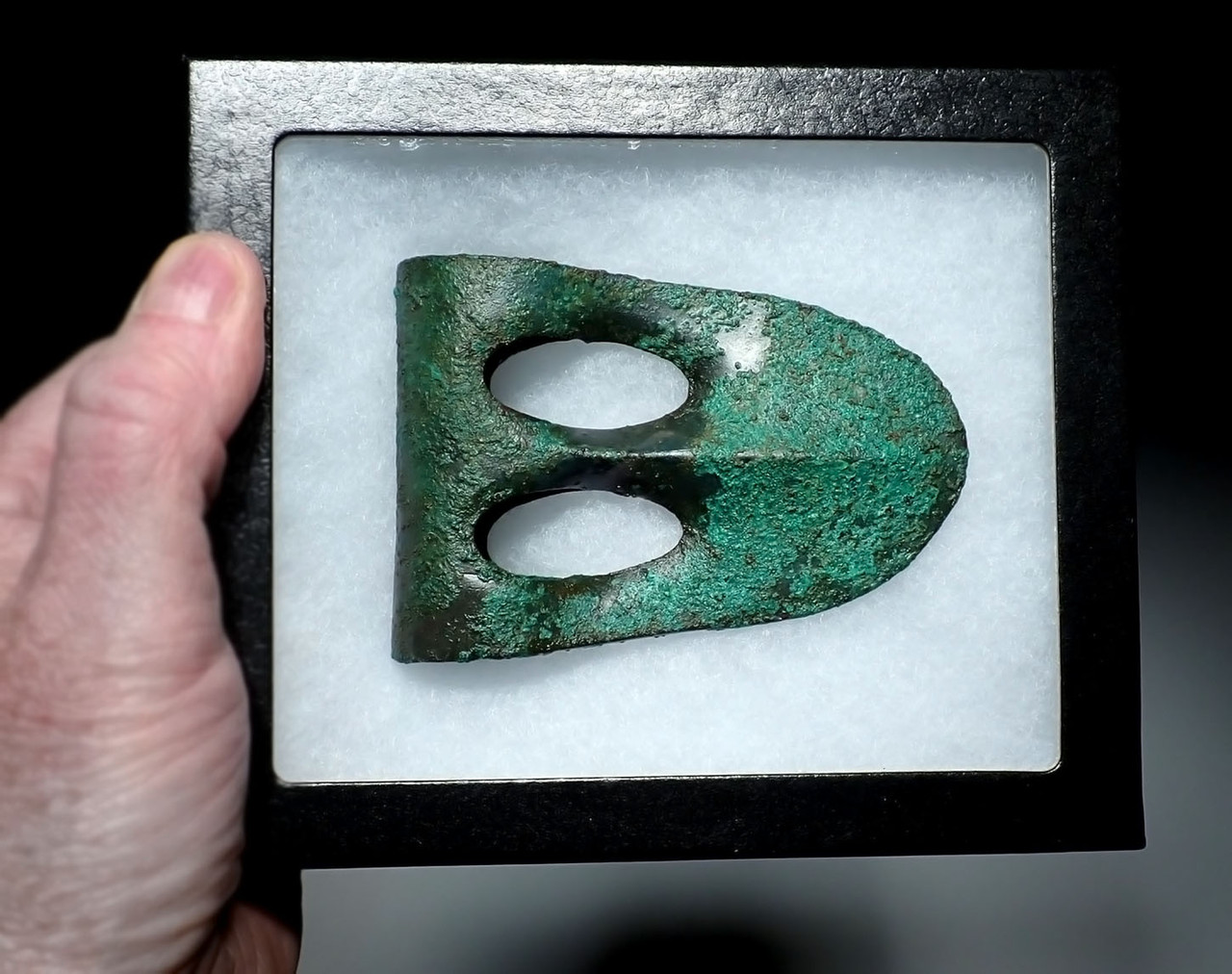
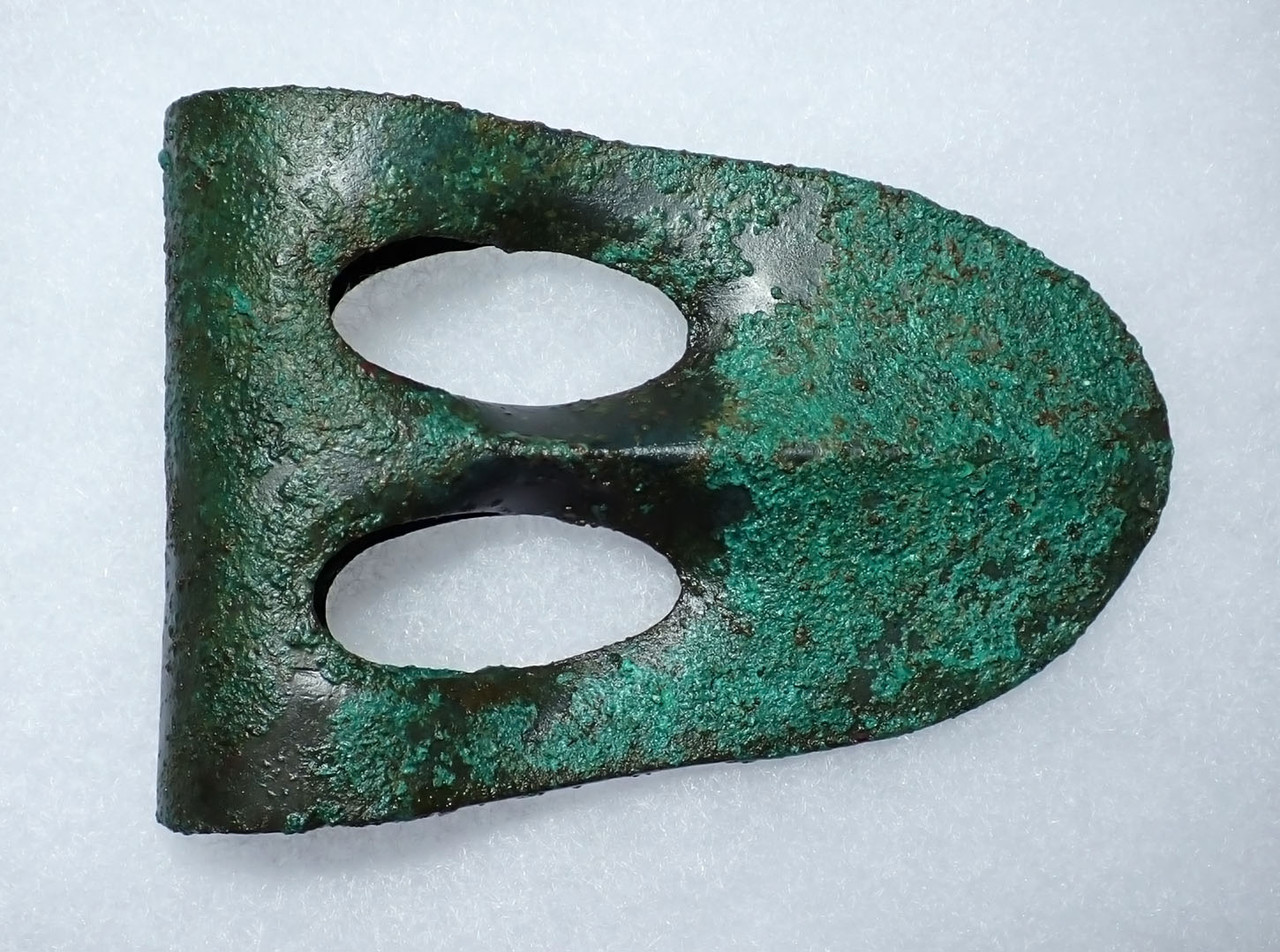
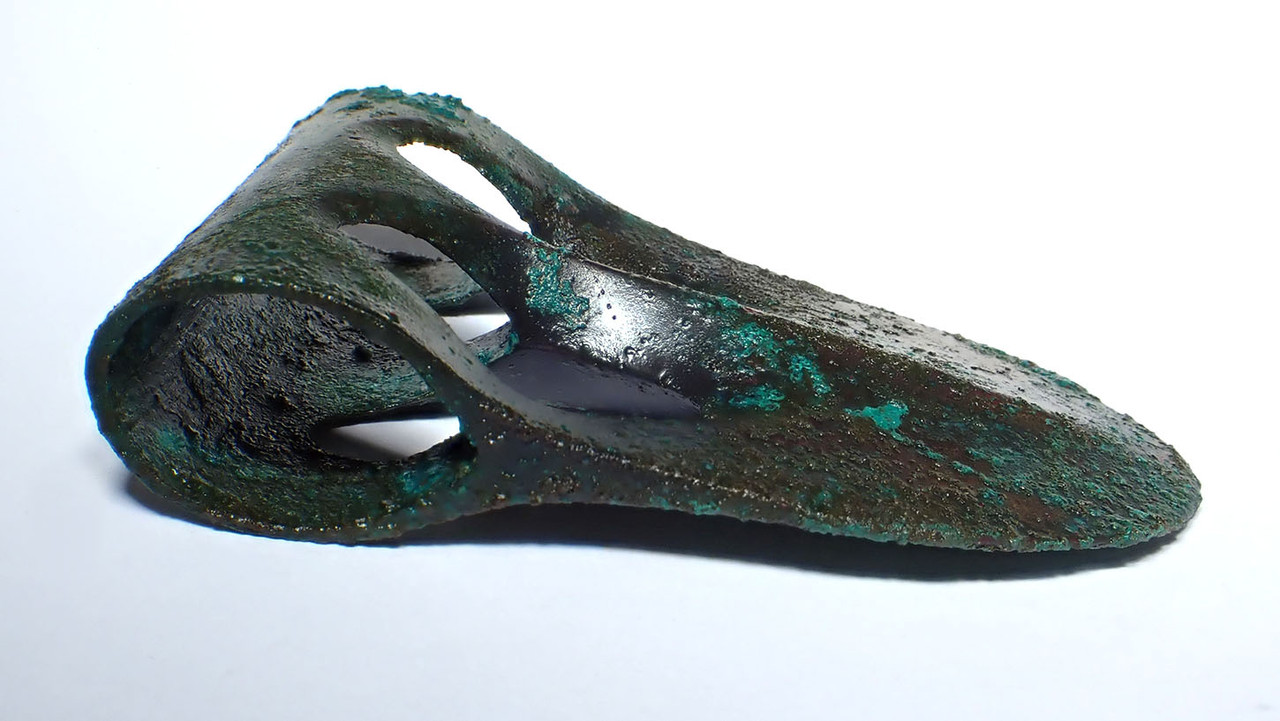
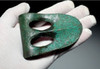
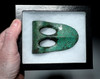
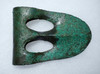
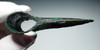
From the Biblical lands and Age of the Patriarchs, this classic fenestrated bronze war axe was most often used by the tribes from the Land of Canaan - the Canaanites and Phoenicians. Fenestrated battle axes are identified by their large openings in the body of the axe, just before the portion where the shaft handle fit into the axe. Their narrow yet functional blades were designed to split skulls and break bones, rather than offer a sharp surface that would cut.
This is the finest AND ONLY example we have ever offered of these rare Bronze Age Biblical weapons of the enemies of Israel. With the finest preservation and the most beautiful, colorful ancient encrustations still intact on all surfaces of the bronze, this INVESTMENT-CLASS specimen is impossible to improve on. It is complete with full, slender penetrating blade head, and a complete shaft body. The bronze is well-preserved with NO erosion, bronze disease or damage, and the axe is complete. This impressive specimen displays a beautiful malachite ancient mineral bronze patina.
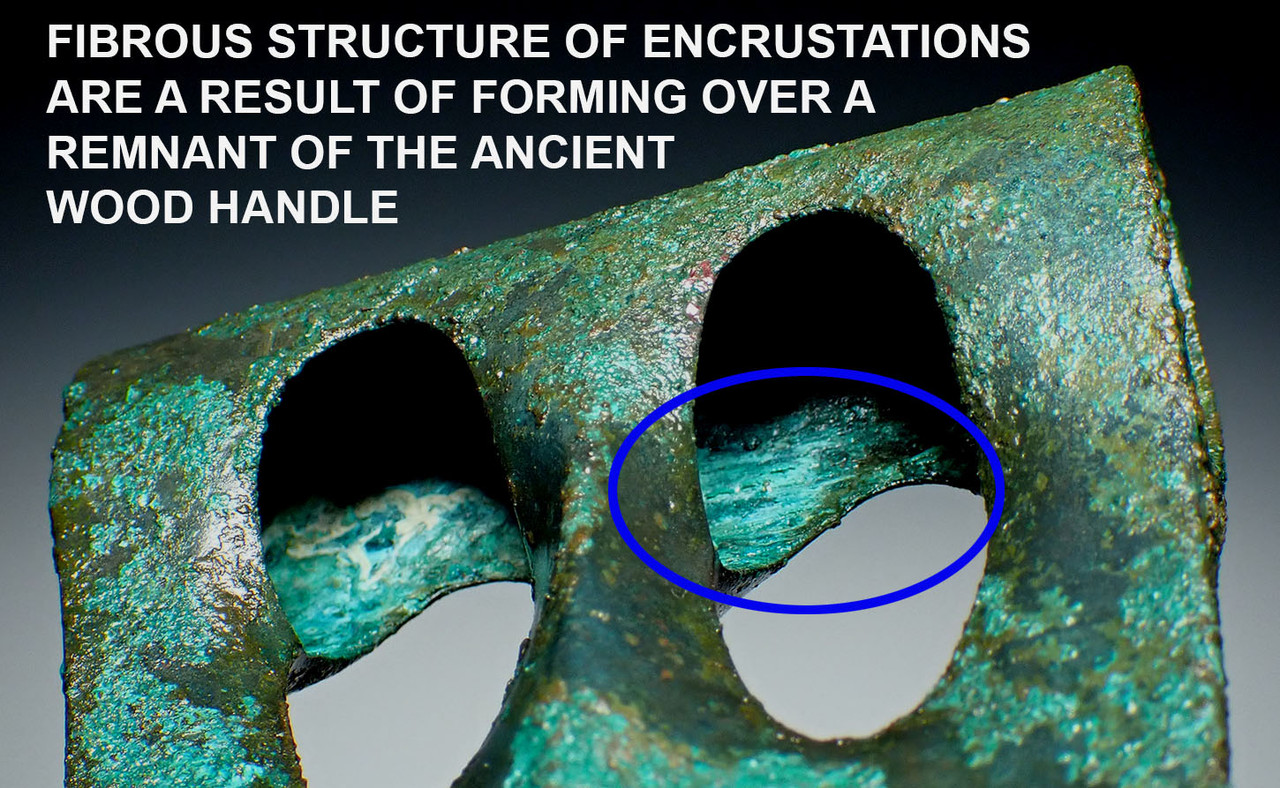
There is an image of the shaft hole cavity shows ancient encrustations that mimic the wooden fibers and grain of the former wood shaft handle. These formed between the wood and bronze, filling into the grain before the wood was lost to the ages, leaving the fossilized remnants of the former wooden handle.
This artifact has been professionally cleaned and conserved in our lab, being treated with a special sealer developed and formulated by us specifically for ancient metal preservation. The patina shows beautiful traits only found in authentic ancient weapons. It is a patina like this that the finest ancient bronzes are prized for and it is a patina like this that brings a premium in price and value of the specimen. There is no active bronze disease. Bronze disease can develop on ancient bronze that is not properly cleaned and conserved. It produces a corrosive powder that will literally eat away an artifact over time and destroy it.
WARNING: There is a STAGGERING number of fake bronze weapons on the market. Many being sold as "authentic" were never meant to deceive and were made as far back as 100 years ago as exact reproductions for museums to sell in their gift shops. Other examples are modern fabrications specifically intended to fool unwitting buyers. As fine quality intact, original specimens become more scarce, the techniques to fake these objects have become highly advanced. We have personally handled numerous well-done fakes with extremely convincing patinas. The degree to which the fakers have been able to replicate patina to disguise their work requires an expert examination by highly experienced individuals. It is common to find very reasonably priced weapons that are made up of part original and part modern components or wholly modern pieces displaying elaborate artificial patinas. All purchases should include a written guarantee of authenticity from the seller, with unconditional and lifetime return policies regarding such guarantee, such as we provide.
HISTORY
The Land of Canaan was a Semitic-speaking civilization and region in the Ancient Near East during the late 2nd millennium BC. The name Canaan appears throughout the Bible, where it corresponds to the Levant, in particular to the areas of the Southern Levant that provide the main setting of the narrative of the Bible: Phoenicia, Philistia, Israel, and other nations.
The word 'Canaanites' serves as an ethnic catch-all term covering various indigenous populations—both settled and nomadic-pastoral groups—throughout the regions of the southern Levant or Canaan. It is by far the most frequently used ethnic term in the Bible. In the Book of Joshua, Canaanites are included in a list of nations to exterminate, and later described as a group which the Israelites had annihilated.
Canaan included what today are Lebanon, Israel, northwestern Jordan, and some western areas of Syria. According to archaeologist Jonathan N. Tubb, "Ammonites, Moabites, Israelites, and Phoenicians undoubtedly achieved their own cultural identities, and yet ethnically they were all Canaanites", "the same people who settled in farming villages in the region in the 8th millennium BC."
Canaanite civilization was a response to long periods of stable climate interrupted by short periods of climate change. During these periods, Canaanites profited from their intermediary position between the ancient civilizations of the Middle East—Ancient Egypt, Mesopotamia (Sumer, Akkad, Assyria, Babylonia), the Hittites, and Minoan Crete—to become city states of merchant princes along the coast, with small kingdoms specializing in agricultural products in the interior.