US DOLLAR
 EURO
EURO
 AUSTRALIAN DOLLAR
 CANADIAN DOLLAR
 POUND STERLING





Product Description
SEE MORE PRE-COLUMBIAN ARTIFACTS
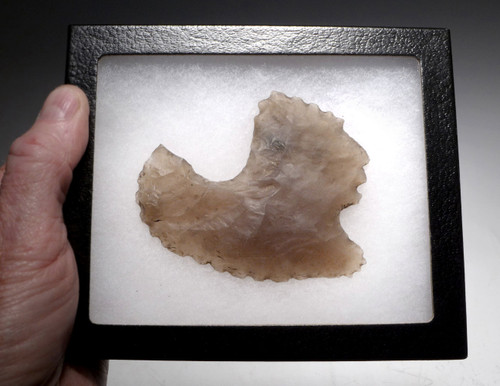
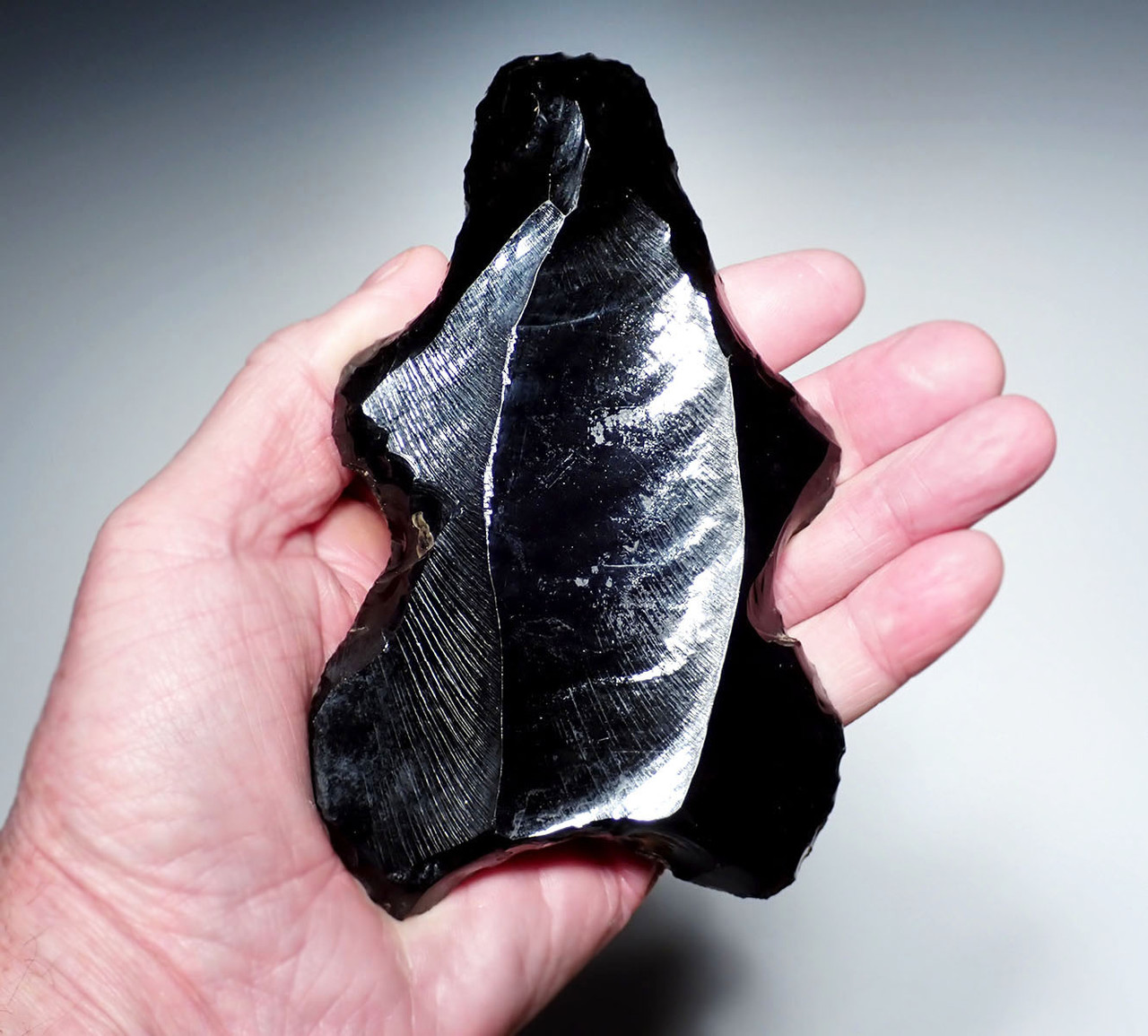
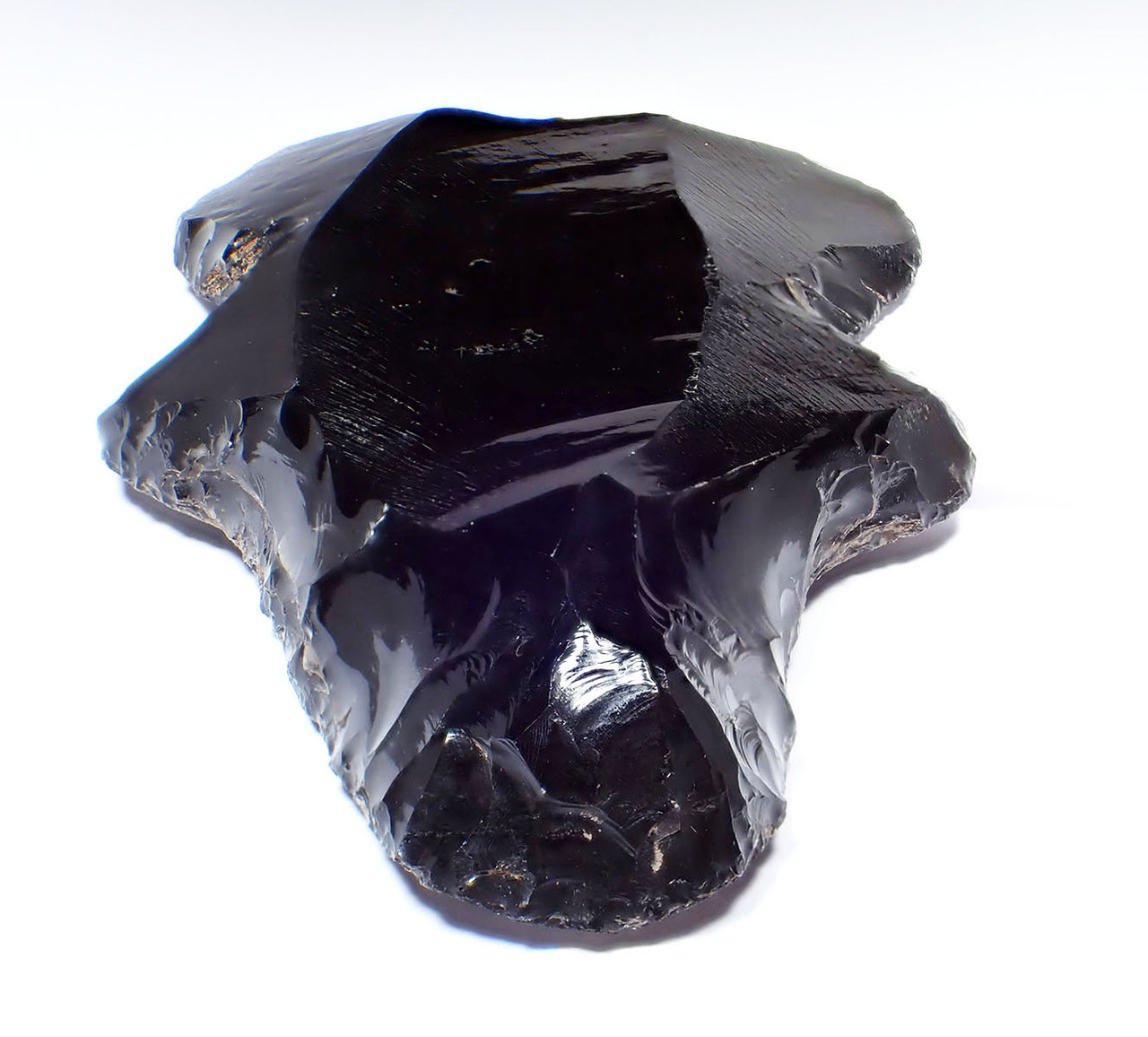
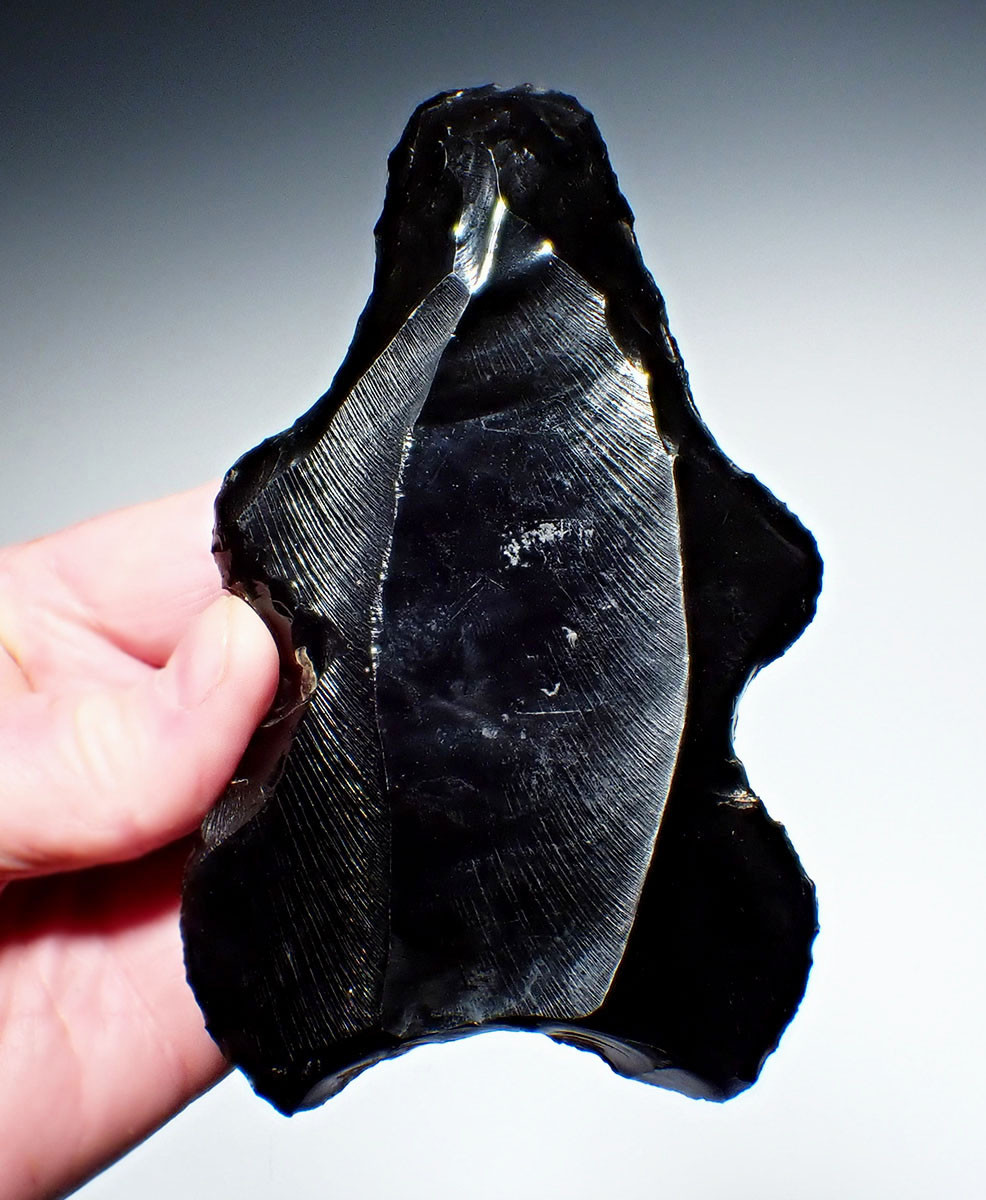
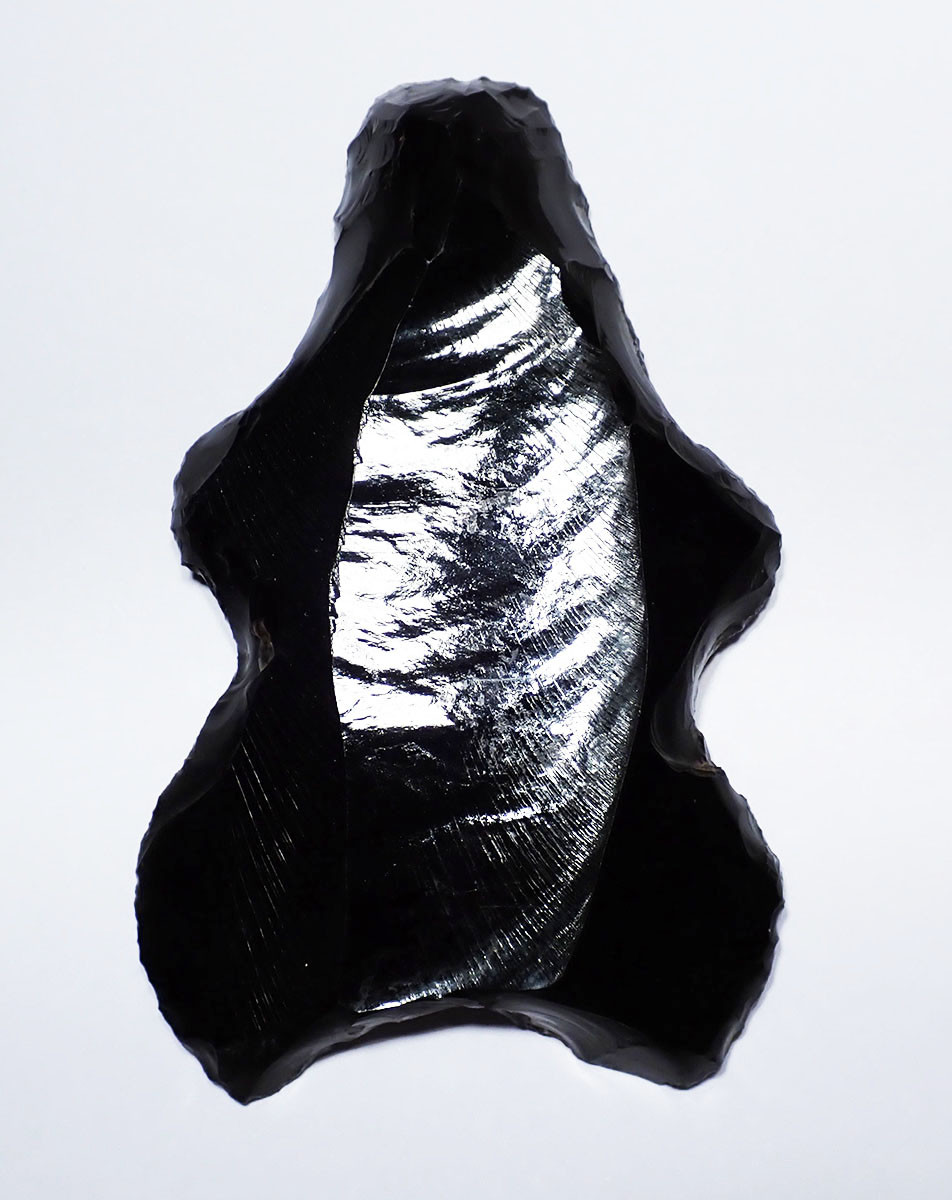
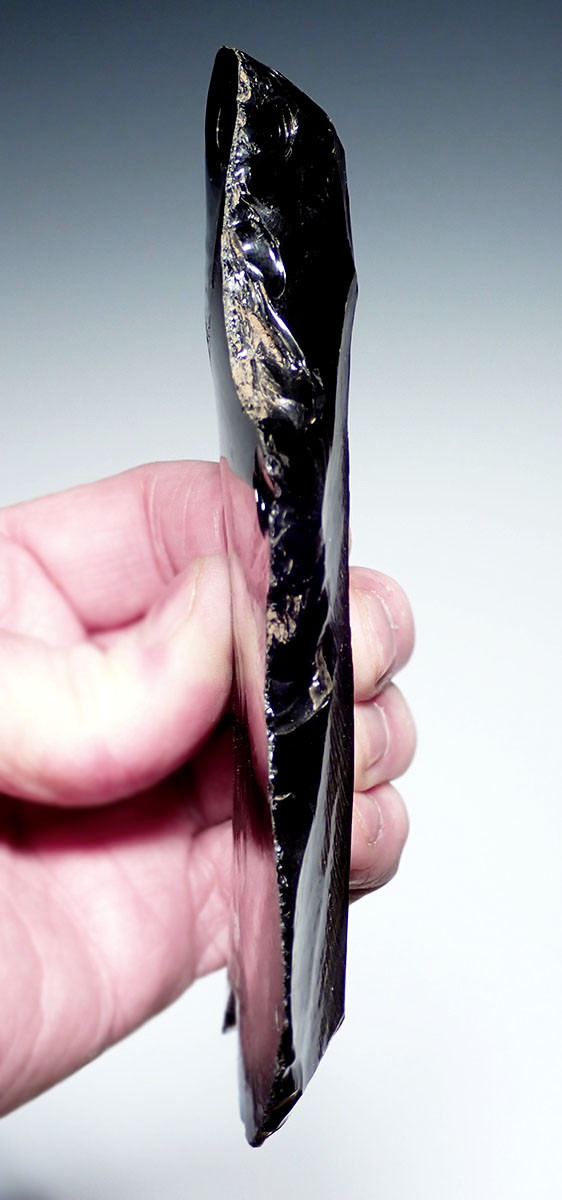
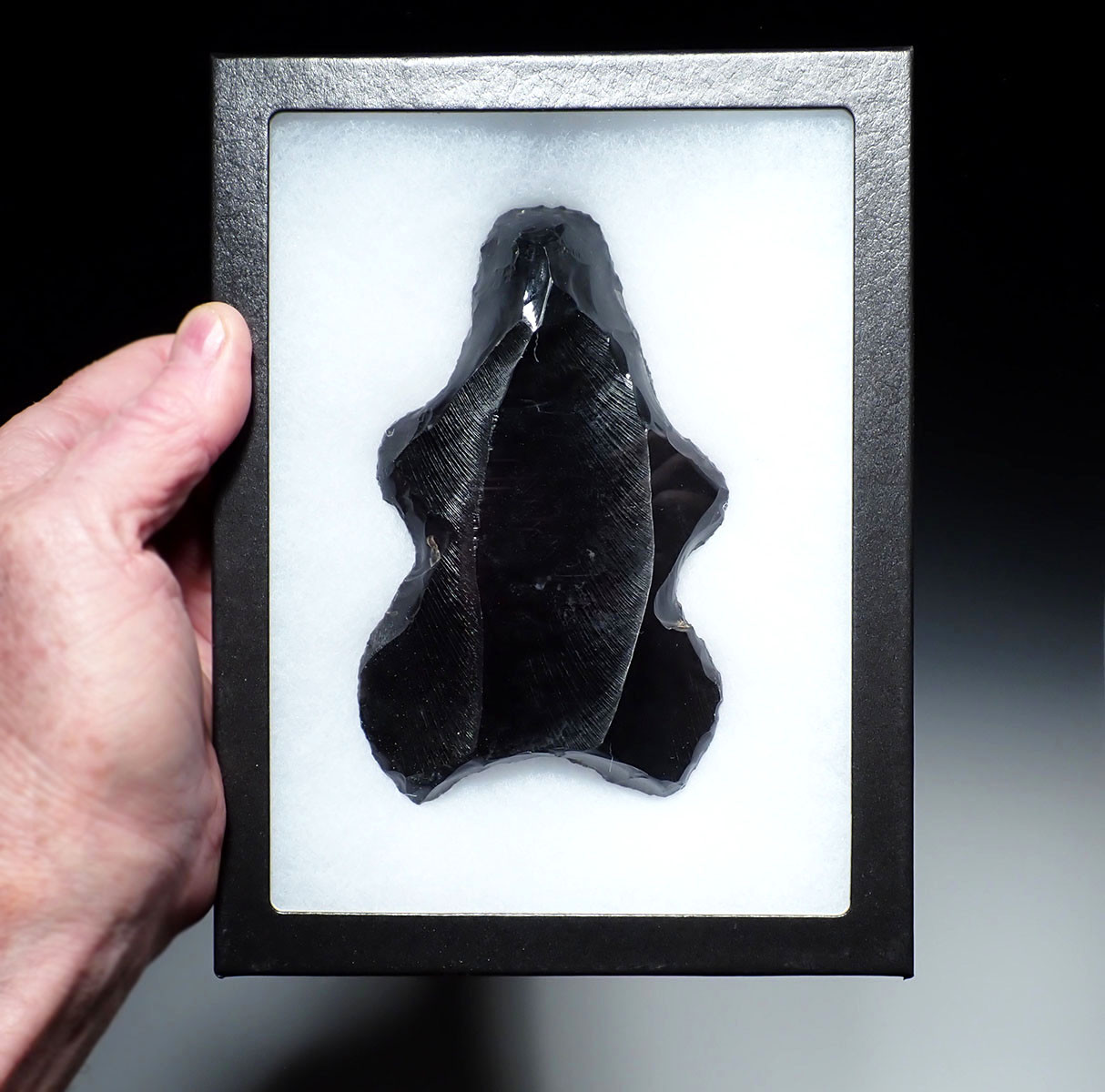
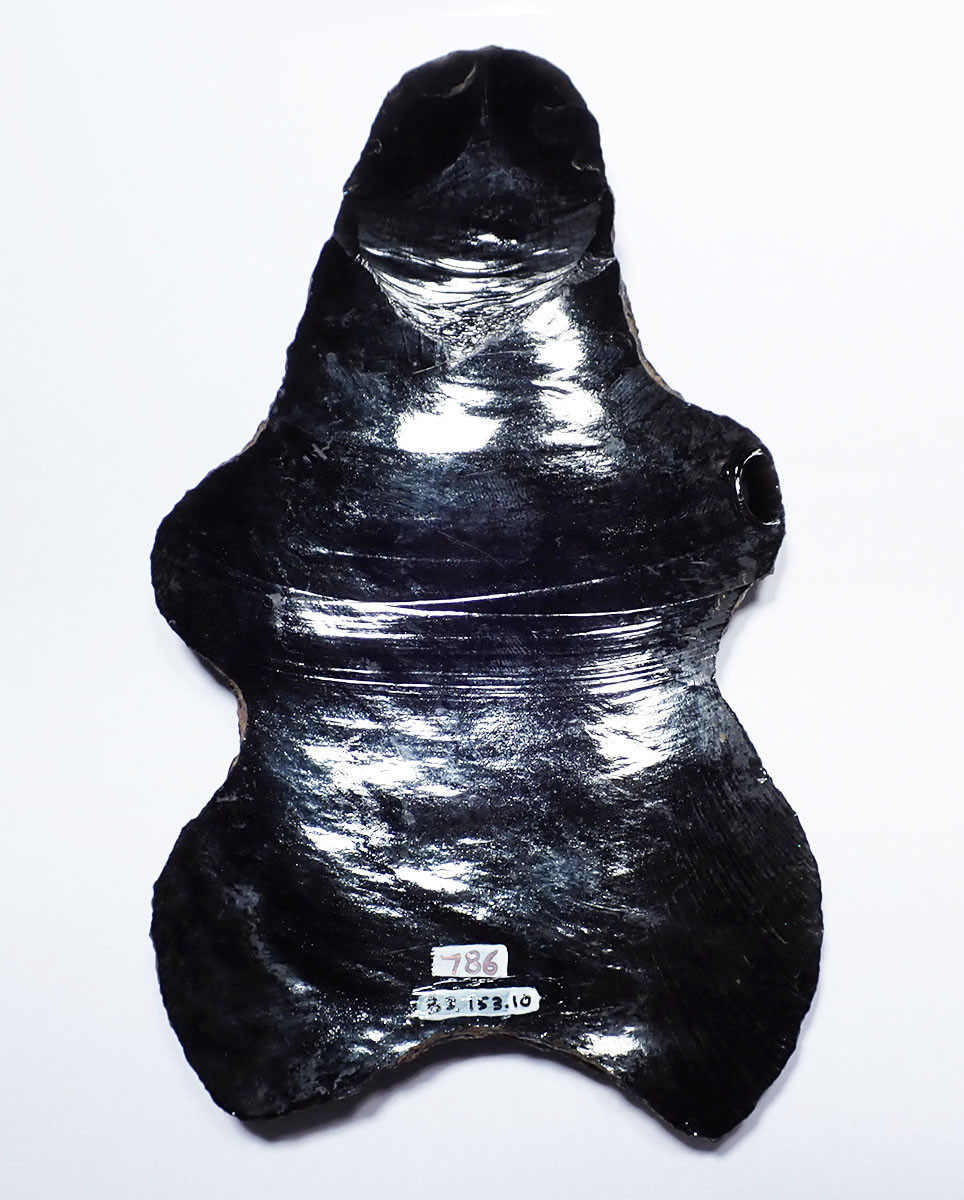
This is an EXTREMELY RARE flaked Mayan anthropomorphic obsidian eccentric effigy of a human form. It was found in a cenote, a water-filled sinkhole that was often a repository for human sacrifice offerings by the Mayan. Such practices by the Cult of the Cenote were a legendary tradition by the Mayan particularly under the rulership of the Mayapan in the Yucatán Peninsula. The tradition includes throwing selected people in the city's cenote as a human sacrifice as well as precious stones like gold, jade and other ornaments for the rain god, Chaac. The Sacred Cenote is surrounded by ancient Mayan ruins known as the Chichen Itza which translates into the "mouth of the well in Itza". The ceremonies conducted in the Sacred Cenote were expected by the people to produce rain. Instances where personal sacrifices were made rather than communal, might have included throwing an object like this into the cenote, where the monumental offering of a human was represented in this human-shaped flaked effigy.
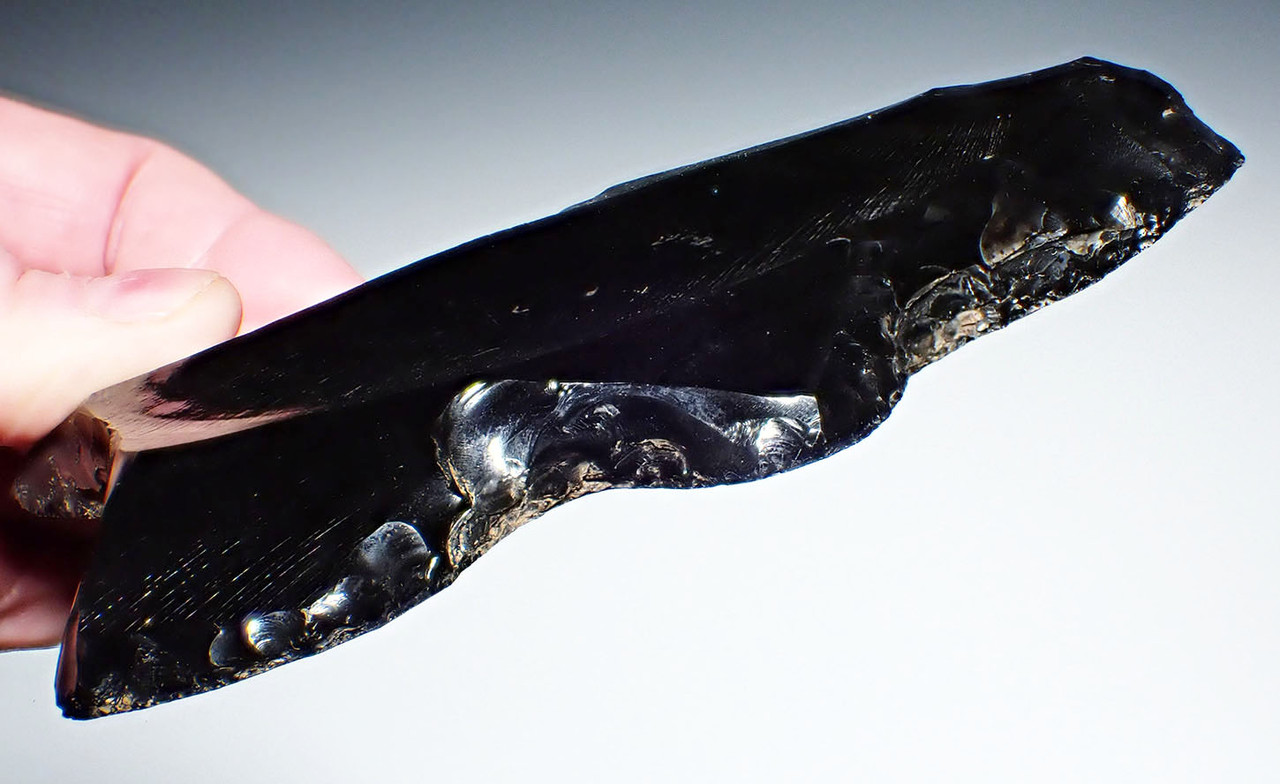
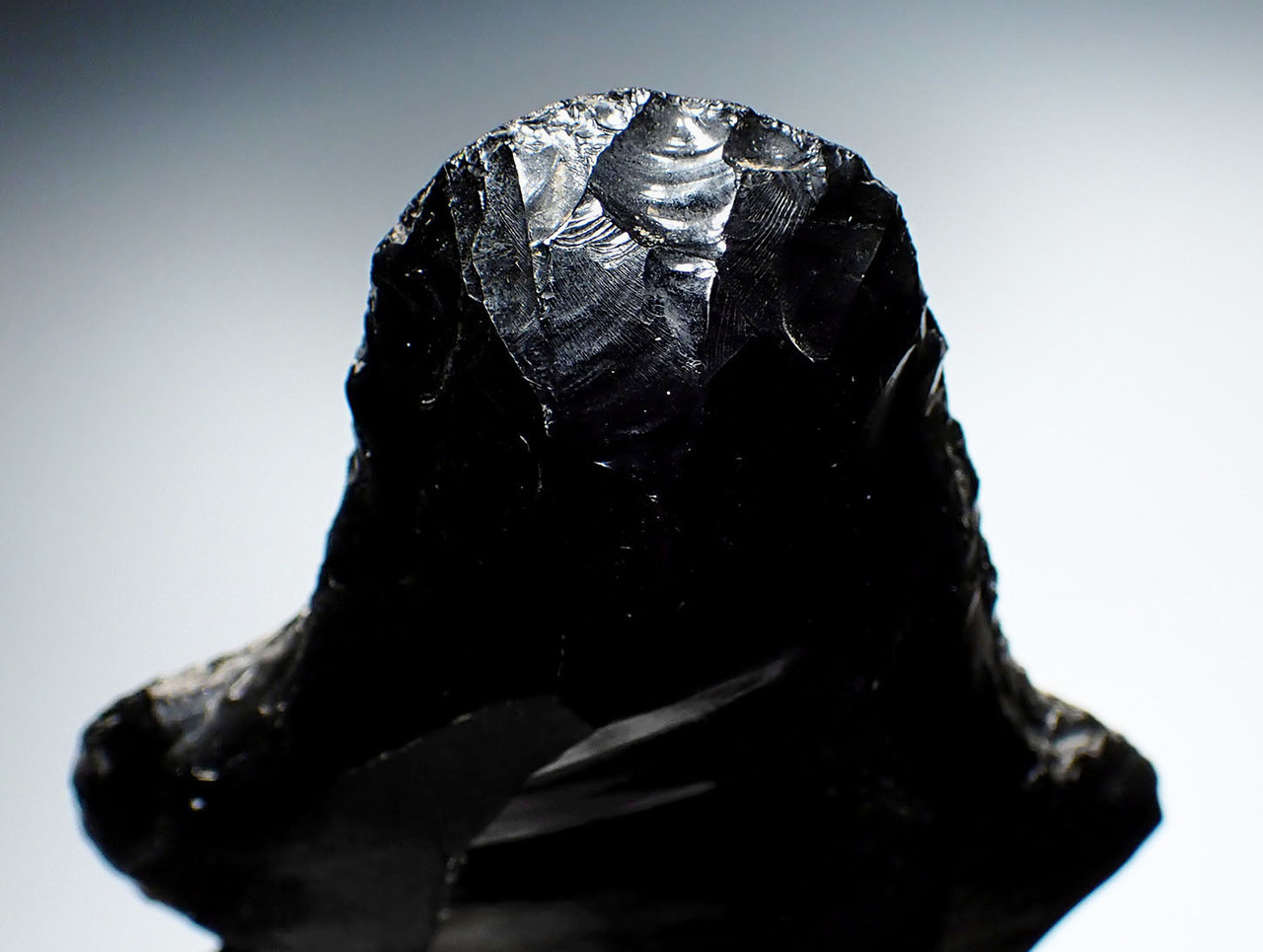
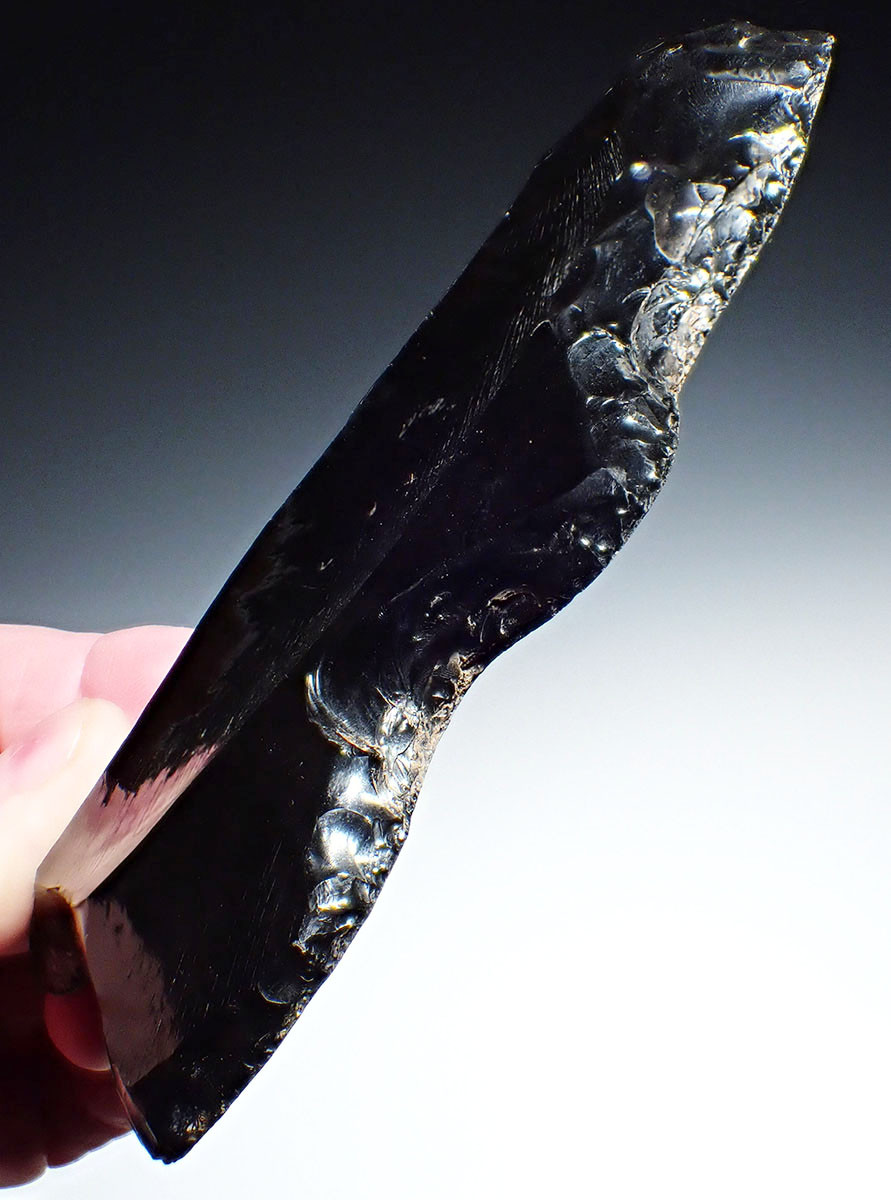
This remarkable specimen was one of only a few, having come from the incredible 1950's collection of Dr. Jose Medina, a diver collector who was one of the earliest users of scuba equipment. This was the largest and finest flaked obsidian anthropomorphic effigy of its kind of that collection, of what amounted to some of the finest flaked stone Pre-Columbian objects we have ever seen in private hands (a notarized acquisition letter and documentation from the estate, will be provided to the buyer.) Made on a single, massive robust unifacial flake, the edges of the entire perimeter show incredible invasive flaking, made by a highly skilled master knapper. The symmetry is exceptional. Ample ancient deposits are intact in all micro-crevices and flaking hinge fractures of this specimen - traits ONLY seen in authentic, unaltered examples.
Anthropomorphic Mayan flaked stone eccentric effigies resembling human forms are extremely rare but have been discovered in formal published excavations. See page 81, figure 10, of in the book "Maya Stone Tools - Selected Papers from the Second Maya Lithic Conference", edited by Thomas R. Hester and Harry J. Shafer, Monographs in World Archaeology No. 1, 1991.
Certain cenotes contain a large number of human remains, including both males and females, and young children/infants. Evidence from Maya mythology suggests that many young victims (most aged 6 to 12) were male (de Anda, 2007). While the classical images of a female Maya sacrifice being flung alive to drown in a cenote are pervasive, de Anda's (2007) writings on the subject suggest that most sacrificial victims — juveniles who were either purchased or captured while their parents were working in the fields, warriors captured in battle, or elites captured during conflicts with neighboring clans — were usually (though not always) killed prior to being thrown into the cenote, and in many cases, dozens of miles from the cenotes in which their bodies were eventually deposited. Only a certain set of cenotes were used in this way, while others were reserved for domestic purposes (de Anda 2007). This suggests that Maya religious officiants believed that only certain cenotes led to the underworld, and sacrifices placed in others would serve no purpose. It also suggests that the status of the victim as alive or dead was unimportant.
From the Dr. Jose Medina Pre-Columbian collection dating to the 1950's, of which a notarized acquisition letter and documentation will be provided to the buyer.
While we have handled thousands of exceptional Pre-Columbian antiquities, Mayan flint eccentrics featuring humans, are so rare, only a few specimens have passed through our hands. The rarity of these human eccentrics have made them 'Holy Grails' in museum collections of Mayan objects of art. Mayan stone flaked eccentric show a great variety of forms, such as crescents, crosses, snakes, and scorpions. Rarer forms display human features. The vast majority of flaked effigies are in chert of flint - those in obsidian were considered more sacred and are much less in numbers.
No one knows what these eccentric figures mean in the Mayan Culture but both individual, as well as caches of them have been excavated from numerous sites. They are usually made of flint, chert or obsidian. Some resemble recognizable objects while others are extremely abstract. The value of these Mayan knapped eccentrics is based on the workmanship, symmetry and difficulty in the flaking of the design. Some of the most complex examples with human forms have fetched six-figure prices in major auctions recently!
As always with any ancient knapped stone, one must look for mineral deposits and encrustations deep in the microscopic flake scars of the knapped surfaces to ascertain authenticity. This exceptional specimen has these intact deposits as seen in the photos. Forgeries will not!
HISTORY
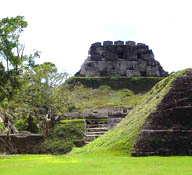 Of all the ancient cultures of the Americas, no civilization has held more intrigue and secrets for so long as that of the Mayans. In 1960, their language code of glyphs was finally deciphered and forever changed our view of what we initially thought was a peaceful and harmonious society. On the contrary, the Mayan Culture of the latter years was bathed in the blood of vicious warfare and astounding levels of human sacrifice. Their technology was so advanced it is no wonder many believe they received intelligence from extra-terrestrials. Despite our recent discoveries of Mayan mathematics, astronomy and calendar technology, the Mayans still leave us with many mysteries. Their love of war caused them to manufacture spectacular weapons with inherent beauty and artistry. Their ceramics depict a fascinating culture of status, sacrifice and deep religious devotion to a number of strange gods.
Archaeologists divide the Mayan Culture into different periods - LATE PRE-CLASSIC / PROTO-CLASSIC (300 BC - 300 AD), EARLY CLASSIC (300 AD - 600 AD), LATE CLASSIC (600 AD - 830 AD), TERMINAL CLASSIC (830 AD - 950 AD). The earliest days of the Maya date back to 2000 BC when small farming villages first appeared in the highlands and Pacific coastline of Guatemala. Crops such as corn, squash and beans made up the staple of their diet and are believed to have been brought from previous migration through Mexico. The Maya pottery styles were unique to the early Maya settlements, though. By 1000 BC, villages sprang up in the lowland regions. The Maya lived in the same locations for centuries and in a continuous state of architectural improvement and expansion leading up to the magnificent 'super-cities' we associate with them today. By 300 AD. full-scale cities were being built with stone featuring massive plazas, temples and pyramids reaching 20 stories high.
It is no wonder that some believe that extra-terrestrial beings brought their knowledge to the Maya. By 300 AD, the first inscriptions suddenly appeared in Maya sites. These early inscriptions were so beautiful it was as if the gods had delivered it to the Mayan themselves! Forward to 600 years later and the inscriptions cease. The first comprehensive writing system in Pre-Columbian America was invented by the Maya. Among the mysteries of the Maya are their amazing understanding of astronomy along with the development of an accurate calendar and mathematical system. Their number system was based on units of 20 and included a concept of 'zero'.
The skills of the Mayan craft are exemplified in their stone and wood carvings, flaked stone objects, pottery and personal adornment. Much of their art centers around their devotion to a religion that is both fascinating and gory. Blood-letting rituals were the norm and many acts of war were motivated by the capture of vast numbers of their enemies for ritual human sacrifice that would run for days on end, forming lakes of blood and fat at the bases of their stone pyramids that defy architectural explanation.
Our understanding of the fascinating MAYAN CULTURE was completely wrong and misinterpreted until as recent as the 1960, when major achievements were made in the deciphering of their glyph language. Elaborately designed ceremonial cities lacking any obvious defenses initially led us to believe that the Mayans were a peaceful theocracy living in ideal harmony with their environment and each other. We could not have been further from the truth. Lowland city-states lived in constant warfare with one another and the thirst of their gods for human blood and sacrifice seemed impossible to satiate.
Perhaps a lesson for us today, recent scientific analysis of the demise of the highly advanced Mayan civilization now answers the biggest mystery of all - "What ever happened to the ancient Mayans?". Long-term high population density (500 people per square mile - the highest in the world at the time) of unbelievable proportions put a strain on their agricultural system that was impossible to sustain. The effects of nutritional deficiencies are evident in bone and tooth analysis on graves dating to the Late Classic Period. It is most probable that starvation put unbearable sociopolitical stress on the society to either kill each other for food or die of hunger necessitated by the technological advancement of warfare and its escalation.